
The Ultimate Guide to Mtoni Palace Safaris

The Mtoni Palace Ruins are the remains of a very grand and important historical building located on the western coast of Zanzibar Island, close to Stone Town. Imagine a huge, beautiful palace that was once full of life, laughter, and important meetings. Now, much of it is in ruins, with crumbling walls, broken columns, and parts of its old structures. Even though it is ruined, it still tells a powerful story of Zanzibar's rich past.
This palace was once the main home of Sultan Sayyid Said bin Sultan Al-Busaid. He was a very powerful ruler from Oman who decided to move his main home from Oman to Zanzibar in the early 19th century. This move changed Zanzibar forever, making it a very important center for trade and power in East Africa. The Mtoni Palace was his first big palace on the island, and it was built to be a grand residence for him, his many wives, and his large family.
The word "Mtoni" means "place by the river" in Swahili, which likely refers to a small river or watercourse that was near the palace.
What are the Mtoni Palace Ruins Unique?
The Mtoni Palace Ruins are unique for several special reasons that make them a significant historical site in Zanzibar.
A. Oldest Royal Palace in Zanzibar; Mtoni Palace is considered the oldest palace built by the Omani Sultans on Zanzibar Island. It was constructed in the early 19th century, making it a very early example of the grand architecture and lifestyle that the Sultans brought to the island. Before Mtoni, there might have been older houses, but this was the first large, official royal residence.
B. Home of a Powerful Sultan and His Family: Sultan Sayyid Said was a very important figure in Zanzibar's history. He was the one who greatly expanded the clove trade, making Zanzibar famous as the "Spice Island." He also made Zanzibar the center of his vast empire, which stretched from Oman to parts of East Africa. Mtoni Palace was not just his home; it was the heart of his royal court. It housed his only legitimate wife, many secondary wives (concubines), and a large number of his children (he had many!). Historical accounts suggest that over 1,000 people, including servants and guards, lived or worked at the palace during its busiest times. This gives us a picture of a very active and grand royal household.
C. Architectural Grandeur and Design: Even in ruins, you can see how magnificent Mtoni Palace once was.
● Coral Stone and Wood: The palace was built using coral stone, which is a common building material in Zanzibar, and wood.
● Ornate Design: It was known for being one of the most decorated and beautiful palaces on the island.
● Persian Bathhouse (Hamamni Persian Baths): A very unique feature was its Persian-style bathhouse. These baths were used for bathing and relaxation, showing the influences of Middle Eastern culture. You can still see the remains of separate bathrooms for women and a large bath for the Sultan.
● Gardens and Orchards: The palace was surrounded by beautiful, lush gardens and orchards. These gardens were not just for beauty; they were also very important because they were home to some of the first clove trees planted on the island. Cloves later became the main product that made Zanzibar rich.
● Falaj System: There was a special water system called a 'falaj' (an ancient irrigation channel) that brought fresh mountain water to the palace and its baths.
D. Witness to Historical Events and Royal Life: Mtoni Palace was a center of social and political life. It hosted important gatherings, ceremonies, and entertainment. It was a place where decisions were made that affected the entire region.
● Princess Salme's Birthplace: One of Sultan Sayyid Said's daughters, Princess Salme (who later became famous for eloping with a German merchant and writing a book about her life in Zanzibar), was born and spent her early childhood at Mtoni Palace. Her writings give us a rare personal look into what life was like inside the palace in the mid-1800s, describing peacocks and gazelles wandering in the courtyard, and the Sultan watching his fleet from a round tower overlooking the sea.
E. Symbol of Zanzibar's "Spice Island" Era: The palace's gardens, with their early clove trees, symbolize the beginning of Zanzibar's prosperity as the "Spice Island." The wealth generated from the spice trade, especially cloves, allowed the Sultans to build such grand structures and establish Zanzibar as a powerful trading empire.
F. A Glimpse into Decay and Conservation: The ruins themselves are unique because they tell a story of decline and the challenges of preserving history. The palace fell into disrepair after the Sultan's death and was largely destroyed by a fire in 1899. It was even used as a warehouse during World War I. Today, the efforts to conserve and restore parts of the ruins highlight the ongoing struggle to protect Zanzibar's heritage.
In summary, Mtoni Palace Ruins are unique because they are the oldest royal palace, the heart of Sultan Sayyid Said's empire, a showcase of grand architecture with Persian influences, the birthplace of a famous princess, and a symbol of Zanzibar's rich spice trade history. Even in their ruined state, they offer a powerful and evocative connection to a glorious past.
ESTABLISHMENT.
The Sultan's Vision: Making Zanzibar a Capital.
The establishment of Mtoni Palace is closely linked to the vision of Sultan Sayyid Said bin Sultan Al-Busaid. He was the ruler of Oman and its territories, which included parts of East Africa. In the early 19th century, he recognized the great potential of Zanzibar. The island had fertile land, a strategic location for trade along the East African coast, and a good natural harbor.
Around 1828, Sultan Sayyid Said decided to shift his main residence and the center of his empire from Muscat in Oman to Zanzibar. This was a very significant decision that changed the course of Zanzibar's history. To mark this shift and establish his presence, he needed a grand palace. Mtoni Palace was his first major royal residence built on the island for this purpose.
The land for the palace was reportedly purchased from an earlier owner. The name "Mtoni" (meaning "place by the river") suggests its location near a water source, which was important for a large palace and its gardens.
CONSTRUCTION.
The palace was constructed using local materials, primarily coral stone and wood, which were readily available on the island. While specific construction dates are often cited around 1828, it's likely that the complex grew and was refined over time during the Sultan's long reign (he ruled until 1856).
Mtoni Palace was designed to be a sprawling and ornate complex, reflecting the wealth and power of the Omani Sultanate. It was not just a single building but a collection of structures that included:
● Royal Quarters: Areas for the Sultan, his principal wife (an Omani princess named Azze), and his many secondary wives and children.
● Courtyards: Large open spaces, one of which was famously described as having gazelles, peacocks, ostriches, and flamingos wandering around.
● Bathing Areas: Including the elaborate Persian bathhouse (Hamamni Persian Baths), which had separate sections for men and women, and a large private bath for the Sultan.
● Gardens and Orchards: Extensive grounds where various fruits and spices were cultivated. These gardens were especially important because they were where the first clove trees were planted on the island. The success of these clove plantations would later make Zanzibar the world's leading producer of cloves and bring immense wealth to the Sultanate.
● Water Supply System: An advanced 'falaj' (aqueduct) system brought fresh water from mountain springs (like Chem Chem) to the palace, supplying its baths and gardens.
● Watchtower: The Sultan reportedly had a large round tower overlooking the sea, from which he could observe his fleet anchored in the bay and greet visitors arriving by boat.
At its peak, Mtoni Palace was a bustling hub, with over a thousand people associated with the Sultan's court living and working there, including royal family members, servants, guards, and administrators.
LIFE AT THE PALACE.
Life at Mtoni Palace during Sultan Sayyid Said's time was a mix of royal duties, family life, and cultural activities. Princess Salme, one of the Sultan's daughters, later wrote a famous autobiography, "Memoirs of an Arabian Princess from Zanzibar." In her book, she described her childhood at Mtoni Palace in the 1850s, giving us a rare personal account of the daily routines, the beauty of the palace, and the large number of people who lived there. She mentioned playing with peacocks in the courtyard and relaxing in the steam rooms of the bath complex.
The palace was a center for social gatherings, religious ceremonies, and entertainment, reflecting the cosmopolitan nature of Zanzibar during the Sultanate era.
DECLINE AND RUIN.
After the death of Sultan Sayyid Said in 1856, Mtoni Palace began to lose its central importance. His successors often preferred other palaces or built new ones. The palace gradually fell into disrepair.
A major blow came in 1899 when a devastating fire largely destroyed the palace. What remained continued to deteriorate over time. During World War I, parts of the ruined palace were even used as a warehouse, leading to further alterations and damage.
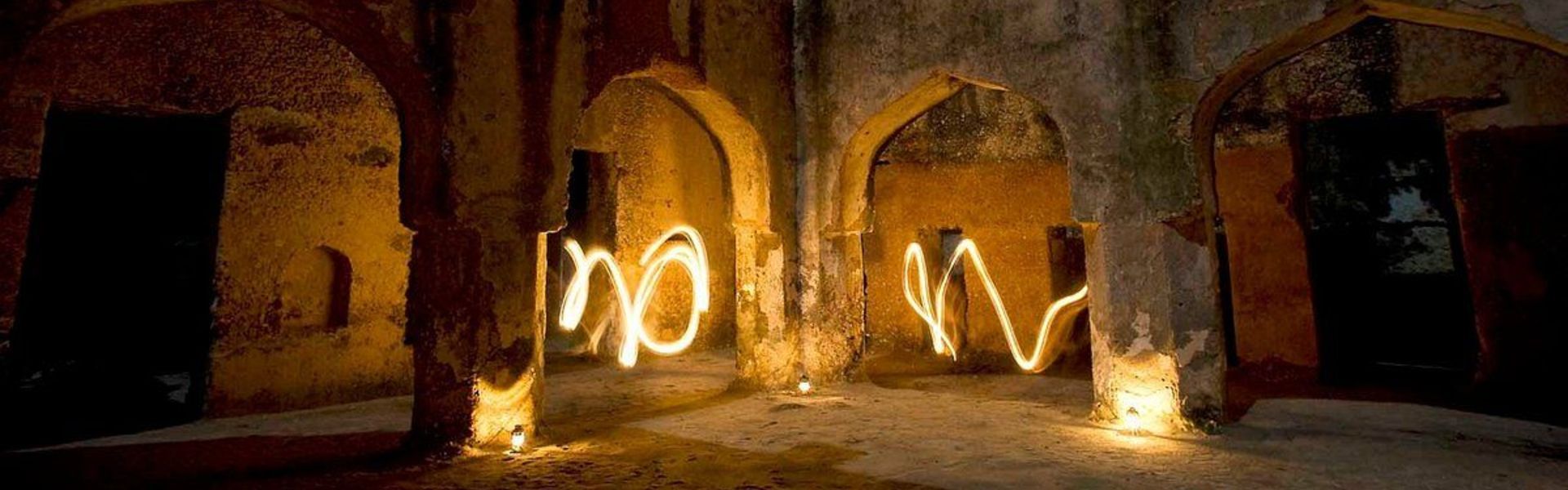
By the time Princess Salme revisited Zanzibar in 1885, she noted that Mtoni Palace had already been abandoned and was in ruins. Today, only the strong main walls, some columns, arched doorways, and the remnants of the bathhouse and water tanks remain, overgrown with vegetation.
MODEM CONSERVATION EFFORTS.
In recent decades, there has been a growing recognition of Mtoni Palace's historical significance, leading to efforts for its conservation and partial restoration.
● Archaeological Surveys: Research and excavations have been carried out to understand the palace's layout and history.
● Conservation Works: Some conservation work has been done, including restoring parts of the gardens, realigning the ancient watercourse (falaj), and consolidating some of the crumbling structures.
● Cultural Events: The central courtyard has been cleared and used for cultural events like open-air dance shows, concerts, and conferences, bringing some life back to the ruins.
● Future Plans: There have been plans to further redevelop parts of the complex, focusing on cultural activities, a herbal garden, and handicraft workshops, often with support from international partners and private funders. The Ministry of Tourism and Cultural Heritage in Zanzibar has also expressed intentions to revive Mtoni and turn it into a museum, possibly with cooperation from Oman.
The establishment of Mtoni Palace marked the beginning of Zanzibar's golden age under the Omani Sultans, and its ruins today stand as a powerful reminder of that glorious past, while also highlighting the ongoing efforts to preserve this vital piece of heritage.
Location and Accessibility.
Where is Mtoni Palace Ruins Located?
The Mtoni Palace Ruins are located on the western coast of Unguja Island, which is the main island of Zanzibar.
● Proximity to Stone Town: It is situated just a short distance north of Stone Town, the capital city of Zanzibar and a UNESCO World Heritage Site itself. The distance is approximately 5 to 6 kilometers (about 3 to 4 miles) from the center of Stone Town.
● Coastal Setting: The ruins overlook the Indian Ocean, offering beautiful views of the sea, especially at sunset. This coastal location was strategic for the Sultan, allowing him to monitor his fleet and receive visitors arriving by sea.
● Neighborhood: The ruins are in the Mtoni area, which is a residential area just outside the bustling Stone Town. It is also close to other historical sites like the Maruhubi Palace Ruins (another Sultan's palace) and the Kibweni Palace.
How to Get There (Accessibility).
Mtoni Palace Ruins are relatively easy to access from Stone Town, making it a popular half-day trip or a quick visit for tourists staying in the capital.
By Taxi.
● Convenience: Taking a taxi is the most comfortable and direct way to reach the ruins.
● Duration: The drive from Stone Town to Mtoni Palace usually takes about 5 to 10 minutes, depending on traffic.
● Cost: Fares are typically around 10,000-15,000 Tanzanian Shillings (TZS), but it's important to negotiate the fare with the driver before starting your journey. Taxis are readily available throughout Stone Town.
By Daladala (Public Minibus).
● Affordability: Daladalas are the cheapest way to travel and offer a more local experience.
● Route: From the nearest daladala station in Stone Town, look for a daladala heading towards Kisauni or Bububu. Mtoni Palace is along this route.
● Instructions: Inform the conductor that you want to get off at Mtoni Palace. They will drop you off on the main road (Malawi Road).
● Walking: From the main road, you may need to walk a short distance (about 10-15 minutes) on a dirt track to reach the actual ruins. Look for small signposts.
● Cost: The fare is usually very low, around 500-1000 TZS.
By Private Car/Rental Car.
● Flexibility: If you have rented a car in Zanzibar, you can easily drive to Mtoni Palace.
● Directions: From Stone Town, head northeast on Mizingani Road, then continue onto Mobutu Road, and turn left onto Malawi Road. Follow Malawi Road for approximately 5 kilometers, and you will see signs directing you to the ruins.
● Parking: There is usually ample parking available at the site, though there might be a small parking fee.
By Bicycle/Motorcycle.
● Adventurous Option: For those who enjoy cycling or riding a motorcycle, it's possible to reach Mtoni Palace this way. The road from Stone Town is relatively flat.
● Considerations: Be aware of traffic on the main road and ensure you have proper safety gear.
Guided Tours.
● Organized Trips: Many tour operators in Stone Town offer guided tours to Mtoni Palace, often combined with visits to other nearby historical sites like Maruhubi Palace or spice farms.
● Benefits: These tours usually include transport, an entrance fee, and a knowledgeable guide who can provide historical context and stories about the palace.
Accessibility within the Ruins.
Once at the Mtoni Palace Ruins, visitors can explore the site on foot.
● Uneven Terrain: The terrain within the ruins can be uneven, with crumbling walls, scattered stones, and overgrown areas. Comfortable walking shoes are recommended.
● Exploration: You can wander through the remains of the halls, courtyards, and the bath complex, imagining the grandeur that once was.
● Views: The site offers beautiful views of the Indian Ocean, especially from the areas that once overlooked the sea.
Best Time to Visit.
● Morning or Late Afternoon: It is often recommended to visit Mtoni Palace Ruins early in the morning or late in the afternoon.
○ Avoid Heat: This helps avoid the midday heat, making exploration more comfortable.
○ Photography: The light during these times is also ideal for photography, especially for capturing the ruins against the backdrop of the ocean.
○ Peaceful Atmosphere: Visiting outside of peak hours can offer a more peaceful and contemplative experience.
Mtoni Palace Ruins' convenient location near Stone Town and its relatively easy accessibility make it a must-visit for anyone interested in Zanzibar's rich history and royal heritage.
Transportation.
Introduction: Getting to and Around Mtoni Palace Ruins.
Transportation to and around Mtoni Palace Ruins is relatively straightforward, especially since it's located quite close to Stone Town, the main hub of Zanzibar. Visitors have several options, ranging from convenient private transport to more local and affordable public options.
Transportation to Mtoni Palace Ruins (from Stone Town).
By Taxi (Most Convenient).
● Availability: Taxis are widely available throughout Stone Town, at hotels, and at designated taxi stands.
● Route: The drive from Stone Town to Mtoni Palace Ruins is direct, heading north along the coast. It's a short journey, typically taking about 5 to 10 minutes.
● Fare Negotiation: It is crucial to agree on the fare with the driver before starting your journey. Taxis in Zanzibar do not typically use meters, so negotiation is standard practice. A reasonable fare from Stone Town would be around 10,000-15,000 Tanzanian Shillings (TZS) for a one-way trip. You can also negotiate a return trip with waiting time if you prefer.
● Benefits: Taxis offer comfort, speed, and direct door-to-door service, which is especially convenient if you're carrying bags or prefer not to navigate public transport.
By Daladala (Public Minibus - Most Affordable).
● Local Experience: Taking a daladala offers an authentic local experience and is the most budget-friendly option.
● How to Find: Go to the main daladala station in Stone Town (often near Darajani Market). Look for daladalas that are heading towards destinations north of Stone Town, such as Kisauni or Bububu.
● Instructions: Tell the conductor (or driver) that you want to get off at "Mtoni Palace" or "Mtoni Ruins." They will drop you off on the main road (Malawi Road) near the turn-off for the ruins.
● Walking: From the main road, you will need to walk a short distance (around 10-15 minutes) along a dirt track to reach the actual ruins. There might be small signs to guide you.
● Fare: The fare is very low, usually between 500-1000 TZS per person.
● Considerations: Daladalas can be crowded, and they stop frequently to pick up and drop off passengers. They may not be suitable if you have a lot of luggage.
By Private Car/Rental Car.
● Flexibility: If you have rented a car for your stay in Zanzibar, driving to Mtoni Palace is easy.
● Directions: Follow the main road (Malawi Road) north from Stone Town. The ruins are well-signposted about 5 km out.
● Parking: Parking is generally available at or near the site, though there might be a small fee.
● Driving in Zanzibar: Be aware that driving in Zanzibar can be challenging due to traffic, narrow roads in some areas, and different driving habits. An international driving permit is often required.
By Bicycle or Motorcycle.
● Adventurous and Independent: For independent travelers, renting a bicycle or scooter is a popular way to explore Zanzibar.
● Route: The road from Stone Town to Mtoni is relatively flat and suitable for cycling.
● Considerations: Always wear a helmet if riding a scooter/motorcycle. Be cautious of traffic and road conditions.
As Part of a Guided Tour.
● All-Inclusive: Many tour operators in Stone Town offer half-day or full-day tours that include Mtoni Palace Ruins. These tours typically include round-trip transportation from your hotel, an entrance fee, and a knowledgeable guide.
● Benefits: This is a hassle-free option, especially if you want to visit multiple sites (like Maruhubi Palace or a spice farm) in one trip, as the logistics are handled for you.
Transportation within the Mtoni Palace Ruins Site.
Once you arrive at the Mtoni Palace Ruins, exploration is done entirely on foot.
● Walking: Visitors walk through the remnants of the palace structures, courtyards, and the bathhouse.
● Terrain: The ground can be uneven, with rubble, overgrown areas, and exposed foundations. Comfortable, sturdy shoes are highly recommended.
● Guided Walks: If you've come with a tour guide, they will lead you through the site, explaining the history and significance of different sections.
4.4 Tips for Transportation in Zanzibar
● Bargain for Fares: Always negotiate taxi and boda-boda fares before you start your journey.
● Safety First: Choose reputable taxi drivers. If riding a boda-boda, ensure the driver is safe and you feel comfortable.
● Local Sim Card: Having a local SIM card with data can be helpful for navigation apps (like Google Maps or Waze) if you're self-driving or using public transport.
● Ask Locals: Don't hesitate to ask hotel staff or locals for directions or advice on the best way to get around.
ü By understanding these transportation options, visitors can choose the method that best suits their budget, comfort level, and desire for a local experience, ensuring a smooth visit to the historic Mtoni Palace Ruins.
Accommodation.
Introduction: Where to Stay When Visiting Mtoni Palace Ruins.
l When planning a visit to the Mtoni Palace Ruins, most visitors choose to stay in or around Stone Town, Zanzibar's capital. Stone Town is a UNESCO World Heritage Site itself, offering a wide range of accommodation options, from luxury hotels to budget-friendly guesthouses. It's also the main hub for tours, restaurants, and other attractions, making it a convenient base. However, there are also a few options closer to the Mtoni area for those who prefer to be just outside the bustling city center.
Ø Accommodation Options in Stone Town (Most Popular Choice).
Stone Town offers the widest variety of accommodation, catering to all budgets and preferences. It's only a 5-10 minute drive from Mtoni Palace Ruins.
Luxury and Boutique Hotels.
● Emerson on Hurumzi / Emerson Spice: These are famous boutique hotels known for their unique Swahili-Arabic architecture, beautifully restored buildings, and stunning rooftop restaurants with panoramic views of Stone Town and the ocean. They offer a luxurious and authentic experience.
● Mizingani Seafront Hotel: Located right on the waterfront, offering beautiful sea views and a blend of traditional Zanzibari and modern comforts.
● Tembo House Hotel: A popular choice with a historical feel, located near the beach. It offers a pool and a mix of traditional and modern amenities.
● Park Hyatt Zanzibar: A well-known international luxury hotel offering modern amenities, a large pool, and excellent service, while still blending into Stone Town's historic architecture.
Mid-Range Hotels and Guesthouses.
● Al-Minar Hotel: Often praised for its comfortable rooms, good breakfast, and a location that's a bit away from the busiest part of Stone Town but still close to everything.
● The Swahili House: A refurbished 5-story Indian Merchant House built around a courtyard, offering a historical ambiance in the heart of Stone Town.
● Golden Tulip Stone Town Boutique: Offers comfortable rooms and modern amenities in a central location.
● Zanzi House / Retro / Rumaisa Hotel / Al Johari Hotel & Spa: These are other mid-range options in Stone Town, offering various levels of comfort and amenities, often with good access to the market and other attractions.
Budget-Friendly Options.
● Balcony House: Known for its good location, friendly staff, and comfortable rooms, often with balconies offering views of the town. It's a popular choice for budget travelers.
● Various Guesthouses and Hostels: Stone Town has numerous smaller guesthouses and hostels that offer basic, clean, and affordable rooms, often with shared facilities. These are great for backpackers or those on a tight budget.
Vacation Rentals (e.g, Airbnb).
Apartments and Private Rooms: You can find many apartments and private rooms for rent in Stone Town through platforms like Airbnb. These can offer more space, privacy, and a chance to experience living like a local.
Accommodation Options Near Mtoni Palace Ruins (North of Stone Town).
While the selection is smaller, there are a few hotels and resorts located closer to the Mtoni area, offering a quieter atmosphere away from the Stone Town bustle, often with direct beach access.
Hotel Verde Zanzibar - Azam Luxury Resort & Spa.
● Description: This is a large, upscale luxury resort located on Malawi Road, very close to the Mtoni Palace Ruins. It offers sleek rooms and suites, an outdoor pool, refined restaurants, and a spa.
● Benefits: It provides a modern, comfortable, and luxurious stay with resort-style amenities, making it a good choice for those who want to relax by the pool or beach after exploring historical sites. Its proximity to Mtoni Palace is a major advantage.
Zanzibar View Hotel.
● Description: Located in the Mtoni area, this hotel offers a comfortable stay with good views, often praised for its location near the airport and Stone Town, while being outside the main city noise.
Maruhubi Villas.
● Description: Situated near the Maruhubi Palace Ruins (which are also close to Mtoni Palace), these villas offer a more private and spacious accommodation option, often with garden or sea views.
Hotel Mtoni Marine.
● Description: This hotel is located on the west coast, just 5 minutes north of Stone Town, specifically on a private beach between The Maruhubi Palace and The Mtoni Palace Ruins.
● Facilities; It offers a restaurant, bar, private beach, swimming pool, and tropical garden. Rooms are equipped with air conditioning, private bathrooms, and mosquito nets. This hotel is particularly convenient for visiting both Mtoni and Maruhubi ruins.
Choosing Your Accommodation.
When deciding where to stay, consider;
● Location Preference: Do you prefer to be in the heart of the historic Stone Town with easy walking access to markets, restaurants, and other historical sites, or do you prefer a quieter, more resort-like setting closer to Mtoni Palace with beach access?
● Budget: Stone Town offers options for all budgets, while the hotels directly near Mtoni tend to be more mid-range to luxury.
● Amenities: What facilities are important to you (pool, restaurant, Wi-Fi, air conditioning, private beach)?
● Travel Style: Are you looking for a lively cultural experience or a more relaxed, secluded getaway?
Regardless of your choice, Zanzibar offers a wide array of accommodation options that can enhance your visit to the Mtoni Palace Ruins and the broader island. It's always advisable to book in advance, especially during peak tourist seasons.
Ø Benefit of Local Community.
Introduction: How Mtoni Palace Ruins Can Help Local People.
The Mtoni Palace Ruins, as a significant historical and cultural site, have the potential to bring many good things to the local communities living around them and in Zanzibar generally. When managed well, tourism to such sites can create jobs, support local businesses, and help preserve the unique culture and environment. This is often called "sustainable tourism" or "community benefits from heritage."
Direct Economic Benefits.
Job Creation.
● Tour Guides: Local people can be trained and employed as tour guides at Mtoni Palace Ruins. They can share the history, stories, and cultural significance of the palace with visitors, earning an income. This is a very direct way for the community to benefit.
● Site Management and Maintenance: Jobs are created for people who maintain the ruins, keep the grounds clean, manage visitors, and provide security.
● Artisans and Vendors: Local artisans can sell handmade crafts, souvenirs, and traditional products to tourists visiting the ruins. This provides a market for their skills and generates income.
● Hospitality Sector: Hotels, guesthouses, and restaurants in the Mtoni area and nearby Stone Town employ local staff, from chefs and waiters to housekeepers and receptionists. The presence of a historical site like Mtoni Palace contributes to the overall tourism appeal that supports these jobs.
● Transportation: Local taxi drivers, daladala drivers, and motorcycle riders (boda-boda) earn money by transporting tourists to and from the ruins.
Income for Local Businesses.
● Food and Beverage: Local shops, cafes, and restaurants benefit from tourists buying food, drinks, and snacks before or after their visit to the ruins.
● Accommodation Providers: Local guesthouses and smaller hotels in the Mtoni area directly benefit from visitors choosing to stay close to the ruins.
● Service Providers: Other local businesses, such as those providing laundry services, small repairs, or supplies, also see increased demand due to tourism.
Entrance Fees and Revenue Sharing.
● If there is an entrance fee to the Mtoni Palace Ruins, a portion of this revenue can ideally be reinvested into the local community. This could be through direct funding for community projects or by supporting the local government's services.
● Some tours, like the "Dhow Cruise & Mtoni Palace Magical Recital," specifically state that part of the money collected goes to the Mtoni Palace Conservation Project for the restoration of the Palace. This directly benefits the site and indirectly the community through preservation.
Cultural Preservation and Awareness.
Valuing Heritage.
● When tourists from around the world visit Mtoni Palace Ruins and show interest in its history, it helps the local community recognize and appreciate the value of their own heritage. This can foster a sense of pride and encourage them to protect their cultural sites and traditions.
● It highlights the importance of oral histories and local knowledge, as guides share stories passed down through generations.
Revitalization of Cultural Practices.
● Organizing cultural events at the ruins, such as traditional dance shows or music recitals (like the "Magical Recital" mentioned), provides a platform for local artists and performers. This helps to keep traditional arts alive and provides income for the performers.
● It also allows visitors to experience the living culture of Zanzibar, not just its past.
Educational Opportunities.
● The ruins can serve as an educational resource for local schools. Children can learn about their own history, the lives of the Sultans, and the importance of preserving historical sites.
● This can inspire younger generations to pursue careers in tourism, heritage management, or conservation.
Infrastructure and Community Development.
Improved Infrastructure.
● As tourism grows, there is often an incentive to improve infrastructure around tourist sites. This could include better access roads, clearer signage, improved waste management, and potentially better water and electricity supply in the Mtoni area. These improvements benefit not only tourists but also the local residents.
Community Projects.
● Revenue generated from tourism or through partnerships with conservation organizations can be used to fund various community development projects, such as improving local schools, health clinics, or water sources.
Challenges in Ensuring Benefits.
While the potential benefits are significant, it's important to ensure that they are realized fairly and sustainably:
● Equitable Distribution: Making sure that the economic benefits reach a wide range of community members, not just a few individuals or businesses.
● Community Involvement: Actively involving local communities in the planning and management of tourism and conservation efforts to ensure their needs and perspectives are considered.
● Cultural Sensitivity: Managing tourism in a way that respects local customs, traditions, and the spiritual significance some sites might hold for the community.
By focusing on these aspects, Mtoni Palace Ruins can become a powerful engine for positive change, contributing to the well-being and cultural vitality of the local communities in Zanzibar.
Challenges and Solutions.
Protecting a Fragile Past.
The Mtoni Palace Ruins, despite their immense historical value, face a number of significant challenges. As a centuries-old structure, largely exposed to the elements and human activity, its preservation requires constant effort and careful management. These challenges can be broadly categorized into natural deterioration, human impacts, and management/resource limitations. Understanding these problems is crucial for developing effective solutions to protect this vital piece of Zanzibar's heritage.
Natural Deterioration.
Weathering and Erosion.
● Problem;The ruins are built primarily from coral stone, which is susceptible to natural weathering processes. Exposure to sun, wind, and especially rain causes the stone to erode and crumble over time. The coastal location means salt spray from the ocean can also accelerate decay. Vegetation growth (roots growing into cracks) further weakens the structures.
● Solution;
○ Consolidation: Apply special treatments to consolidate (strengthen) the crumbling stone and mortar. This involves using compatible materials that don't harm the original structure.
○ Drainage Systems: Improve drainage around the ruins to prevent rainwater from pooling and seeping into the foundations and walls, which causes rapid deterioration.
○ Vegetation Management: Regularly remove invasive vegetation (like trees and shrubs) whose roots can damage the structures, but do so carefully to avoid disturbing the ruins.
○ Climate Monitoring: Monitor environmental conditions (humidity, temperature, salt levels) to understand their impact and adapt conservation strategies.
Lack of Roofs.
● Problem; The palace was largely destroyed by fire in 1899, leaving most of its structures without roofs. This exposes the remaining walls and internal elements directly to rain and sun, accelerating their decay.
● Solution;
○ Partial Re-roofing: For some key sections, especially those used for interpretation or small museum displays (like the bath complex), partial re-roofing with lightweight, historically appropriate materials could protect the structures. This must be done carefully to maintain the "ruin" aesthetic.
○ Protective Coverings: In some very sensitive areas, temporary or semi-permanent protective coverings could be installed to shield the most vulnerable parts from direct rainfall.
Human Impacts.
Lack of Maintenance and Neglect.
● Problem; After the Sultan's death and the fire, the palace was largely abandoned and neglected for many decades. This long period of neglect allowed rapid deterioration. Even today, consistent maintenance can be a challenge due to resource limitations.
● Solution;
○ Regular Maintenance Plan: Implement a clear, funded, and consistent maintenance plan for the ruins, including regular cleaning, minor repairs, and vegetation control.
○ Skilled Labor: Train local workers in basic heritage conservation techniques to carry out routine maintenance effectively.
Vandalism and Looting;
● Problem; Uncontrolled access can lead to vandalism (e.g., graffiti, carving names) or the removal of historical artifacts from the site.
● Solution;
○ Site Security: Increase security presence at the ruins, especially during non-visiting hours.
○ Controlled Access: Establish clear pathways and boundaries for visitors to minimize accidental damage.
○ Visitor Education: Provide clear signage and information (in multiple languages) about the historical importance of the ruins and the rules for visitors (e.g., "do not touch," "do not remove anything"). Guides play a crucial role in this.
Uncontrolled Development Pressure.
● Problem; As Zanzibar's tourism grows, there might be pressure for new construction or development around the ruins, which could negatively impact the historical setting and views.
● Solution;
○ Buffer Zones: Establish and enforce strict buffer zones around the Mtoni Palace Ruins to control new construction and ensure it is compatible with the historical character of the area.
○ Integrated Planning: Develop an integrated urban and heritage planning strategy for the Mtoni area that balances development needs with conservation goals.
Management and Resource Limitations.
Insufficient Funding.
● Problem; Conservation and maintenance of a large historical site like Mtoni Palace require significant financial resources, which are often limited.
● Solution;
○ Diverse Funding Sources: Seek funding from various sources, including government budgets, international heritage organizations (example, UNESCO, World Monuments Fund), foreign aid agencies, private donors, and tourism revenue.
○ Sustainable Financing Mechanisms: Explore ways to generate sustainable income from the site itself (example, a portion of entrance fees, cultural events, souvenir sales) that can be reinvested into conservation.
Lack of Technical Expertise.
● Problem; Specialized knowledge and skills are needed for heritage conservation (example, architectural conservation, archaeological analysis, material science). There might be a shortage of locally trained experts.
● Solution;
○ Training and Capacity Building: Invest in training programs for local professionals and artisans in heritage conservation techniques. Collaborate with international universities and experts for knowledge transfer.
○ Partnerships: Form partnerships with international conservation organizations that can provide technical assistance and expertise.
Incomplete Documentation and Research.
● Problem; While some research has been done, comprehensive documentation of all remaining structures and archaeological findings might still be incomplete.
● Solution;
○ Systematic Surveys: Conduct thorough architectural and archaeological surveys to fully document the ruins.
○ Digital Archiving: Create detailed digital archives (3D models, photographs, drawings) of the ruins to preserve information and aid future conservation efforts.
Balancing Conservation with Use (e.g, Cultural Events).
● Problem; While cultural events bring life to the ruins, there's a need to ensure they don't cause damage or wear and tear to the fragile structures.
● Solution;
○ Impact Assessments: Conduct thorough assessments before hosting events to ensure they are appropriate for the site and do not pose risks.
○ Controlled Usage: Limit the number of people, types of activities, and frequency of events to minimize impact.
○ Temporary Infrastructure: Use temporary, non-damaging infrastructure for events.
By addressing these challenges through a combination of scientific conservation, community engagement, sustainable funding, and strategic planning, Mtoni Palace Ruins can be preserved as a precious historical asset for generations to come.
Opportunities.
Introduction: Unlocking the Potential of Mtoni Palace Ruins.
The Mtoni Palace Ruins, despite their current state of decay, hold immense potential. Their rich history, unique architectural remnants, and strategic location near Stone Town offer numerous opportunities for development that can benefit both the site's preservation and the local communities. By carefully planning and investing in these opportunities, Mtoni Palace can become an even more vibrant and meaningful destination.
Enhanced Tourism and Visitor Experience.
Historical and Cultural Tourism.
● Opportunity; Mtoni Palace is a key site for understanding Zanzibar's Omani Sultanate era, the spice trade, and the life of Sultan Sayyid Said. This appeals to history enthusiasts and cultural tourists.
● Action; Develop more engaging interpretive materials (signboards, audio guides, virtual reality reconstructions) that bring the palace's history to life. Offer specialized guided tours focusing on royal life, architecture, or the spice trade.
Experiential Tourism.
● Opportunity; The ruins can be used to create immersive experiences that go beyond just viewing the structures.
● Action;
○ "1001 Nights" Recitals: Continue and expand the "Dhow Cruise & Mtoni Palace Magical Recital" events. These evenings, with traditional melodies, dances, candles, and incense, recreate the atmosphere of the past, offering a unique cultural experience that also contributes to conservation.
○ Historical Reenactments: Organize occasional historical reenactments of court life or significant events to engage visitors.
○ Culinary Experiences: Offer traditional Zanzibari cooking classes or dining experiences within the palace grounds, perhaps focusing on dishes from the Sultanate era.
Integration with Other Attractions.
● Opportunity; Mtoni Palace is close to other historical sites (Maruhubi Palace Ruins) and popular attractions (spice farms, Stone Town).
● Action; Create combined tour packages that link Mtoni Palace with these nearby sites, offering a comprehensive historical and cultural itinerary for visitors. Promote it as part of a "Royal Palaces of Zanzibar" tour.
Educational Tourism.
● Opportunity; The site is an excellent outdoor classroom for students of history, architecture, archaeology, and even botany (due to its historical gardens).
● Action; Develop educational programs for local and international schools and universities. Host workshops or field study programs focusing on heritage conservation or Zanzibari history.
Community Empowerment and Economic Growth.
Job Creation and Skill Development.
● Opportunity; Increased tourism and site activities will create more jobs for local people.
● Action; Expand training programs for local tour guides, site managers, conservation workers, hospitality staff, and artisans. Focus on specialized skills required for heritage interpretation and traditional crafts.
Local Entrepreneurship.
● Opportunity; The influx of visitors can stimulate local businesses.
● Action; Support the establishment of small, community-run businesses around the ruins, such as souvenir shops selling authentic local crafts, small cafes offering traditional snacks, or local transport services. Provide business training and microfinance.
Revenue Generation for Conservation.
● Opportunity; Tourism can provide a sustainable funding source for the ruins' preservation.
● Action; Ensure that a portion of entrance fees and revenue from cultural events is directly allocated to the Mtoni Palace Conservation Project. Seek partnerships with hotels and tour operators for direct contributions to conservation funds.
Conservation and Sustainable Management.
Comprehensive Conservation Masterplan.
● Opportunity; Develop a long-term, detailed masterplan for the conservation and management of the entire Mtoni Palace complex.
● Action; This plan should outline specific conservation interventions, visitor management strategies, community involvement mechanisms, and sustainable financing models. It should be regularly reviewed and updated.
International Partnerships and Expertise.
● Opportunity: Collaborate with international heritage organizations, universities, and experts to leverage global knowledge and resources.
● Action: Seek technical assistance, funding, and training opportunities from organizations like UNESCO, ICOMOS, or specialized conservation institutes.
Public Awareness and Advocacy.
● Opportunity; Raise awareness about the importance of Mtoni Palace among local residents, national stakeholders, and the international community.
● Action; Launch public campaigns, educational programs, and advocacy efforts to highlight the value of the ruins and the need for their protection.
By seizing these opportunities, Mtoni Palace Ruins can transform from a decaying historical site into a vibrant center for cultural exchange, economic development, and a powerful symbol of Zanzibar's enduring heritage.
Conclusion.
A Legacy in Ruins, A Story That Endures.
The Mtoni Palace Ruins stand as a poignant and powerful reminder of Zanzibar's golden age under the Omani Sultans. Once the magnificent residence of Sultan Sayyid Said, the very heart of his vast empire in the early 19th century, this palace was a hub of political power, trade, and royal life. Its grand architecture, sophisticated Persian baths, and lush gardens (home to the island's first clove trees) speak volumes about the wealth and influence that flowed through Zanzibar during its peak as the "Spice Island."
Even in its ruined state, with crumbling walls and roofless halls, Mtoni Palace continues to tell a compelling story. It is the birthplace of Princess Salme, whose memoirs offer a rare personal glimpse into the daily life of a Zanzibari royal household. It symbolizes the cosmopolitan blend of cultures—African, Arab, Indian, and European—that shaped the island's unique identity.
The Imperative of Preservation.
The journey of Mtoni Palace from grandeur to ruin highlights the fragility of historical sites and the constant battle against natural decay and human impact. The devastating fire of 1899, coupled with decades of neglect, left much of the palace in disrepair. Today, challenges such as weathering, vegetation growth, and the need for consistent funding and expert conservation remain significant.
However, there is a growing recognition of Mtoni Palace's invaluable heritage. Efforts by local authorities, conservation groups, and private initiatives (like the cultural events held at the site) are slowly bringing life back to the ruins and working towards their preservation. The commitment to restoring parts of the palace and using it as a venue for cultural events is a positive step towards ensuring its survival.
A Future Built on History.
The opportunities for Mtoni Palace Ruins are vast and exciting. By strategically developing its potential, it can become an even more significant attraction for historical and cultural tourism.
● Enhanced Visitor Experience: Through engaging interpretive displays, immersive cultural events, and specialized tours, visitors can gain a deeper understanding of the palace's past.
● Community Empowerment: Increased tourism will create more jobs for local guides, artisans, and hospitality staff, directly benefiting the communities living around the ruins. Vocational training programs can further equip locals with valuable skills.
● Sustainable Conservation: Tourism revenue, coupled with international partnerships and dedicated funding, can provide the necessary resources for ongoing conservation, research, and documentation efforts, ensuring that the ruins are protected for future generations.
● Educational Resource: Mtoni Palace can serve as a powerful educational tool, inspiring students and researchers to explore Zanzibar's rich history and the importance of heritage preservation.
NB;
Mtoni Palace Ruins is more than just a collection of old stones; it is a tangible link to a glorious past, a place where history whispers from every archway and every crumbling wall. It offers a unique and evocative experience, inviting visitors to imagine the vibrant life that once filled its halls and courtyards.
By visiting Mtoni Palace Ruins, you not only connect with a pivotal chapter in Zanzibar's history but also contribute to the ongoing efforts to preserve this irreplaceable heritage. It is a destination that truly captures the essence of the "Spice Island"—its beauty, its complexity, and its enduring legacy. Let the echoes of the past guide you through this fascinating site, and leave with a deeper appreciation for the rich tapestry of human history.