

Ultimate Guide to Chobe Safari
Find Chobe Safari Tours from Verified Botswana Operators
The Ultimate Guide to Chobe Safari
Magnificent Botswana National Parks
Chobe National Park, declared in 1968, is Botswana’s first national park and remains its most biologically diverse. Covering over 11,700 km², it lies in the north of the country, bordering Namibia’s Caprivi Strip and forming part of the Kavango–Zambezi Transfrontier Conservation Area. The park is world-famous for its immense herds of African bush elephants, estimated at around 50,000, and for its predator populations, including lions that have adapted to hunting juvenile elephants. Its varied ecosystems, ranging from lush riverfronts to dry hinterlands, make it one of Africa’s premier wildlife destinations.
History
The original inhabitants of the Chobe region were the San (Basarwa) people, nomadic hunter-gatherers who left behind rock paintings in the hills. In the early 20th century, the land was classified as crown land under the British protectorate of Bechuanaland. Conservation proposals began in 1931, and by 1932, 24,000 km² were declared a non-hunting area, later expanded to 31,600 km². Tsetse fly infestations delayed progress, but in 1960 the Chobe Game Reserve was created. In 1968, it was upgraded to national park status. Industrial settlements, particularly timber operations at Serondela, were gradually removed, and by 1975 the park was free of human activity. Minor expansions followed in the 1980s, cementing Chobe’s role as a cornerstone of Botswana’s conservation strategy.
Ecology
Chobe is divided into four distinct ecosystems. The Serondela (Chobe Riverfront) in the northeast features lush floodplains and dense woodlands, sustained by the Chobe River. This area is the most visited, due to its proximity to Kasane and Victoria Falls, and is the only place in Botswana where the puku antelope occurs. The Savuti Marsh, covering 10,878 km², is fed by the erratic Savuti Channel, which alternates between drying up and flowing due to tectonic shifts. Its savannahs and grasslands host dynamic wildlife, including zebras, wildebeest, and predators. The Linyanti Marsh, in the northwest, is rich in lagoons, riverine woodlands, and floodplains, supporting lions, leopards, wild dogs, and rare antelope such as sitatunga and red lechwe. Between Linyanti and Savuti lies the Nogatsaa grass woodland, a hot, dry hinterland known for eland and other plains game.
Wildlife
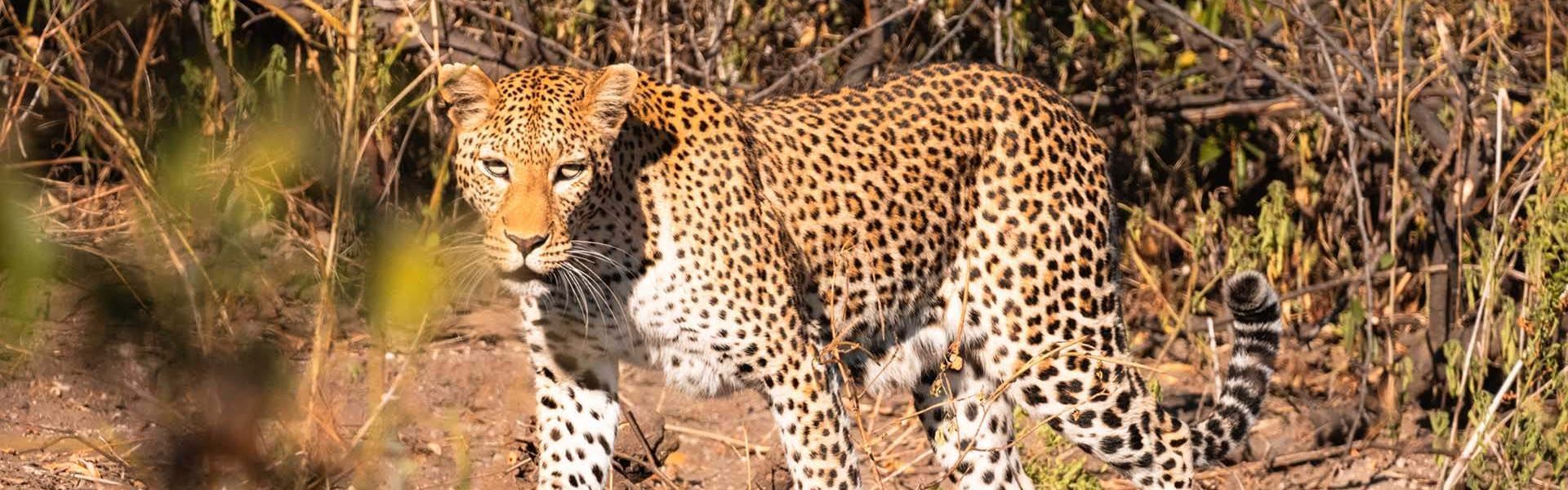
Chobe is renowned for its elephant population, the largest concentration in Africa. These Kalahari elephants are distinctive, with brittle ivory and shorter tusks, likely due to calcium-deficient soils. Their seasonal migrations span hundreds of kilometers, reaching into Zimbabwe. Other large mammals include buffalo, giraffe, zebra, wildebeest, kudu, sable, roan, and gemsbok. Predators such as lions, leopards, cheetahs, hyenas, and wild dogs thrive here, with lions famously preying on young elephants. Birdlife is prolific, with over 450 species, including carmine bee-eaters, spoonbills, storks, raptors, and waterfowl. The park’s ecosystems support an extraordinary diversity of species, making it one of Africa’s richest reserves.
Surrounding Areas
The town of Kasane, located just downstream of the Chobe River, serves as the northern gateway to the park and a hub for tourism. Its proximity to Victoria Falls and the borders of Namibia, Zambia, and Zimbabwe makes Chobe a key destination within the Kavango–Zambezi Transfrontier Conservation Area. The park’s location along major rivers enhances its ecological importance, linking it to broader regional conservation efforts.
Activities
Game drives – Explore diverse ecosystems, from riverfront floodplains to Savuti’s grasslands, spotting elephants, predators, and antelope.
Boat cruises – Experience the Chobe River up close, watching elephants, hippos, and crocodiles, as well as abundant birdlife.
Birdwatching – With over 450 species, Chobe is a paradise for bird enthusiasts, especially during migration seasons.
Photography – Capture dramatic wildlife scenes, including elephants crossing rivers and lions hunting in Savuti.
Cultural exploration – Discover San rock paintings and learn about the region’s history and heritage.
Wilderness camping – Stay in remote areas like Savuti or Linyanti for an immersive experience in the wild.
Best Time to Visit
Dry season (May–October) – Best for game viewing, as animals congregate at rivers and waterholes; roads are sandy but passable.
Wet season (November–April) – Lush vegetation and abundant birdlife, though roads can become muddy and difficult to navigate.
Transitional months (April and November) – Offer moderate weather and a balance between wildlife visibility and comfort.
Visitor Tips
Use a 4x4 vehicle – Roads are sandy and rough, especially in Savuti and Nogatsaa; proper vehicles are essential.
Plan for seasonal conditions – Dry months bring thick sand, while wet months make roads muddy and challenging.
Book accommodation early – Lodges and campsites near Kasane and inside the park fill quickly during peak seasons.
Bring binoculars and cameras – Essential for birding and capturing iconic wildlife scenes.
Respect conservation rules – Do not feed animals; poaching is strictly controlled, with rangers empowered to act against offenders.
Prepare for remoteness – Some sections, like Nogatsaa, are little visited; carry supplies and fuel.
Combine with regional attractions – Chobe’s location near Victoria Falls and Namibia’s Caprivi Strip makes it ideal for multi-destination trips.