

Ultimate Guide to Nxai Pan Safari
Find Nxai Pan Safari Tours from Verified Botswana Operators
The Ultimate Guide to Nxai Pan Safari
Magnificent Botswana National Parks
Nxai Pan National Park, located in north-eastern Botswana, is part of the greater Makgadikgadi Pan system. The park centers around Nxai Pan, a fossil lake bed of about 40 km², surrounded by vast salt flats and savanna. It adjoins the Makgadikgadi Pans National Park to the south, forming a continuous conservation landscape. Nxai Pan is famous for its striking scenery, seasonal wildlife migrations, and the iconic Baines’ Baobabs, a cluster of millennia-old trees first described by explorer and artist Thomas Baines.
History and Conservation
Nxai Pan was proclaimed a national park to protect its unique salt pan ecosystem and the wildlife that depends on it. It is part of the Kavango–Zambezi Transfrontier Conservation Area (KAZA TFCA), the second-largest conservation area in the world, spanning five countries. This inclusion highlights Nxai Pan’s importance in regional biodiversity and migratory corridors.
Ecology
The park’s terrain is dominated by the fossil pan, surrounded by grasslands, acacia woodlands, and seasonal waterholes. During the rainy season, the pan fills with water and grasses, attracting large herds of herbivores and predators. In the dry season, the pan becomes a shimmering salt flat, with wildlife concentrated around permanent water sources. The baobabs serve as landmarks and cultural icons, linking natural history with human exploration.
Wildlife
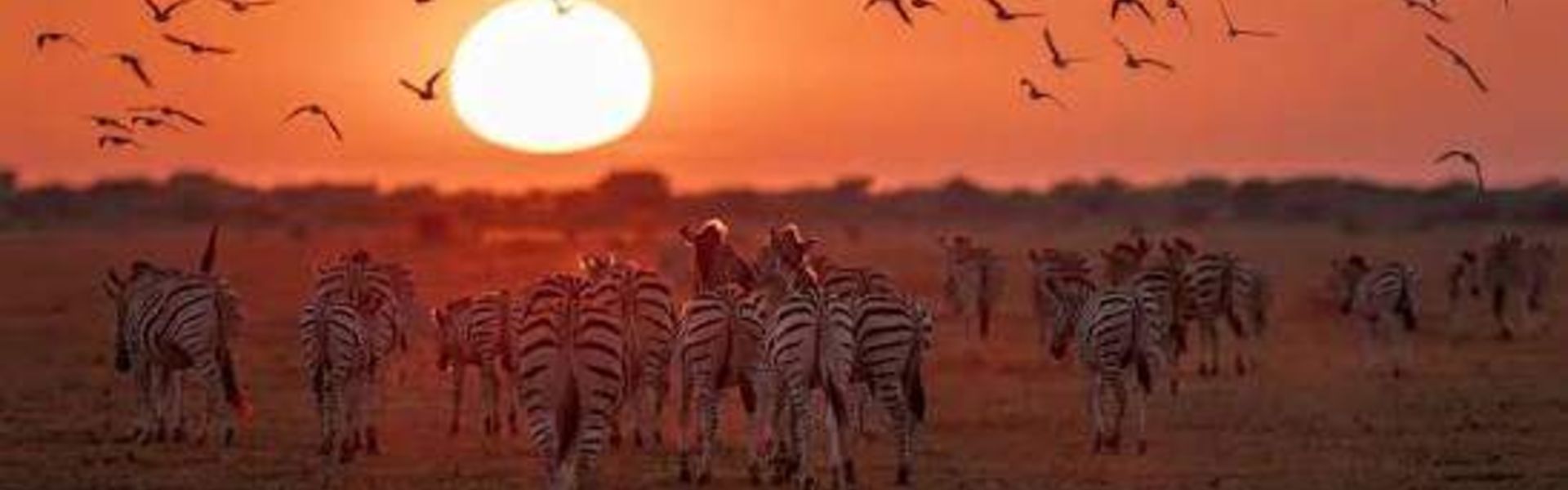
Nxai Pan hosts a wide variety of species. Large mammals include elephants, giraffes, zebras, wildebeest, kudu, springbok, impala, and ostriches. Predators such as lions, leopards, cheetahs, Cape wild dogs, jackals, hyenas, bat-eared foxes, aardwolves, and honey badgers roam the park. Seasonal migrations of zebras and wildebeest are a highlight, drawing predators and creating dynamic wildlife interactions. Birdlife is abundant, with raptors, bustards, and waterfowl thriving during the wet season.
Surrounding Areas
Nxai Pan lies just north of the Maun–Nata main road, making it accessible for travelers heading to or from the Okavango Delta. Its proximity to Makgadikgadi Pans National Park allows visitors to combine experiences of salt flats, baobab islands, and wildlife migrations.
Activities
Game drives – Explore the pan and surrounding grasslands to see elephants, antelope, and predators.
Birdwatching – Spot ostriches, raptors, and migratory waterfowl during the wet season.
Photography – Capture dramatic salt flats, baobabs, and wildlife migrations.
Cultural exploration – Visit Baines’ Baobabs, immortalized in 19th-century paintings.
Camping – Stay at designated sites for an immersive wilderness experience.
Scenic drives – Travel through fossil pans and savanna landscapes, experiencing seasonal contrasts.
Best Time to Visit
Wet season (November–April) – The park is at its best, with abundant game, zebra migrations, and lush scenery. Roads may be difficult after heavy rains.
Dry season (May–September) – Easier access, but wildlife is more dispersed; good for exploring baobabs and salt flats.
Transitional months (October and April) – Offer moderate weather and a mix of dry landscapes and wildlife activity.
Visitor Tips
Use a 4x4 vehicle – Roads can be sandy or muddy depending on the season.
Plan for remoteness – Facilities are limited; carry food, water, and fuel.
Respect conservation rules – Stick to designated tracks to protect fragile habitats.
Pack for climate extremes – Summers are hot, winters can be cold at night; layered clothing is essential.
Bring binoculars and cameras – Essential for birding and capturing landscapes.
Combine destinations – Pair Nxai Pan with Makgadikgadi Pans or the Okavango Delta for a fuller safari experience.