
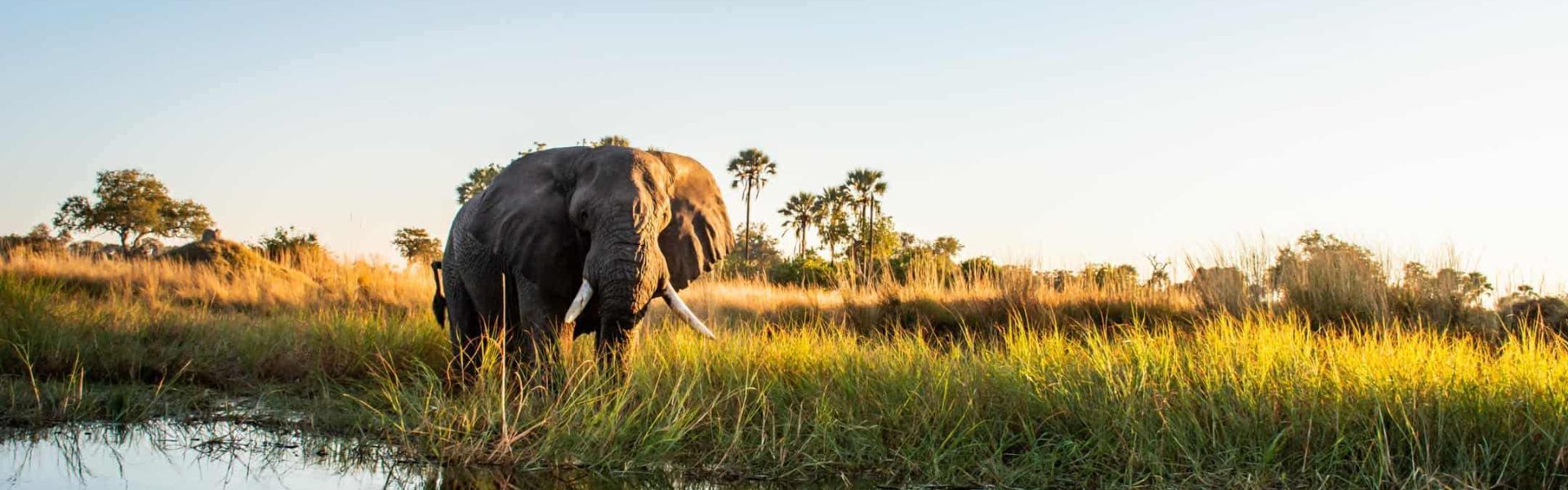

Ultimate Guide to Moremi Safari
Find Moremi Safari Tours from Verified Botswana Operators
The Ultimate Guide to Moremi Safari
Magnificent Botswana Game Reserves
Moremi Game Reserve, proclaimed in 1963, is one of Botswana’s most celebrated protected areas. Covering nearly 5,000 km² on the eastern side of the Okavango Delta, it was named after Chief Moremi III of the BaTawana tribe. Unlike national parks, Moremi was designated as a game reserve, allowing the BaSarwa (Bushmen) who traditionally lived there to remain. The reserve combines permanent waterways with dry savanna, creating striking contrasts and diverse habitats. Prominent features include Chiefs Island and the Moremi Tongue, which provide some of the best wildlife viewing in Africa.
History
Moremi was established under the leadership of Elizabeth Pulane Moremi, widow of Chief Moremi III, who sought to protect wildlife from overhunting. Initially proclaimed in 1963, the reserve expanded in the 1970s to include the Chief’s Royal Hunting Grounds. This foresight preserved one of Africa’s richest ecosystems. Today, Moremi is part of the Kavango–Zambezi Transfrontier Conservation Area, linking it with neighboring reserves and parks across five countries.
Ecology
Moremi’s habitats are remarkably diverse, ranging from mopane woodlands and acacia forests to floodplains, lagoons, and savanna grasslands. Only about 30% of the reserve is mainland, with the rest lying within the Okavango Delta. This mosaic of ecosystems supports both aquatic and terrestrial species, making Moremi a hotspot for biodiversity. Seasonal pans dry up in winter, concentrating wildlife around permanent water sources, while summer rains rejuvenate the landscape.
Wildlife
Moremi is home to nearly 500 bird species, from waterfowl to forest dwellers. Mammals include lion, leopard, elephant, buffalo, black rhino, hippo, giraffe, zebra, wildebeest, cheetah, hyena, jackal, warthog, impala, and lechwe. The reserve is particularly significant for African wild dogs, with a long-running research project since 1989 monitoring their populations. Visitors often see collared wild dogs as part of ongoing conservation efforts. Predators thrive here, supported by abundant prey species, making Moremi one of the best places in Africa for big game viewing.
Surrounding Areas
To the northeast, Moremi borders Chobe National Park, creating a vast conservation landscape. The reserve’s location within the Okavango Delta makes it accessible by light aircraft and helicopter transfers, with lodges often having their own airstrips. Its remoteness ensures a low-impact tourism model, with limited lodges inside the reserve and only four designated camping areas: South Gate, Third Bridge, Xakanaxa, and Khwai.
Activities
Game drives – Explore diverse habitats to spot elephants, predators, and antelope.
Mokoro excursions – Glide through lagoons in traditional dug-out canoes (now often fiberglass), guided by local polers.
Walking safaris – Experience the bush on foot, learning about plants, tracks, and smaller wildlife.
Birdwatching – With nearly 500 species, Moremi is a paradise for bird enthusiasts.
Photography – Capture dramatic contrasts of water and savanna, plus close encounters with wildlife.
Helicopter flights – View the delta and wildlife migrations from above.
Camping – Stay at designated sites for an immersive wilderness experience.
Best Time to Visit
Dry season (July–October) – Peak game viewing, as animals concentrate around permanent water sources.
Hot season (October–November) – Wildlife remains abundant, but temperatures can be extreme before rains arrive.
Wet season (December–April) – Lush landscapes, bird migrations, and fewer tourists, though wildlife disperses.
Transitional months (May–June) – Cooler weather and good wildlife visibility, offering a balance of comfort and sightings.
Visitor Tips
Take malaria precautions – Mosquitoes are prevalent; prophylaxis is strongly recommended.
Use proper vehicles – Roads can be sandy or waterlogged; a snorkel-equipped 4x4 is essential for crossings.
Plan for remoteness – Facilities are limited; carry recovery kits and know how to use them.
Book lodges and campsites early – Limited accommodation ensures exclusivity but fills quickly.
Respect conservation rules – Poaching remains a threat; visitors must support anti-poaching efforts by following guidelines.
Bring binoculars and cameras – Essential for birding and capturing wildlife.
Combine destinations – Moremi pairs well with Chobe National Park and other Okavango Delta lodges.