

Ultimate Guide to Makgadikgadi Safari
Find Makgadikgadi Safari Tours from Verified Botswana Operators
The Ultimate Guide to Makgadikgadi Safari
Magnificent Botswana Game Reserves
The Makgadikgadi Pan, located in northeastern Botswana, is one of the largest salt flats in the world, covering about 16,000 km² in the Kalahari Basin. It is the remnant of the ancient Lake Makgadikgadi, which once covered an area larger than Switzerland but dried up tens of thousands of years ago. Today, the pans are vast, shimmering expanses of salty clay crust, seasonally transformed into wetlands that sustain wildlife. Archaeological evidence suggests that early humans lived here, with stone tools predating Homo sapiens, and genetic studies indicate that modern humans may have first evolved in this fertile region around 200,000 years ago.
Geography
Makgadikgadi lies southeast of the Okavango Delta, surrounded by the Kalahari Desert. It is not a single pan but a collection of many, the largest being Sua (Sowa), Ntwetwe, and Nxai Pans. Sua Pan, the lowest point at 890 m elevation, is the most prominent. The pans are dry and salty most of the year, but seasonal rains transform them into shallow lakes and grasslands. The Nata River and the Boteti River provide water, sustaining wildlife and migratory birds. Relic shorelines from the ancient lake are visible on ridges, marking its former size.
Geology
The pans share geological features with Victoria Falls and the broader Kalahari Basin. As Lake Makgadikgadi shrank, it left behind relic shorelines at elevations of 940 m and 920 m, visible on Gidikwe Ridge. The basin likely formed through gentle crustal down-warping and tectonic activity, though no major faults have been identified. Igneous rock “islands” such as Kubu Island and Kukome Island rise from the salt flats, dotted with ancient baobab trees and protected as national monuments.
Flora
Plant life is sparse within the pans, limited to blue-green algae. However, the fringes support salt marshes, grasslands, and shrubby savanna. Iconic baobab trees serve as landmarks, with some historically used by explorers as meeting points or even post offices. Seasonal rains bring carpets of grasses and wildflowers, briefly transforming the landscape.
Wildlife
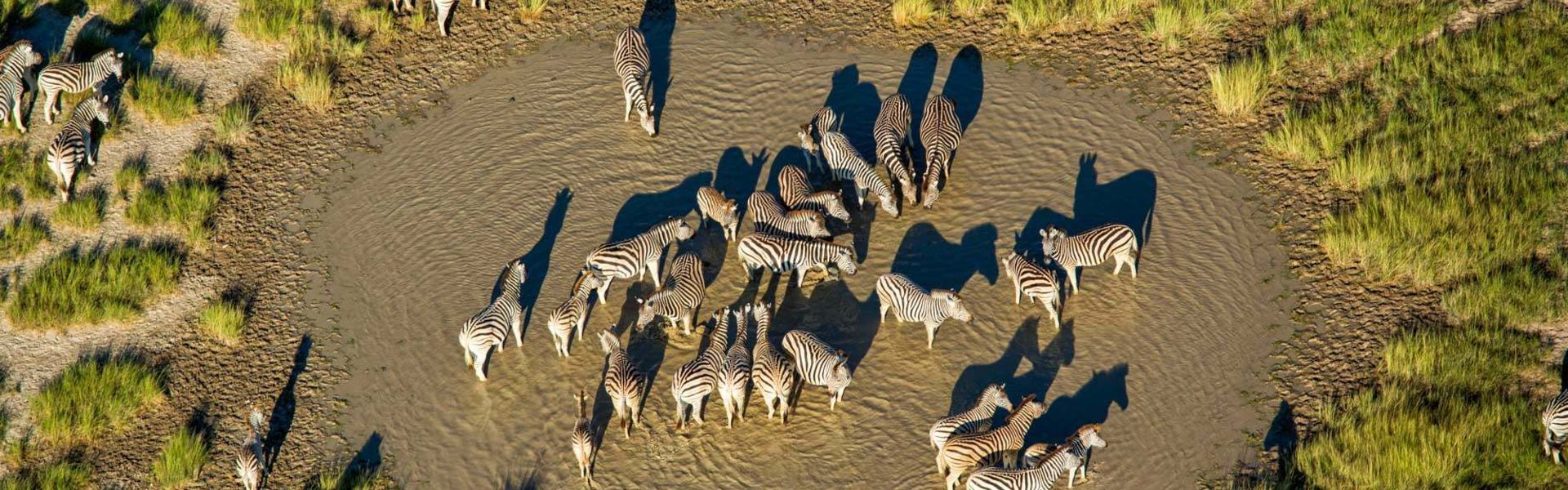
During the dry season, the pans are inhospitable, with only ostriches and plovers present. After rains, however, the pans become a refuge for migrating wildebeest and zebras, forming one of Africa’s largest zebra populations. Predators such as lions and cheetahs follow the herds. The pans are also one of only two breeding sites for greater flamingos in southern Africa, with colonies forming on Sua Pan. Other birds include pelicans, ducks, geese, and waders. Reptiles such as tortoises, rock monitors, snakes, and lizards thrive on the fringes, including the endemic Makgadikgadi spiny agama. The saltwater supports crustaceans like Moina belli, vital for flamingo diets.
Surrounding Areas
Makgadikgadi is accessible from towns such as Nata, Maun, and Gweta, with nearby reserves like Nxai Pan National Park and the Makgadikgadi Pans Game Reserve offering wildlife viewing. The Nata Bird Sanctuary is a prime spot for flamingo and pelican sightings. Cultural heritage sites include baobabs painted by 19th-century artist Thomas Baines and archaeological finds of prehistoric tools.
Activities
Wildlife viewing – Witness zebra and wildebeest migrations, predators, and flamingo colonies after rains.
Birdwatching – Spot pelicans, flamingos, ostriches, and migratory waterfowl across the pans and sanctuaries.
Photography – Capture surreal salt flats, baobab islands, and dramatic wildlife scenes.
Cultural exploration – Visit Kubu Island’s baobabs and historic landmarks tied to explorers.
Camping and stargazing – Experience the vastness of the pans under clear desert skies.
Scenic drives – Explore Nxai Pan and Makgadikgadi reserves, combining landscapes and wildlife.
Best Time to Visit
Wet season (November–April) – Best for wildlife migrations, flamingo breeding, and lush scenery.
Dry season (May–October) – Ideal for exploring salt flats and baobab islands, though wildlife is sparse.
Transitional months (April and November) – Offer moderate weather and a mix of dry landscapes and wildlife activity.
Visitor Tips
Plan for remoteness – Facilities are limited; carry food, water, and fuel.
Use a 4x4 vehicle – Roads can be sandy or muddy depending on the season.
Respect conservation rules – Avoid disturbing flamingo colonies and stick to designated tracks.
Pack for climate extremes – Summers are hot, winters can be cold at night; layered clothing is essential.
Bring binoculars and cameras – Essential for birding and capturing landscapes.
Support local communities – Tourism helps sustain livelihoods; consider visiting nearby villages and buying crafts.