
Ultimate Guide to Iriqui Safari
Find Iriqui Safari Tours from Verified Morocco Operators
The Ultimate Guide to Iriqui Safari
Magnificent Morocco National Parks
Iriqui National Park, established in 1994, is a desert national park in southern Morocco covering 123,000 hectares. It lies between the Draa River and the southern foothills of the Anti-Atlas mountains, within the provinces of Zagora and Tata. The park was created to protect desert ecosystems and rehabilitate the seasonal wetland of Lake Iriqui, making it an important ecological refuge in Morocco’s Saharan zone.
History
The park was proclaimed in 1994 as part of Morocco’s national conservation strategy, with a focus on restoring Lake Iriqui as a wetland habitat for migratory birds. Historically, the area was used for grazing by nomadic communities, and the park’s creation aimed to balance ecological protection with traditional livelihoods. Its establishment also aligned with Morocco’s broader efforts to promote eco-tourism and sustainable development in the Sahara.
Ecology
Iriqui National Park is characterized by desert landscapes, including dunes, stony plains, and acacia savanna. Vegetation is sparse but adapted to arid conditions, with acacia woodlands, tamarix shrubs on dunes, and desert grasses forming the main plant cover. During wet periods, Lake Iriqui fills with water, transforming into a temporary wetland that supports migratory bird populations.
Wildlife
The park hosts a variety of desert-adapted species:
Birds: Flamingos, coots, geese, and other migratory waterbirds use Lake Iriqui as a stopover and wintering site.
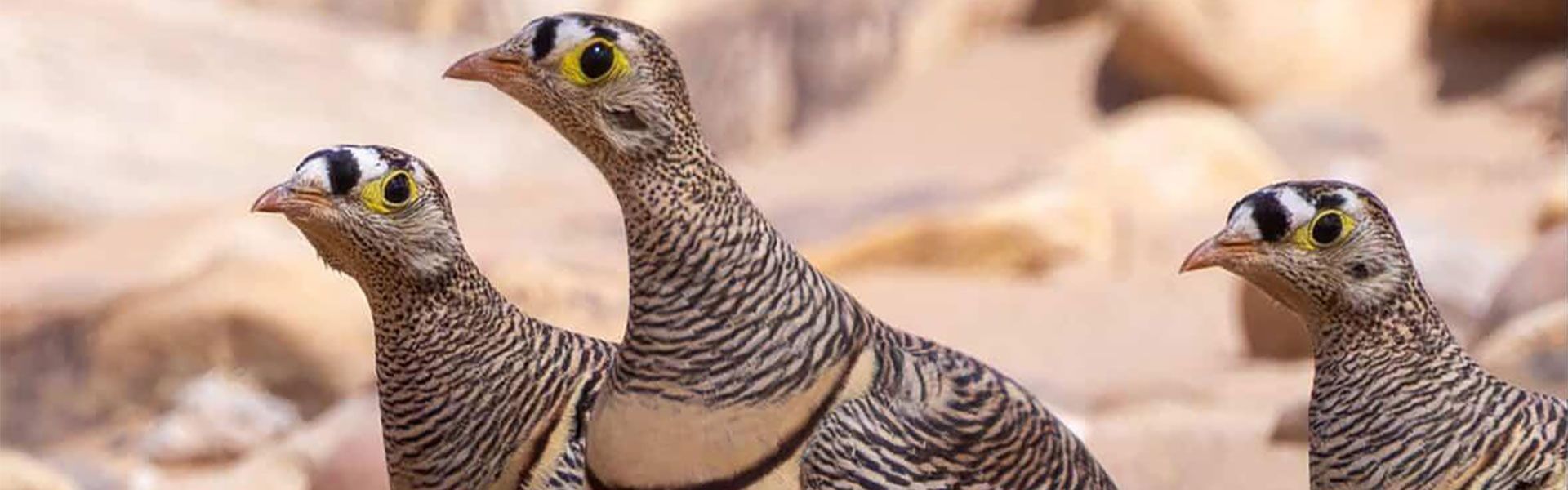
Large Fauna: Houbara bustards, North African ostriches, Barbary sheep, dorcas gazelles, and oryxes.
Predators: Striped hyenas roam the desert plains.
Reptiles: Lizards, horned vipers, monitor lizards, chameleons, geckos, and numerous snake species thrive in the hot, dry environment.
Surrounding Areas
The park lies in a remote Saharan region between Zagora and Tata. It is part of Morocco’s southern desert tourism circuit, often combined with visits to the Draa Valley, Anti-Atlas mountains, and desert oases. The area is sparsely populated, with a few families settled inside the park who rely on grazing.
Activities
Birdwatching: Seasonal wetlands attract flamingos and other migratory birds.
Wildlife Viewing: Spot desert species such as gazelles, ostriches, and reptiles.
Hiking & Desert Tours: Explore dunes, acacia savannas, and rocky landscapes.
Cultural Encounters: Learn about nomadic traditions and grazing practices in the region.
Photography: Capture dramatic desert scenery, wildlife, and seasonal wetlands.
Eco-Tourism: The park is part of Morocco’s strategy to promote sustainable tourism in Saharan areas.
Best Time to Visit
Winter (November–February): Cooler temperatures and presence of migratory birds at Lake Iriqui.
Spring (March–May): Mild weather, with occasional rains that may fill the lake.
Summer (June–August): Very hot, less suitable for travel, but desert landscapes are striking.
Autumn (September–October): Transitional season with moderate temperatures and fewer visitors.
Visitor Tips
Access: Remote location; best reached via Zagora or Tata with 4x4 vehicles.
Supplies: Carry water, food, and fuel-facilities are minimal.
Clothing: Light wear for daytime, warm layers for cold desert nights, and sun protection.
Safety: Be cautious of reptiles, respect wildlife, and travel with guides.
Community Support: Engage with local families and eco-tourism initiatives to support sustainable development.