
Ultimate Guide to Khenifiss Safari
Find Khenifiss Safari Tours from Verified Morocco Operators
The Ultimate Guide to Khenifiss Safari
Magnificent Morocco National Parks
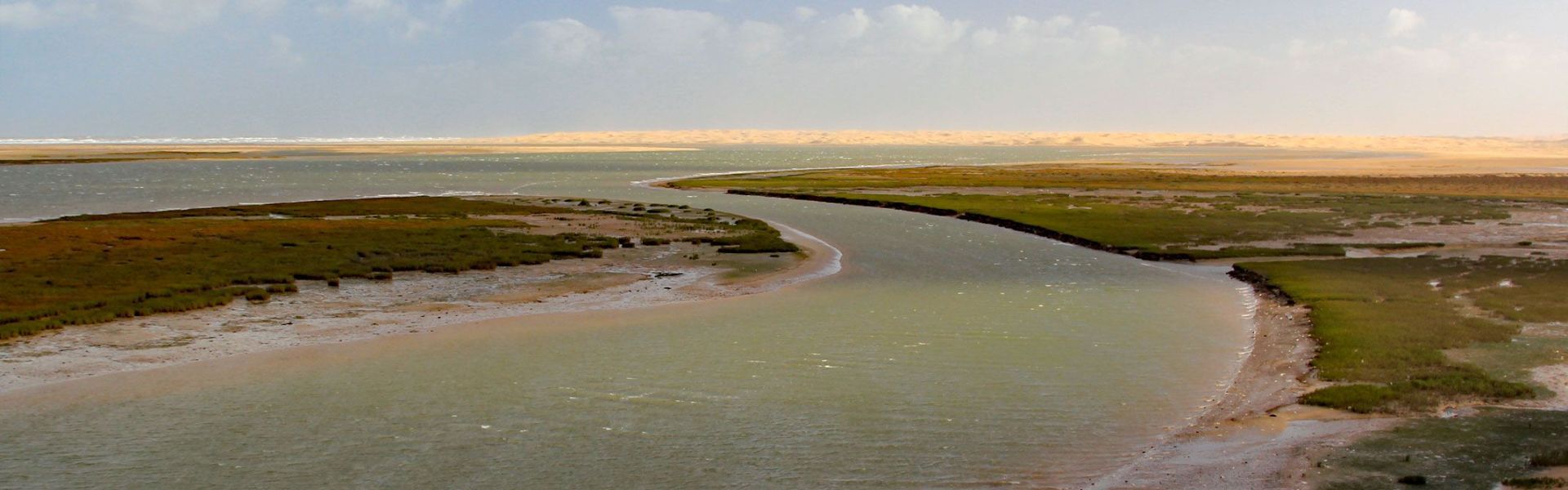
Khenifiss National Park (French: Parc National Khenifiss) is a protected area in southwestern Morocco, located near Akhfenir on the Atlantic coast in the Laâyoune-Sakia El Hamra region. Established in 2006, the park spans 1,850 km² (710 mi²) and was created to safeguard desert, wetland, and coastal dune ecosystems. It is best known for the Khenifiss Lagoon, the largest lagoon on Morocco’s Atlantic coast, which serves as a vital habitat for migratory birds and marine life.
History
The site was first designated a natural reserve in 1960, later classified as a wetland of international importance in 1980, and transformed into a Permanent Biological Reserve in 1983. In 1998, it was added to the UNESCO World Heritage Tentative List under the “natural” category. Finally, on 26 September 2006, it was officially proclaimed a national park. The Moroccan government has since emphasized its potential as a major ecotourism destination, combining conservation with sustainable development.
Ecology
The park’s geography includes three main zones:
Coastal Lagoon: The Khenifiss Lagoon stretches along the Atlantic coast, providing critical feeding and breeding grounds for waterbirds.
Desert Interior: Inland areas feature sabkhas (salt flats), dunes, and limestone plateaus typical of Saharan landscapes.
Dune Systems: Coastal dunes protect the lagoon and host specialized vegetation adapted to arid conditions.
Vegetation includes halophytic plants in salt flats, desert shrubs, and dune grasses. The lagoon’s productivity supports rich marine and bird life.
Wildlife
Birds: The lagoon hosts permanent populations of ruddy shelducks, marbled ducks, and Audouin’s gulls. Each winter, about 20,000 migratory birds arrive, including flamingos, coots, and waders. BirdLife International has designated the park as an Important Bird Area (IBA).
Marine Life: The lagoon and coastal waters support fish, crustaceans, and mollusks, forming the basis of the food chain for birds and local fisheries.
Terrestrial Fauna: The desert interior shelters reptiles, small mammals, and desert-adapted species, though the park’s primary conservation focus is on avian and wetland biodiversity.
Surrounding Areas
Khenifiss lies between Tan-Tan to the north and Tarfaya to the south, with National Route 1 passing through the park. Its location near the Western Sahara border makes it part of Morocco’s southern coastal tourism circuit. The nearby town of Akhfenir serves as a gateway for visitors.
Activities
Birdwatching: Observe wintering populations of flamingos, ducks, and gulls at the lagoon.
Photography: Capture dramatic coastal dunes, desert plateaus, and flocks of migratory birds.
Eco-Tours: Guided visits highlight the lagoon’s ecological importance and desert landscapes.
Hiking: Explore dune systems and limestone plateaus.
Cultural Visits: Combine park visits with nearby towns like Tarfaya, rich in Saharan heritage.
Marine Excursions: Boat trips in the lagoon to view bird colonies and coastal scenery.
Best Time to Visit
Winter (November–February): Peak bird migration, with thousands of waterbirds present.
Spring (March–May): Mild weather, blooming desert vegetation, and active birdlife.
Summer (June–August): Hot inland, but cooler coastal conditions; fewer migratory birds.
Autumn (September–October): Transitional season with moderate temperatures and quieter tourism.
Visitor Tips
Access: Reachable via National Route 1; nearest towns are Akhfenir, Tan-Tan, and Tarfaya.
Vehicles: Standard cars can access main roads, but 4x4s are recommended for desert tracks.
Supplies: Carry water, food, and essentials, as facilities inside the park are limited.
Clothing: Light wear for daytime, warm layers for evenings, and sun protection.
Safety: Respect wildlife, especially nesting birds, and avoid disturbing sensitive dune habitats.
Community Support: Engage with local eco-tourism initiatives to support conservation and regional development.