

Ultimate Guide to Kibale Safari
Find Kibale Safari Tours from Verified Uganda Operators
The Ultimate Guide to Kibale Safari
Kibale SafariKibale National Park, located in western Uganda, is one of Africa’s most important rainforest reserves. Covering 766 km² (296 sq mi), the park protects vast tracts of moist evergreen forest and a mosaic of landscapes ranging from lowland to montane habitats. Elevations vary between 1,100 m and 1,600 m, making Kibale one of the last remaining expanses in East Africa to host both lowland and montane forest ecosystems. It is especially notable for preserving the last significant stretch of pre-montane forest in the region.
Gazetted in 1932 and formally established as a national park in 1993, Kibale was created to safeguard a forest that had previously been logged. Today, it forms a continuous wildlife corridor with Queen Elizabeth National Park, creating a 180 km (110 mi) stretch of protected land that supports elephants, primates, and countless other species. Kibale is a premier ecotourism destination, famous for its habituated chimpanzees and rich primate diversity. It also hosts the Makerere University Biological Field Station, a hub for scientific research.
Local Communities & Human Impact
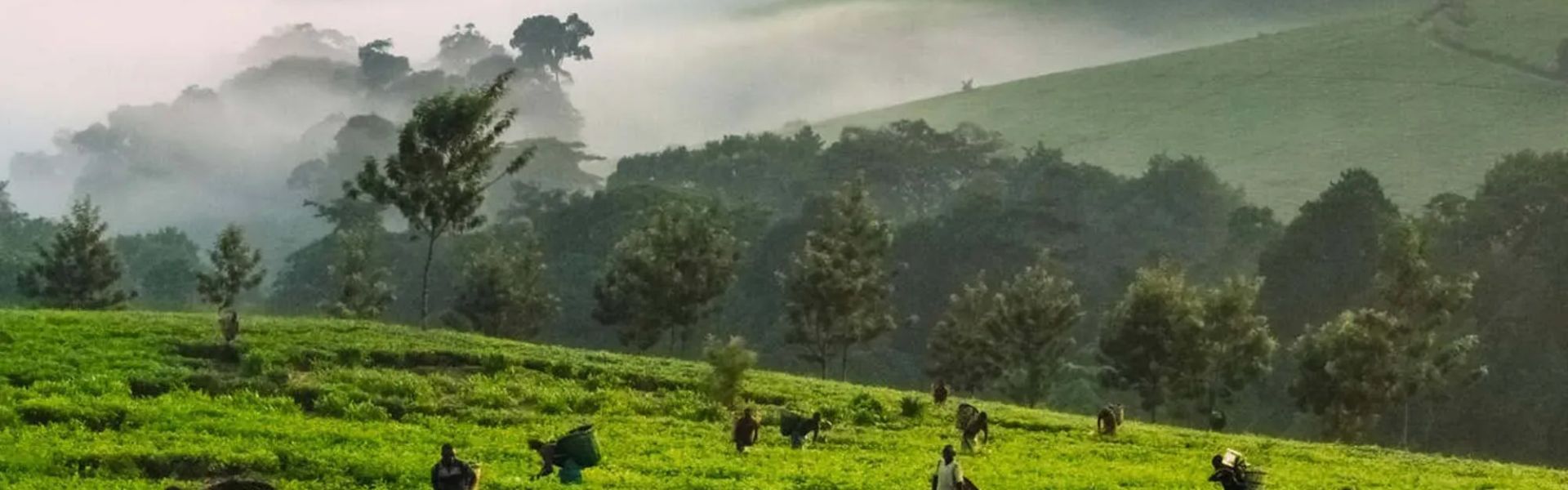
Two major tribes, the Batooro and Bakiga, live around Kibale and rely on the park for food, fuel, and resources. With support from the Uganda Wildlife Authority, some community members benefit from tourism revenue and employment opportunities. However, population growth has been dramatic-sevenfold in the last century-driven by fertile soils and economic opportunities linked to tourism.
This expansion has led to:
Conversion of land into plantations and farmland.
Increased demand for firewood, straining forest resources.
Encroachment and deforestation outside park boundaries.
Balancing conservation with community needs remains one of Kibale’s greatest challenges.
Biodiversity
Kibale is often referred to as the “Primate Capital of the World” due to its extraordinary diversity and density of primates.
Primates
Chimpanzees: Large populations of habituated communities, making Kibale one of the best places globally to track them.
Endangered Species: Uganda red colobus (Procolobus tephrosceles) and red colobus monkeys.
Rare Species: L’Hoest’s monkey (Allochrocebus lhoesti), considered vulnerable.
Other Primates: Uganda mangabey, mantled guereza (black-and-white colobus), blue monkey, and more.
In total, 13 primate species inhabit the park, with studies showing how logging and agricultural encroachment affect their distribution. Some species decline in disturbed areas, while others adapt more easily.
Other Mammals
Elephants migrating between Kibale and Queen Elizabeth National Park.
Antelopes such as duikers, bushbucks, sitatungas, and waterbucks.
Larger mammals including buffalo, bushpigs, warthogs, and giant forest hogs.
Carnivores like leopards, servals, African golden cats, mongooses, and otters. Lions occasionally visit the park.
Birdlife
Kibale hosts over 325 bird species, including:
Olive long-tailed cuckoo
Western tinkerbird
African and green-breasted pittas
Grey parrot
Kibale ground thrush (Geokichla cameronensis kibalensis), endemic to the park
Flora
The park’s forests contain approximately 229 tree species.
Endangered Timber Trees: Cordia millenii, Entandrophragma angolense, and Lovoa swynnertonii.
Understory Plants: Shade-tolerant shrubs and herbs such as Palisota schweinfurthii and Pollia condensata, alongside ferns and broad-leaf grasses.
Forest Management & Regeneration
Scientific studies in Kibale have explored how forests recover from human disturbance.
Fire Exclusion: Areas protected from fire show higher tree diversity and greater abundance of animal-dispersed species, highlighting the role of wildlife in regeneration.
Plantations: Exotic pine and cypress plantations surprisingly support natural regeneration of indigenous trees, aided by seed-dispersing animals like chimpanzees, monkeys, and duikers.
These findings suggest that careful management—limiting fire and encouraging natural succession—can restore degraded lands.
Wild Coffee Project
Between 1999 and 2002, Kibale was the site of an ambitious conservation-linked coffee initiative. Native robusta coffee was cultivated under shade, with hopes of marketing it as a premium brand similar to Central American shade-grown coffee.
Funding: Supported by USAID, Ford Foundation, and World Bank’s Global Environment Facility.
Goals: Generate revenue for conservation while promoting sustainable agriculture.
Challenges: Despite organic certification and infrastructure, robusta coffee struggled to gain traction in premium markets dominated by arabica. Marketing costs proved prohibitive, and demand never materialized.
Though the project faltered, it highlighted the complexities of linking conservation with commercial ventures.
Activities
Chimpanzee Tracking: The park’s signature experience, offering close encounters with habituated chimpanzees.
Primate Walks: Spot colobus, mangabeys, and other monkeys.
Birdwatching: Seek out rare species like pittas and the endemic Kibale ground thrush.
Nature Walks: Explore diverse forest landscapes, waterfalls, and grasslands.
Research Visits: Engage with Makerere University Biological Field Station for educational tours.
Best Time to Visit
Dry Seasons (December–February, June–August): Best for trekking and wildlife viewing, with easier access and clearer skies.
Wet Seasons (March–May, September–November): Forests are lush and atmospheric, though trails can be muddy and more challenging.
Visitor Tips
Book chimpanzee tracking permits in advance.
Carry sturdy boots, rain gear, and insect repellent.
Travel with guides for safety and deeper insights.
Respect conservation rules-Kibale’s ecosystems are fragile and vital for global biodiversity.