

Ultimate Guide to Mount Elgon Safari
Find Mount Elgon Safari Tours from Verified Uganda Operators
The Ultimate Guide to Mount Elgon Safari
Mount Elgon SafariMount Elgon National Park straddles the border of Uganda and Kenya, protecting one of East Africa’s most striking volcanic landscapes. Covering 1,279 km² (494 sq mi), the park is divided between Uganda (1,110 km²) and Kenya (169 km²). It is named after Mount Elgon, an extinct shield volcano whose vast caldera and rugged slopes dominate the region. The park was gazetted in Kenya in 1968 and in Uganda in 1992, making it a transboundary conservation area of ecological and cultural importance.
Geography & Location
Mount Elgon lies about 140 km northeast of Lake Victoria. Its slopes serve as a crucial water catchment for:
Nzoia River: Flowing into Lake Victoria.
Turkwel/Suam River: Flowing into Lake Turkana.
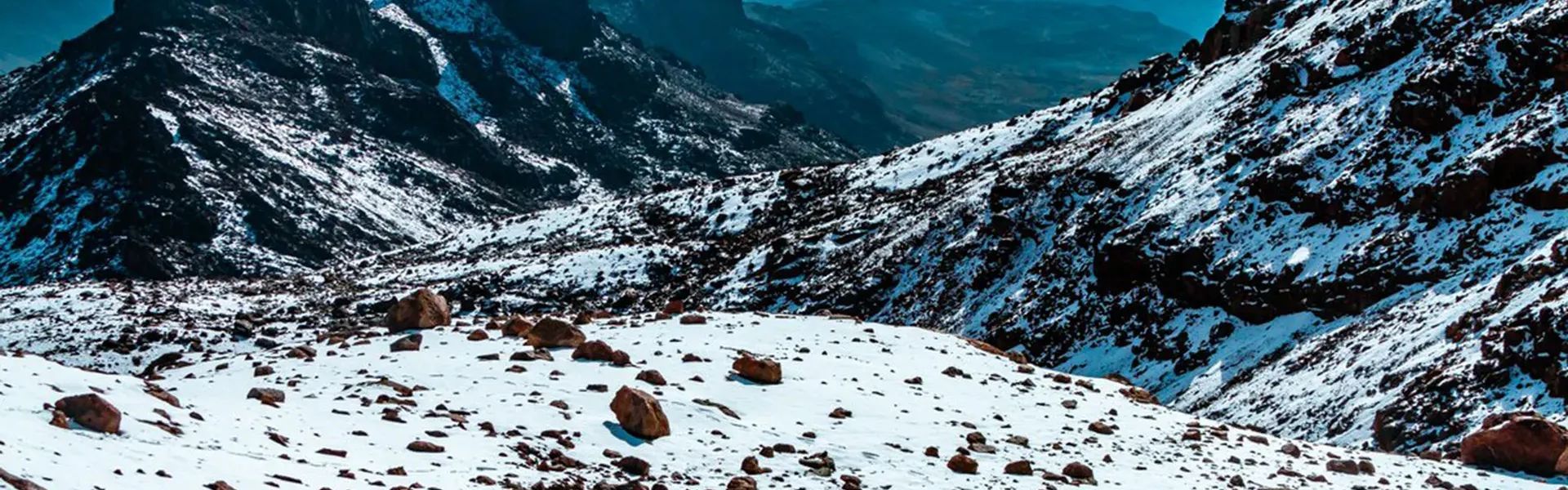
The park’s terrain includes cliffs, gorges, mesas, waterfalls, hot springs, and expansive calderas. On the Kenyan side, the highest peak is Koitoboss (4,155 m), which can be reached in a two-hour hike from the road’s end.
Climate
The climate ranges from moist to moderately dry, with annual rainfall exceeding 1,270 mm.
Dry Seasons: June–August and December–March.
Rainfall Peaks: Though rain can fall year-round, October is particularly wet.
Vegetation
Mount Elgon’s slopes host diverse vegetation zones that change with altitude:
Lower Slopes: Montane forest with Elgon olive (Olea capensis) and Aningeria adolfi-friederici.
Mid-Elevations: Afrocarpus forests and bamboo (Yushania alpina).
Higher Zones: Hagenia abyssinica woodlands.
Alpine Moorlands: Heaths (Erica arborea), tussock grasses, herbs like Alchemilla and Helichrysum, giant lobelias, and groundsels (Dendrosenecio elgonensis).
The park’s botanical diversity includes orchids, African juniper, elderberry, and rare species such as Ranunculus keniensis and Romulea keniensis.
Wildlife
Mammals
Elephants and buffalo roam the lower slopes.
Antelopes and duikers inhabit forest edges.
Primates include black-and-white colobus, blue monkeys, and red-tailed monkeys.
Predators such as leopards and hyenas are present.
Birds
At least 144 bird species thrive here, including:
Jackson’s spurfowl
Hartlaub’s turaco
Tacazze sunbird
Eastern bronze-naped pigeon
The endangered lammergeier
Invertebrates
Maathai’s longleg dragonfly, discovered in 2005 and named after Nobel laureate Wangari Maathai.
Half of Uganda’s butterfly species have been recorded in the park.
Conservation & History
Traditionally, Mount Elgon’s upper slopes were managed under indigenous rules that restricted overuse of communal resources. Colonial administration later gazetted the Ugandan side as a forest reserve in 1929, upgraded to Crown Forest in 1940, and Central Forest Reserve in 1951.
Key milestones:
1983: Ugandan government allowed settlement of the Benet-Ndorobo group on 6,000 hectares, later expanded illegally.
1994: Converted into a national park, though timber harvesting persisted.
Kenya: Gazetted its side in 1968.
Management challenges have included encroachment, civil wars, and balancing community needs with conservation.
Attractions
Mount Elgon offers diverse natural and cultural attractions:
Caves: Kitum, Chepnyali, and Mackingeny caves, where elephants and buffalo visit at night to lick salt from crystalline walls.
Endebess Bluff: Panoramic views of escarpments, mesas, and rivers.
Hot Springs: Bubbling at up to 48 °C in the volcanic crater.
Jackson’s Pool & Peak: A natural pool at 4,050 m beneath Jackson’s Peak (4,165 m), named after explorer Frederick Jackson.
Ancient Cave Paintings: Found near Budadiri trailhead.
Activities include hiking, cave exploration, birdwatching, primate viewing, camping, and photography.
Popular Culture
Mount Elgon’s caves have inspired literature and media:
Featured in Richard Preston’s The Hot Zone.
Believed to have inspired Henry Rider Haggard’s King Solomon’s Mines.
Best Time to Visit
Dry Seasons (June–August, December–March): Best for hiking and wildlife viewing.
Wet Seasons (April–May, September–November): Lush vegetation and dramatic landscapes, though trails may be slippery.
Visitor Tips
Carry waterproof gear and sturdy boots for cave and mountain hikes.
Guided tours are recommended for safety and deeper insights.
Combine Mount Elgon with visits to Lake Victoria, Sipi Falls, or Uganda’s eastern safari circuit.