
Ultimate Guide to Semuliki National Park Safari
Find Semuliki National Park Safari Tours from Verified Uganda Operators
The Ultimate Guide to Semuliki National Park Safari
Semuliki National Park SafariSemuliki National Park, located in Bwamba County of Bundibugyo District in western Uganda, is one of the country’s most unique protected areas. Established in October 1993, the park covers 219 km² (85 sq mi) and is the only lowland tropical rainforest in East Africa. Its position within the Albertine Rift Valley makes it a biodiversity hotspot, with extraordinary richness in flora and fauna. Semuliki is particularly renowned for its bird and butterfly diversity, hosting species that are otherwise typical of the Congo Basin forests. Managed by the Uganda Wildlife Authority, the park is a vital ecological bridge between Central and East Africa.
Geography & Climate
Semuliki lies along Uganda’s border with the Democratic Republic of the Congo, with the Rwenzori Mountains rising to the southeast and Lake Albert to the north. The park sits on flat to gently undulating terrain at elevations between 670 and 760 m, making it distinct from Uganda’s montane parks.
The climate is warm and humid, with average rainfall of 1,250 mm annually. Rain peaks occur between March–May and September–December, often causing seasonal flooding. Temperatures range from 18–30 °C, with relatively small daily variations. The park is bordered by the Semliki and Lamia Rivers, which provide water for wildlife and communities.
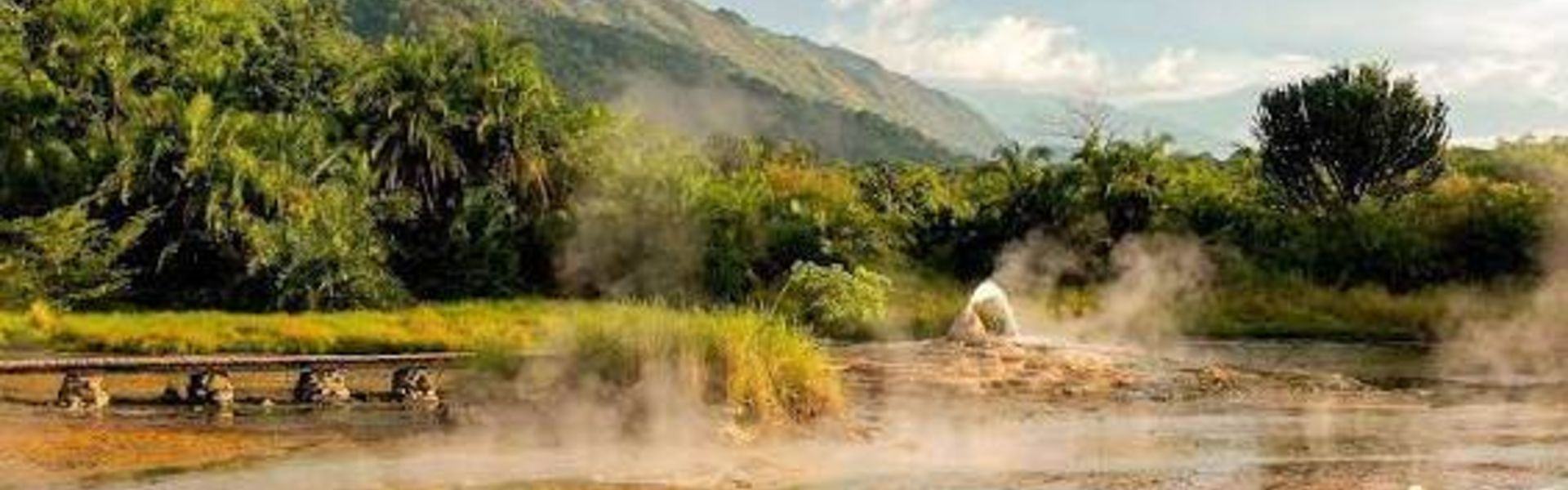
One of Semuliki’s most famous features is the Sempaya Hot Springs, located in a mineral-encrusted swamp. The Mumbuga spring forms a geyser-like fountain nearly 60 cm high, attracting shorebirds and serving as a natural salt lick for animals.
History
The area was first managed as a forest reserve in 1932 under colonial administration, later overseen by Uganda’s Forest Department. In 1993, it was upgraded to national park status to protect the rainforest as part of the Albertine Rift’s conservation network.
Semuliki’s history has also been shaped by civil unrest. Between 1997 and 2001, rebel activity in Bundibugyo District disrupted conservation and displaced local communities into camps. Since then, stability has returned, and conservation efforts have resumed with greater community involvement.
Flora & Fauna
Semuliki represents the easternmost extension of the Congo Basin forests, making its biodiversity distinct from other Ugandan parks. The vegetation is primarily medium-altitude moist evergreen and semi-deciduous forest, dominated by Uganda ironwood (Cynometra alexandri), alongside swamp forest communities.
Birds: Over 400 species, including 216 true forest birds. Rare species include Oberländer’s ground thrush, Sassi’s olive greenbul, and nine hornbill species.
Mammals: More than 60 species, such as buffalo, elephants, hippos, leopards, African civets, bush babies, and the pygmy scaly-tailed flying squirrel. Nine duiker species, including the bay duiker, are found here.
Primates: Eight species, including mona monkeys and baboons.
Butterflies: Nearly 460 species, making Semuliki one of Africa’s richest butterfly habitats.
Human Communities
The forest plays a vital socio-economic and cultural role for surrounding communities. Local people rely on it for fruits, vegetables, herbal medicines, and building materials. Population growth and declining agricultural productivity have increased dependence on the park’s resources.
Semuliki is also home to about 100 Batwa (Great Lakes Twa) people, an indigenous hunter-gatherer community. Tourism provides them with income, as visitors can learn about Batwa culture, history, and crafts. Past exclusionary policies created resentment and illegal activities, but since the 1990s, the Uganda Wildlife Authority has worked to involve communities in park planning, improving cooperation and conservation outcomes.
Activities
Birdwatching for rare Albertine Rift and Congo Basin species
Guided walks to the Sempaya Hot Springs
Forest hikes to spot primates and butterflies
River excursions along the Semliki and Lamia Rivers
Cultural tours with Batwa communities
Visitor Tips
Carry waterproof clothing and sturdy boots-flooding is common in wet seasons.
Travel with guides for safety and deeper ecological insights.
Bring binoculars and cameras for birding and butterfly photography.
Respect cultural sensitivities when visiting Batwa communities.