

Ultimate Guide to Kidepo Valley Safari
Find Kidepo Valley Safari Tours from Verified Uganda Operators
The Ultimate Guide to Kidepo Valley Safari
Kidepo Valley SafariKidepo Valley National Park, located in the remote Karamoja region of northeastern Uganda, is one of the country’s most dramatic and least explored wilderness areas. Covering 1,442 km² (557 sq mi), the park is a vast expanse of rugged savannah framed by the foothills of Mount Morungole. Its landscape is carved by two major river systems-the Kidepo and Narus rivers-which sustain wildlife and vegetation across contrasting valleys.
Location
The park lies near Karenga in Kaabong District, about 220 km northwest of Moroto and roughly 520 km northeast of Kampala, Uganda’s capital. Its northwestern boundary touches South Sudan, where it borders the Kidepo Game Reserve. This frontier location gives the park a sense of isolation and raw wilderness, far removed from the bustle of Uganda’s central tourism circuit.
History
The Ik and Ketebo (Mening) peoples were the original inhabitants of the Kidepo area, living here since the 1800s. In 1958, the British colonial government gazetted the land as a game reserve, evicting local communities to protect wildlife and control tsetse fly infestations. This forced relocation led to famine and hardship, later cited by anthropologists as an example of the dangers of excluding community needs in conservation planning.
In 1962, Uganda’s newly independent government upgraded the reserve to Kidepo Valley National Park. Over the years, the park’s facilities evolved: a luxury lodge project begun in 1967 was abandoned by 1978, only to be revived decades later and reopened in 2019 with 100 rooms. The park also gained international attention through the 1974 documentary The Wild and the Brave, which chronicled the handover of management from British warden Ian Ross to Ugandan warden Paul Ssali.
Geology & Landscape
Kidepo is defined by its two valleys:
Narus Valley: Situated at elevations between 910–1,200 m, this valley receives more rainfall and supports lush grasses and higher wildlife densities.
Kidepo Valley: Drier and less accessible, with sandy-clay soils and black chalky clays. Streams here are dotted with palms, and the area is more prone to poaching and insecurity.
A notable geological feature is Kanangorok Hot Spring, located near the South Sudan border. This tepid spring is the most permanent water source in the park.
Vegetation
The park’s vegetation varies with rainfall and soil types:
Narus Valley: Dominated by red oat grass, Guinea grass, and thatching grass. Trees include red thorn acacia, desert date, drumstick trees, sausage trees, and fan palms along watercourses.
Kidepo Valley: Features whistling thorn acacia, euphorbia candelabrum, monkey bread trees, and buffalo thorn.
This diversity creates habitats ranging from open savannah to wooded grasslands, supporting a wide range of wildlife.
Wildlife
Kidepo is home to over 77 mammal species and 476 bird species, making it one of Uganda’s richest reserves.
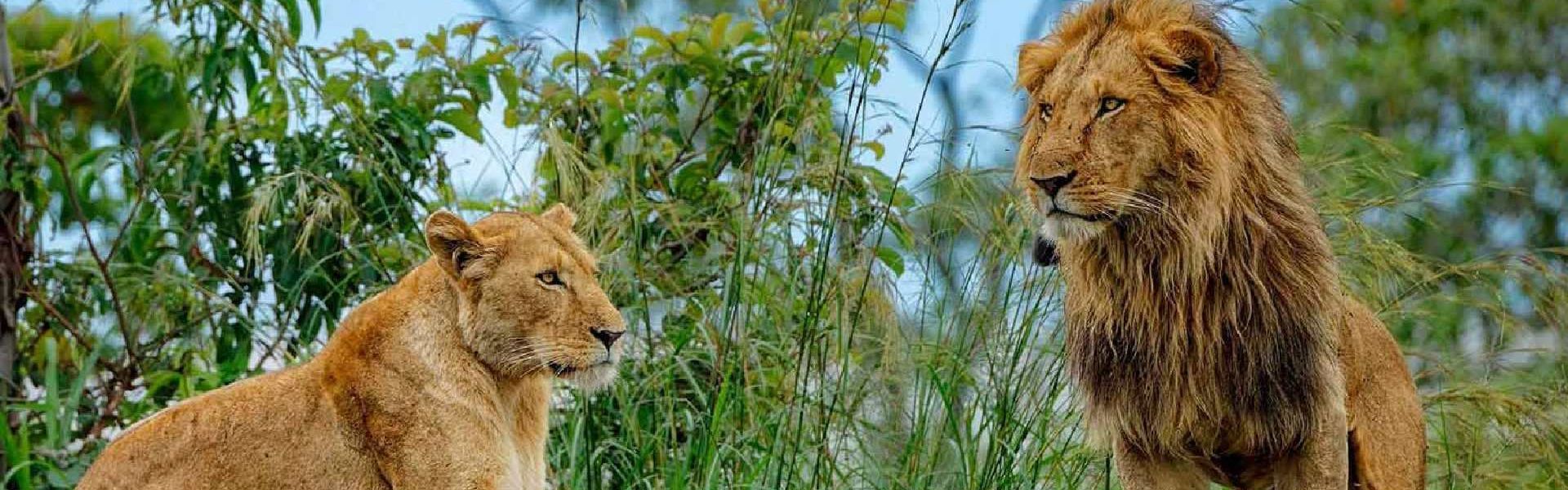
Large Mammals: Elephants, buffalo, giraffes, lions, leopards, and cheetahs.
Antelopes: Kob, reedbuck, bushbuck, and sitatunga.
Unique Species: Maneless zebras, Rothschild giraffes, and African golden cats.
Birdlife: Includes ostriches, secretary birds, and endemic species found only in northeastern Uganda.
Conservation Successes
Elephants: Once nearly wiped out by ivory poaching in the early 1900s, populations recovered through anti-poaching enforcement. By 2014, numbers were estimated between 407–552.
Giraffes: Rothschild giraffes declined to just three individuals by 1992. Translocations from Kenya and Murchison Falls restored the population, which grew to 89 by 2022.
Kob: Hundreds have been translocated from other reserves, bolstering populations.
Rhinos: Once extinct in Kidepo, four southern white rhinos were reintroduced in March 2026 from Ziwa Rhino Sanctuary, marking a historic step in restoration.
Park Management & Leadership
The park is managed by the Uganda Wildlife Authority (UWA). Road improvements have been supported by USAID, enhancing accessibility. Leadership has passed through several wardens since 1958, with notable figures including Tony Henley, Ian Ross, Paul Ssali, and more recently Samuel Amanya (2021).
Tourism & Finances
Tourism in Kidepo has grown steadily:
2009–2010: 2,100 visitors generated USh 294 million (~US$129,000).
2012–2013: 2,300 visitors brought in USh 466 million (~US$178,000).
Though visitor numbers remain modest compared to other Ugandan parks, Kidepo’s remoteness and raw beauty make it a prized destination for adventurous travelers.
Activities
Game Drives: Explore Narus Valley for elephants, lions, and herds of antelopes.
Birdwatching: Spot ostriches, secretary birds, and rare raptors.
Cultural Encounters: Learn about the Ik and Karamojong communities.
Hiking: Trek Mount Morungole for panoramic views.
Photography: Capture dramatic savannah landscapes and wildlife against rugged backdrops.
Best Time to Visit
Dry Season (September–March): Best for wildlife viewing, as animals congregate around water sources.
Wet Season (April–August): Valleys are greener and scenic, though roads may be challenging.
Visitor Tips
Travel with guides for safety, especially in remote areas.
Carry plenty of water, sun protection, and sturdy shoes.
Combine Kidepo with visits to Murchison Falls or Karamoja cultural tours for a fuller northern Uganda experience.