
Ultimate Guide to Otze Forest Safari
Find Otze Forest Safari Tours from Verified Uganda Operators
The Ultimate Guide to Otze Forest Safari
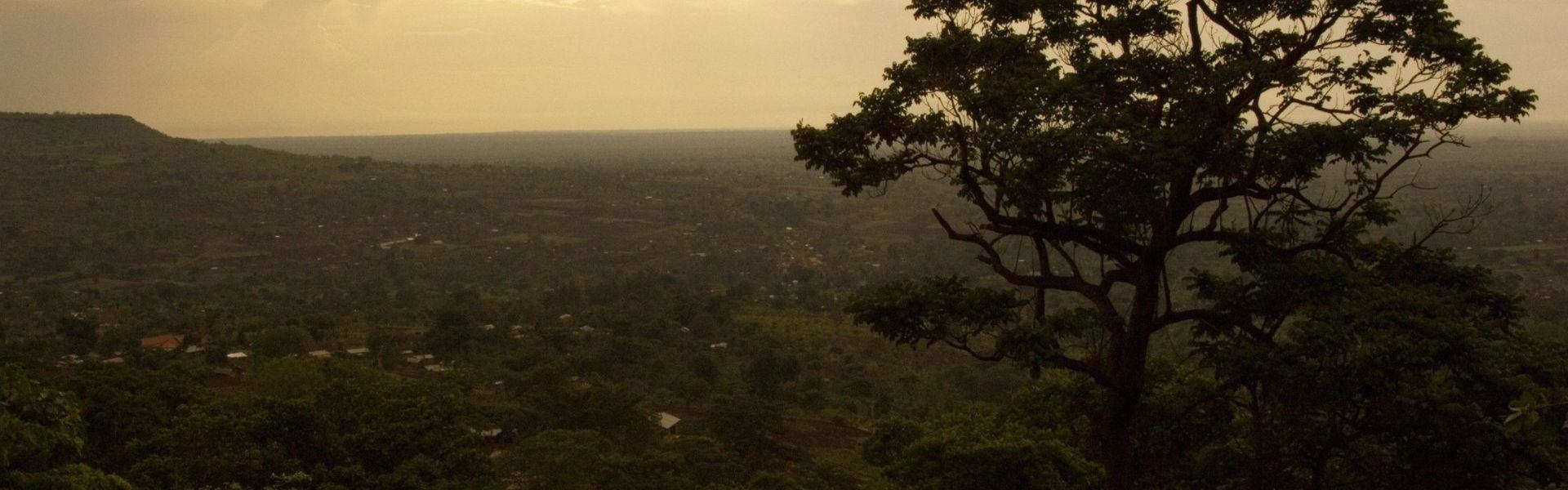
Otze Forest SafariOtze Forest Wildlife Sanctuary (also called Mount Otzi Forest Reserve) is a government-managed protected area in Moyo District, northwestern Uganda. Established in 1933 and gazetted in 1946, it spans about 188 km² and is recognized as an Important Bird and Biodiversity Area (IBA). Managed by the National Forestry Authority, it safeguards tropical forest, savanna, and shrubland habitats, supporting over 168 bird species, endemic mammals, and rare plants.
Overview
Otze Forest Wildlife Sanctuary lies in Uganda’s West Nile region, close to the border with South Sudan. It sits on an escarpment overlooking the confluence of the Achwa River and the White Nile, making it a vital water catchment area. The sanctuary was originally established during the colonial era to protect remnant forest ecosystems and water sources. Today, it is managed under IUCN Category IV, focusing on habitat and species conservation. Despite its modest size compared to Uganda’s national parks, Otze plays an outsized role in maintaining biodiversity corridors in northern Uganda.
Geography & Climate
The sanctuary covers elevations ranging from 760 to 1,667 meters above sea level, creating a mosaic of habitats. Its climate is tropical moist semi-deciduous, with seasonal rainfall that sustains both forest and savanna ecosystems. The land cover is approximately 63% forest, 32% savanna, and 3% shrubland, offering diverse ecological niches.
Flora
Otze Forest is dominated by tall emergent trees such as mahogany, mvule, and fig species, which provide food and shelter for primates and birds. The understory is dense with shrubs, ferns, and climbing plants, while epiphytic orchids and mosses cling to trunks and branches. At the forest edges, wooded savanna with Combretum and Terminalia species adds further diversity. In total, more than 261 tree and shrub species have been recorded.
Wildlife
Otze supports a surprisingly rich fauna for its size.
Mammals: Forest duikers, bushbuck, bushpig, civets, genets, and the Ugandan endemic moon shrew (Crocidura selina)**.
Primates: Vervet monkeys, black-and-white colobus, and olive baboons.
Birds: Over 168 species, including restricted-range endemics such as the red-throated bee-eater and chestnut-crowned sparrow-weaver. Raptors, hornbills, turacos, and sunbirds are common.
Invertebrates: At least 94 butterfly species and numerous moths.
Reptiles & Amphibians: Forest cobras, monitor lizards, frogs, and chameleons.
Conservation & Community Role
The sanctuary faces low-level threats from small-scale farming, logging, and bushfires. However, enforcement by the National Forestry Authority, combined with community involvement, has kept it in relatively good condition. Local communities participate in eco-tourism, forest protection, and sustainable resource use, ensuring that conservation benefits both wildlife and people. Otze’s designation as an Important Bird and Biodiversity Area (IBA) in 2001 highlights its global ecological importance.
Activities
Birdwatching (hornbills, turacos, sunbirds, migratory waterbirds)
Guided forest walks with insights into medicinal plants and traditional knowledge
Wildlife viewing (primates, antelopes, small carnivores)
Butterfly and insect observation
Educational visits for biodiversity research
Visitor Tips
Travel with guides for safety and deeper ecological insights.
Carry binoculars and cameras for bird and forest photography.
Respect conservation rules Otze is fragile and vital for biodiversity corridors.
Combine with visits to Murchison Falls National Park or Ajai Wildlife Reserve for a broader northern Uganda safari experience.