

Ultimate Guide to Bale Mountains Safari
Find Bale Mountains Safari Tours from Verified Ethiopia Operators
The Ultimate Guide to Bale Mountains Safari
Bale Mountains SafariBale Mountains National Park is one of Ethiopia’s most celebrated natural treasures, covering about 2,150 km² (830 sq mi) in the Bale Mountains and Sanetti Plateau of the Ethiopian Highlands. Established to protect Africa’s largest expanse of Afromontane habitats, the park is globally recognized for its extraordinary biodiversity and high levels of endemism. In fact, it has one of the highest incidences of animal endemism of any terrestrial habitat worldwide.
The park was nominated to the UNESCO Tentative List of World Heritage Sites in 2009 and officially inscribed as a World Heritage Site in Ethiopia in 2023, cementing its status as a conservation area of international importance.
Geography
Situated in the Bale Zone of Oromia Region, about 400 km southeast of Addis Ababa and 150 km east of Shashamane, the park spans 215,000 hectares (530,000 acres). Its landscapes rise dramatically above 3,000 meters (9,800 ft), with the highest point being Mount Tullu Dimtu at 4,385 meters (14,386 ft).
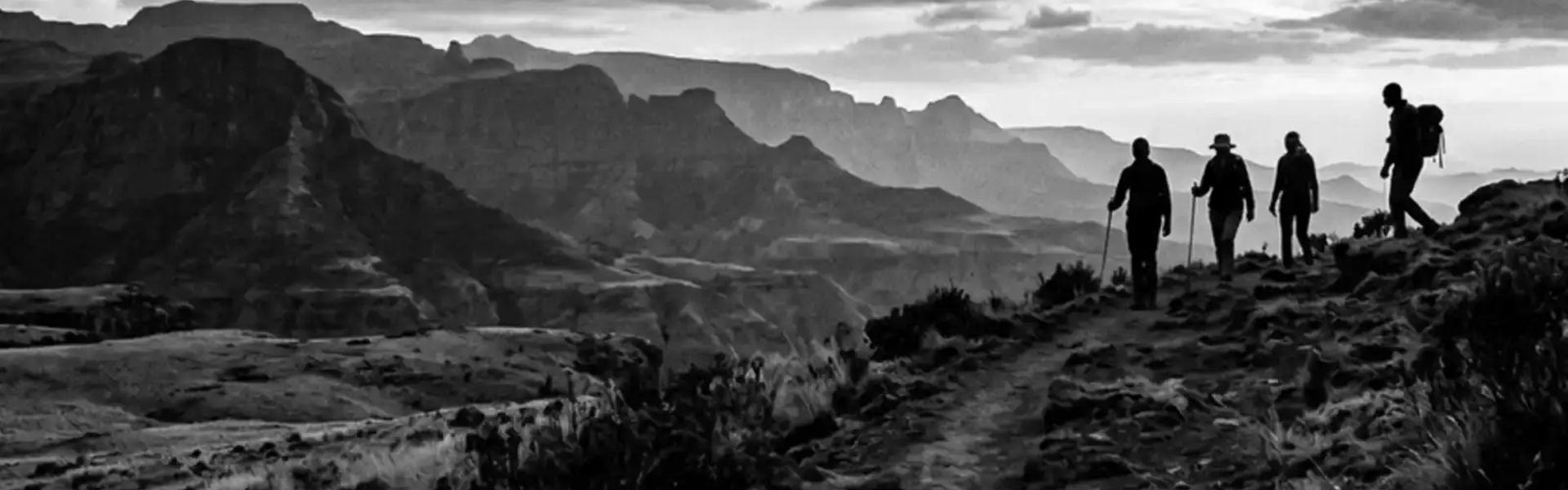
The terrain is diverse: lush montane forests such as the Harenna Forest dominate lower elevations, while grasslands and woodlands spread across mid-altitudes. At the highest reaches, the land transforms into moorlands and Afro-alpine plateaus, dotted with glacial lakes and unique plant species. This ecological layering creates a mosaic of habitats that sustain rare and endemic wildlife.
Climate
The climate varies sharply across the park’s zones. On the Sanetti Plateau, daytime temperatures hover around 10 °C (50 °F), often accompanied by strong winds, while nights frequently bring frost. In the Gaysay Valley, temperatures average 20 °C (68 °F), and the Harenna Forest is warmer, averaging 25 °C (77 °F). Rainfall follows a May-November wet season, with the remaining months dominated by a dry season. Weather shifts can be sudden and dramatic, especially at higher elevations.
Flora
The Bale Mountains are a botanical wonder. The Harenna Forest is home to wild Coffea arabica, Ethiopia’s native coffee species, alongside medicinal plants long used by local communities. For example, the female flowers of Hagenia contain compounds traditionally used to treat tapeworm infestations.
Vegetation changes with altitude: lower slopes host dense evergreen forests, mid-elevations feature grasslands and shrubs, and the Afro-alpine zone is characterized by hardy herbs, grasses, and the striking giant lobelia (Lobelia rhynchopetalum), endemic to Ethiopia’s highlands.
Fauna
Mammals
The park is a stronghold for Ethiopia’s most iconic species. The Ethiopian wolf (Canis simensis), the world’s rarest canid, roams the Afro-alpine plateau. The endangered mountain nyala (Tragelaphus buxtoni) and Menelik’s bushbuck inhabit forested slopes, while species such as duikers, reedbucks, warthogs, servals, honey badgers, and spotted hyenas are widespread.
The Bale Mountains vervet (Chlorocebus djamdjamensis), found only here, adds to the park’s uniqueness. In the Harenna Forest, larger predators like lions, leopards, and African wild dogs coexist with herbivores such as giant forest hogs and primates like mantled guerezas.
Rodents are particularly diverse, with 47 species recorded, many of which are keystone species in the Afro-alpine ecosystem, supporting predators like the Ethiopian wolf.
Birds
With over 282 bird species, including 16 Ethiopian endemics, the Bale Mountains are a paradise for ornithologists. Endemic highlights include the blue-winged goose, spot-breasted lapwing, yellow-fronted parrot, Abyssinian longclaw, Bale parisoma, Ethiopian siskin, and Abyssinian owl. Migratory birds also flock here, making the park a vital stopover in Africa’s avian migration routes.
Reptiles & Amphibians
The Bale Mountains host rare reptiles such as the Bale two-horned chameleon and Ethiopian mountain adder, alongside several newly discovered chameleon species. Amphibians are equally remarkable, with at least seven endemic frogs and toads, including the Bale Mountains frog (Ericabatrachus baleensis) and Malcolm’s Ethiopian toad, many of which are endangered due to habitat loss.
People of Bale
The surrounding Bale Zone is home to about 1.5 million people, most of whom are farmers and cattle herders. Afan Oromo is the dominant language, serving as the lingua franca for millions across Oromia, though Amharic is also widely spoken. The relationship between local communities and the park is complex, as conservation efforts must balance ecological protection with traditional livelihoods.
Activities
Visitors to Bale Mountains National Park can enjoy:
Wildlife Watching: Spot rare species like the Ethiopian wolf and mountain nyala.
Birdwatching: Observe endemic and migratory birds across diverse habitats.
Trekking & Hiking: Explore Mount Tullu Dimtu, the Sanetti Plateau, and the Harenna Forest.
Photography: Capture dramatic landscapes, glacial lakes, and unique flora.
Cultural Encounters: Learn about the traditions of Oromo communities living near the park.
Visitor Tips
Dress warmly for high-altitude zones, as temperatures drop sharply at night.
Carry supplies, as facilities inside the park are limited.
Respect conservation rules-wildlife here is fragile and globally significant.
Travel with a guide to navigate remote areas and maximize wildlife sightings.