
Ultimate Guide to Nechisar Safari
Find Nechisar Safari Tours from Verified Ethiopia Operators
The Ultimate Guide to Nechisar Safari
Nechisar SafariNechisar National Park lies in the heart of Ethiopia’s Great Rift Valley, within the southwestern Ethiopian Highlands. Covering about 750 km² (290 sq mi), the park is famous for its dramatic landscapes, rich biodiversity, and cultural history. Its name, Nechisar meaning “white grass” comes from the sweeping plains east of Lake Abaya and Lake Chamo, which form the centerpiece of the park.
One of its most iconic features is the “Bridge of God”, a narrow isthmus separating the two lakes, offering breathtaking views and unique ecological connections.
History
The park was first proposed in 1967 and officially established in 1974, though it has never been legally gazetted. Despite this, it has functioned as a de facto national park for decades.
Its history is marked by conflict and displacement. In 1982, the Guji people, pastoralists who had long lived near the lakes, were forcibly evicted from the park. During the turbulent years following the fall of the Derg regime, park infrastructure was looted, and the Guji returned to their grazing lands, armed and resistant to further eviction. This period saw significant environmental degradation and the decline of several species. In 2005, human rights groups criticized the forced evictions, highlighting the tension between conservation and community rights.
Geography & Landscape
Nechisar lies just east of Arba Minch, a major regional center. About 15% of the park consists of lakes, with Lake Abaya to the north and Lake Chamo to the south. The landscape includes groundwater forests, shoreline habitats, dry grassy plains, and edaphic grasslands.
Elevations range from 1,108 meters at Lake Chamo’s shore to 1,650 meters on Mount Tabala, which is known for its hot springs. Vegetation includes acacias, balanites, dobora trees, and Chrysopogon grasses, though invasive species and woody plant encroachment pose threats to biodiversity.
Ecology
Flora
The park’s vegetation reflects its varied terrain: riverine forests along the lakes, savannah grasslands across the plains, and calcareous soils supporting specialized grasses. Tall trees such as Acacia tortilis and Balanites aegyptiaca dominate certain areas, while groundwater forests provide shade and shelter for wildlife.
Fauna
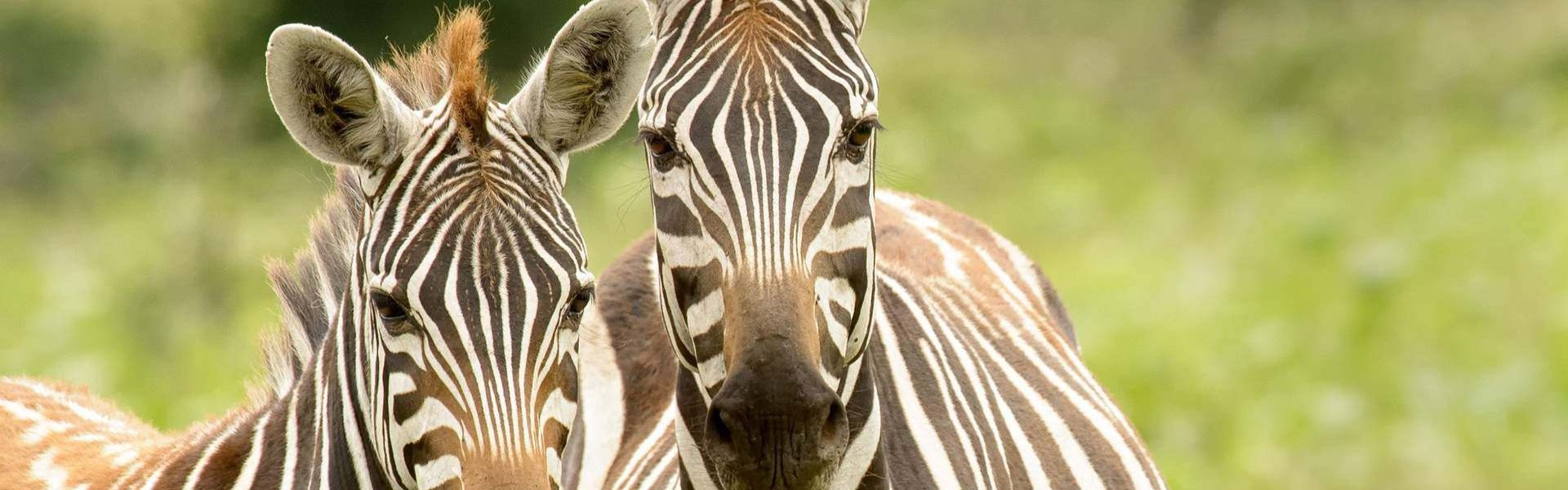
Nechisar is home to a wide range of wildlife. Large mammals include plains zebras, Grant’s gazelles, greater kudus, lions, leopards, cheetahs, and hippopotamuses. Smaller species such as dik-diks, bushbucks, reedbucks, and warthogs are also common.
The park once hosted one of the last populations of Swayne’s hartebeest, but the species is now locally extinct, with the last individual sighted in 2017. The African wild dog also once roamed here but is now considered extinct due to human pressures. In 2009, fewer than 23 lions were estimated to remain in and around the park, underscoring the fragility of its predator populations.
Birdlife is abundant, with kingfishers, storks, pelicans, flamingos, and African fish eagles thriving around the lakes. The northwest shore of Lake Chamo is famously known as “Crocodile Market”, where hundreds of Nile crocodiles gather to bask, creating one of the park’s most dramatic spectacles.
Activities
Visitors to Nechisar National Park can enjoy:
Wildlife Watching: Spot zebras, gazelles, and predators across the plains.
Birdwatching: Observe pelicans, flamingos, and raptors along the lakeshores.
Crocodile Market Visit: Witness Nile crocodiles basking in large numbers at Lake Chamo.
Trekking & Hiking: Explore Mount Tabala and the white grass plains.
Photography: Capture sweeping Rift Valley landscapes and diverse wildlife.
Visitor Tips
Travel with a guide or ranger, as the park’s infrastructure is limited.
Visit during the dry season (December-March) for easier access, though the wet season offers lush scenery.
Bring supplies and water, since facilities are basic.
Respect conservation rules- wildlife here is fragile and under pressure.
Combine your trip with nearby Arba Minch cultural experiences and boat trips on Lake Chamo for a fuller adventure.