

Ultimate Guide to Kafta Humera Safari
Find Kafta Humera Safari Tours from Verified Ethiopia Operators
The Ultimate Guide to Kafta Humera Safari
Kafta Humera SafariKafta Humera National Park is one of Ethiopia’s most biodiverse protected areas, located in the Tigray Region. Officially recognized as a national park in 2007, it is managed by the Ethiopian Wildlife Conservation Authority. The park is celebrated for its transboundary elephant population, its role as a wintering site for migratory birds, and its unique mix of highland and lowland ecosystems.
Geography
The park lies between Qafta, Humera, and Tahtay Adiabo, bordering Eritrea’s Gash-Setit Reserve to the north. The Tekeze River flows through the park, fed by tributaries originating in the highlands of Wolqait, Qafta, Asgede, Tsimbla, Tselemti, and Tsegede, before spreading into the lowlands of Adiabo.
Originally spanning 500,000 hectares, the park’s boundaries were later reduced to about 2,800 hectares, though it remains one of Ethiopia’s largest conservation landscapes. Elevations begin at 550 meters above sea level, creating a warm lowland climate that sustains savannahs, woodlands, and riparian zones.
Ecology
Flora
Vegetation communities include Acacia-Commiphora bushlands, Combretum-Terminalia woodlands, dry evergreen montane forests, and riparian habitats along rivers. These ecosystems provide food and shelter for large mammals, birds, and reptiles, while also supporting traditional livelihoods in surrounding communities.
Fauna
Kafta Humera is home to an extraordinary range of wildlife:
A transboundary elephant population of about 500 individuals, shared with Eritrea’s Gash-Setit. This is the northernmost elephant population in Eastern Africa, migrating seasonally between Ethiopia and Eritrea.
Large carnivores such as lions, leopards, cheetahs, caracals, and hyenas.
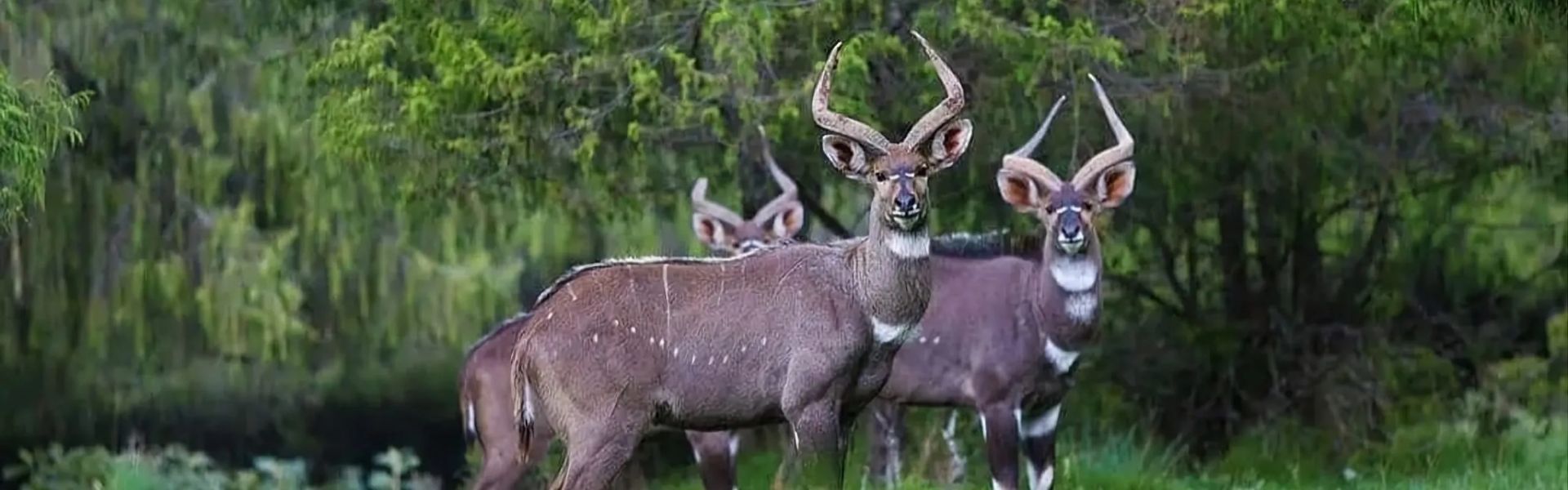
Herbivores including greater kudu, roan antelope, red-fronted gazelle, and aardvarks.
Reptiles such as crocodiles thrive in riverine habitats.
Birds are especially significant: the park is a critical wintering site for demoiselle cranes (Anthropoides virgo). In 2009, more than 21,500 cranes-about 9% of the world’s population-were recorded here, confirming the park’s global importance as a migratory bird sanctuary.
Conservation Significance
Kafta Humera is one of East Africa’s few parks that combines transboundary elephant conservation with internationally significant bird migration corridors. The seasonal elephant movements highlight the need for cross-border cooperation with Eritrea, while the crane concentrations identify the Tekeze Valley wetlands as a site of global ecological importance.
Despite its recognition, the park faces challenges such as habitat reduction, human encroachment, and limited infrastructure. Strengthening protection and community involvement is essential to safeguard its biodiversity.
Activities
Visitors to Kafta Humera National Park can enjoy:
Wildlife Watching: Spot elephants, antelopes, and predators in savannah and woodland habitats.
Birdwatching: Witness the spectacular wintering flocks of demoiselle cranes and other migratory species.
River Exploration: Discover the Tekeze River and its tributaries, home to crocodiles and riparian forests.
Photography: Capture elephants in migration, dramatic landscapes, and rare bird gatherings.
Visitor Tips
Travel with a guide or ranger, as the park is remote and infrastructure is limited.
Visit during the dry season (December-March) for easier access, though the wet season offers lush scenery and bird migrations.
Bring supplies and water, since facilities are basic.
Respect conservation wildlife rules here is fragile and globally significant.