
Ultimate Guide to Maze Safari
Find Maze Safari Tours from Verified Ethiopia Operators
The Ultimate Guide to Maze Safari
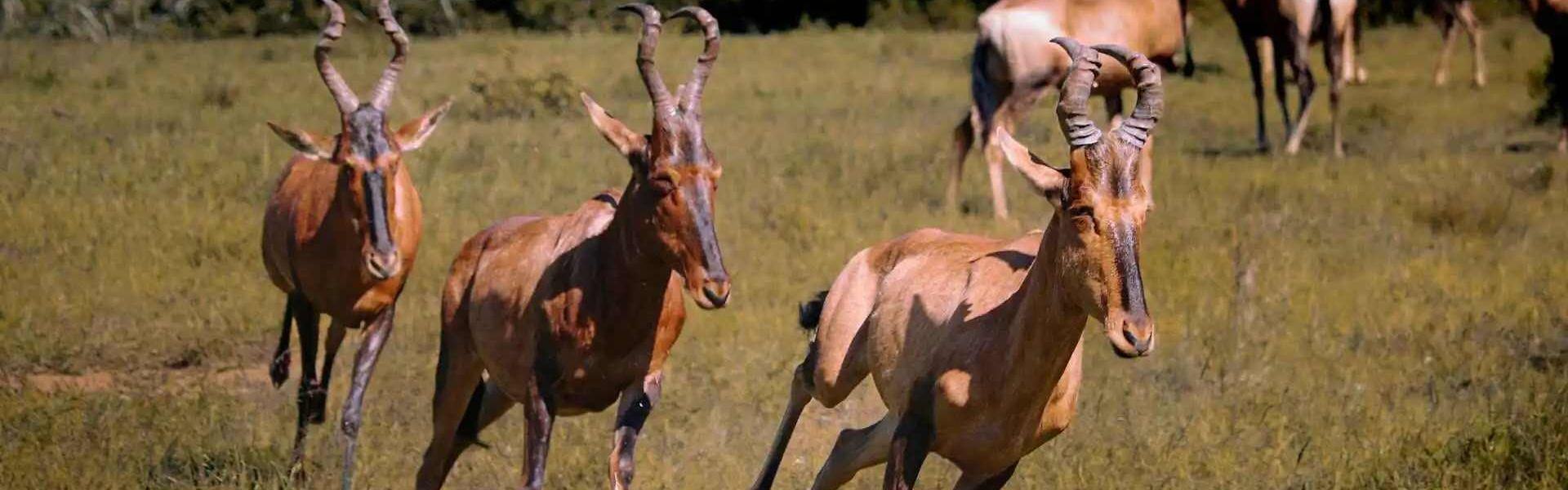
Maze SafariMaze National Park is a protected area in the South Ethiopia Regional State, located about 460 km southwest of Addis Ababa and 248 km from Hawassa. Covering approximately 210 km² (81 sq mi), the park was established in 2005 and is managed by the Ethiopian Wildlife Conservation Authority. Despite its relatively small size compared to other Ethiopian parks, Maze is renowned for its rich biodiversity and its role in conserving the endangered Swayne’s hartebeest.
History
The park takes its name from the Maze River, which flows through its length and sustains much of its ecosystem. Before its designation as a national park, the area served as a hunting ground for Swayne’s hartebeest and buffalo, species that were once heavily targeted. Its transformation into a protected area marked a significant step in Ethiopia’s conservation efforts, ensuring the survival of rare antelope populations and preserving the region’s savannah landscapes.
Geography
Elevations within Maze range between 1,000 and 1,200 meters above sea level, creating a warm climate suitable for savannah ecosystems. Rainfall averages between 800 and 1,600 mm annually, with a wet season from March to September and a dry season from December to February.
The park is bordered by striking natural features, including Mount Gughe, which rises to 4,200 meters on its boundary, offering dramatic views of the surrounding landscape. Within the park, visitors can find Bilbo hot springs, where geysers spout steam into the air, and the Wonja stone caves, capable of holding up to 300 people, adding geological and cultural interest to the area.
Ecology
Flora
Maze is dominated by savannah grasslands interspersed with scattered deciduous broadleaf trees. Vegetation varies with altitude, ranging from bushland and woodland to riverine forests along the Maze River. This diversity supports both grazing herbivores and predators, while also providing resources for local communities.
Fauna
The park is home to 37 mammal species and 196 bird species. Its most notable population is the endangered Swayne’s hartebeest (Alcelaphus buselaphus swaynei), with an estimated 300–1,000 individuals, making Maze the second most important stronghold for this subspecies after Senkelle Sanctuary.
Other mammals include African buffalo, lions, leopards, cheetahs, servals, warthogs, bushpigs, greater and lesser kudus, reedbucks, waterbucks, and baboons. Primates such as olive baboons and vervet monkeys are common, while predators like lions and leopards add to the park’s ecological balance. Birdlife is diverse, with species ranging from savannah dwellers to riverine specialists.
Activities
Visitors to Maze National Park can enjoy:
Wildlife Watching: Observe herds of Swayne’s hartebeest, buffalo, and antelopes, alongside predators like lions and leopards.
Birdwatching: Spot diverse species across savannah and riverine habitats.
Exploring Natural Features: Visit Bilbo hot springs and the Wonja stone caves.
Trekking & Hiking: Experience the savannah landscapes and views of Mount Gughe.
Photography: Capture wildlife, geysers, and dramatic scenery.
Visitor Tips
Travel with a four-wheel drive vehicle, as roads can be rough.
Visit during the dry season (December–February) for easier access, though the wet season offers lush greenery.
Bring supplies and water, since facilities are limited.
Respect conservation rules Maze is critical for protecting Swayne’s hartebeest.