

Ultimate Guide to Chebera Churchura Safari
Find Chebera Churchura Safari Tours from Verified Ethiopia Operators
The Ultimate Guide to Chebera Churchura Safari
Chebera Churchura SafariChebera Churchura National Park lies on the western side of the central Omo-Gibe basin, straddling the Dawro Zone and Konta Zone in Ethiopia’s South West Ethiopia Peoples’ Region. Located about 133 km south of Jimma and 483 km southwest of Addis Ababa, the park is one of Ethiopia’s newer conservation areas, yet it has quickly become known for its rich biodiversity and dramatic landscapes.
History
The park was originally designated as the Kulo-Konta Controlled Hunting Area, primarily used for elephant hunting. Recognizing the ecological importance of the region, the area was upgraded to national park status in 2005 by the regional government. Since then, Chebera Churchura has become a sanctuary for elephants and other wildlife, shifting from exploitation to conservation.
Geography
Covering 1,250 km², the park’s elevation ranges from 500 to 2,000 meters above sea level, creating diverse habitats across its terrain. Rainfall is abundant, averaging 1,200-2,300 mm annually, while temperatures vary between 10-29°C. The wet season extends from March to September, followed by a dry season from December to February.
The park is dotted with four crater lakes-Keriballa, Koka, Shasho, and others-adding scenic beauty and ecological value. It is crisscrossed by 49 perennial rivers, including the Zinga River, a tributary of the Omo, and the Shoshuma River, which joins Zinga inside the park before draining into the Omo. Natural caves, hot and cold springs such as Toshima and Nechwuha, and waterfalls like Barbo Falls further enrich the landscape, making Chebera Churchura one of Ethiopia’s most diverse natural reserves.
Ecology
Flora
The park contains four main habitat types: grasslands, woodlands, mountain forests, and riverine forests. Over 62% of the park is covered by wooded grassland dominated by elephant grass (Pennisetum purpureum), while montane woodland accounts for about 29%. Palm trees are particularly diverse, and woody vegetation includes species of Ficus, Combretum, Ehretia, and Albizia.
The natural forests also harbor economically valuable plants such as enset, coffee, coriander, and Piper species, which are used by local communities. In total, 106 woody plant species have been identified, six of which are endemic to Ethiopia.
Fauna
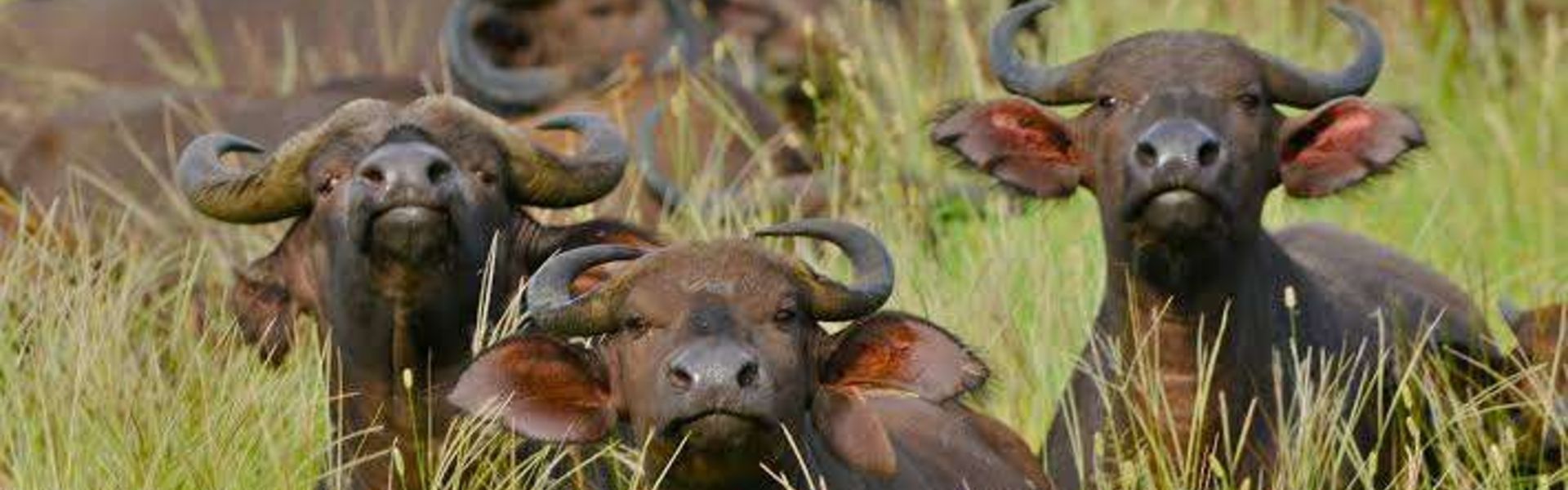
Chebera Churchura is best known as one of Ethiopia’s last strongholds for African elephants, with over 500 individuals roaming in herds across grasslands and forests. Other large mammals include lions, leopards, servals, greater kudus, Cape buffalos, hippopotamuses, defassa waterbucks, and warthogs. Primates such as colobus monkeys and vervet monkeys are also common, adding to the park’s ecological richness.
Birdlife is equally impressive, with 237 species recorded. Endemic birds such as the white-winged cliff chat, banded barbet, wattled ibis, Ethiopian oriole, and thick-billed raven highlight the park’s importance for avian conservation.
Activities
Visitors to Chebera Churchura National Park can enjoy:
Wildlife Watching: Spot elephants, lions, and buffalo in their natural habitats.
Birdwatching: Observe endemic and migratory species across forests and rivers.
Trekking & Hiking: Explore crater lakes, waterfalls, and mountain forests.
Photography: Capture elephants in herds, lush vegetation, and dramatic landscapes.
Hot Springs & Waterfalls Exploration: Relax at Toshima or marvel at Barbo Falls.
Visitor Tips
Travel with a four-wheel drive vehicle, as roads can be challenging.
Bring supplies and water, since facilities inside the park are limited.
Respect conservation rules-wildlife here, especially elephants, is sensitive and protected.
Visit during the dry season (December-February) for easier access, though the wet season offers lush scenery.