
Ultimate Guide to Bwabwata Safari
Find Bwabwata Safari Tours from Verified Namibia Operators
The Ultimate Guide to Bwabwata Safari
Magnificent Namibia National Parks
Bwabwata National Park is a vast protected area in northeastern Namibia, proclaimed in 2007 through the merger of the Caprivi Game Park and Mahango Game Park. Covering 6,274 square kilometres, it stretches across the Caprivi Strip, bounded by the Okavango River to the west and the Kwando River to the east, with Angola to the north and Botswana to the south. The park is unique in that it is both a wildlife sanctuary and a living landscape for about 5,500 residents, making it a rare example of integrated conservation and community management.
History
The area’s conservation journey began in 1963 as Caprivi Nature Park, later upgraded to Caprivi Game Park in 1968. During Namibia’s liberation struggle, the South African Defence Force occupied the park, disrupting conservation efforts. After independence in 1990, the Namibian government commissioned studies to balance biodiversity protection with human settlement. Mahango Game Reserve was proclaimed in 1989, and in 2007, it was united with Caprivi Game Park and adjacent lands to form Bwabwata National Park. A tragic event occurred in 2013 when LAM Mozambique Airlines Flight 470 crashed deliberately within the park, claiming 33 lives.
Ecology
Bwabwata lies within the Tree and Shrub Savanna biome, featuring diverse vegetation zones such as Kalahari woodlands, mopane forests, riverine woodlands, floodplains, and islands. The landscape is marked by low sand dunes and ancient drainage lines known as Omiramba. This ecological variety makes Bwabwata a crucial corridor for wildlife migration across Namibia, Angola, Botswana, and Zambia.
Wildlife
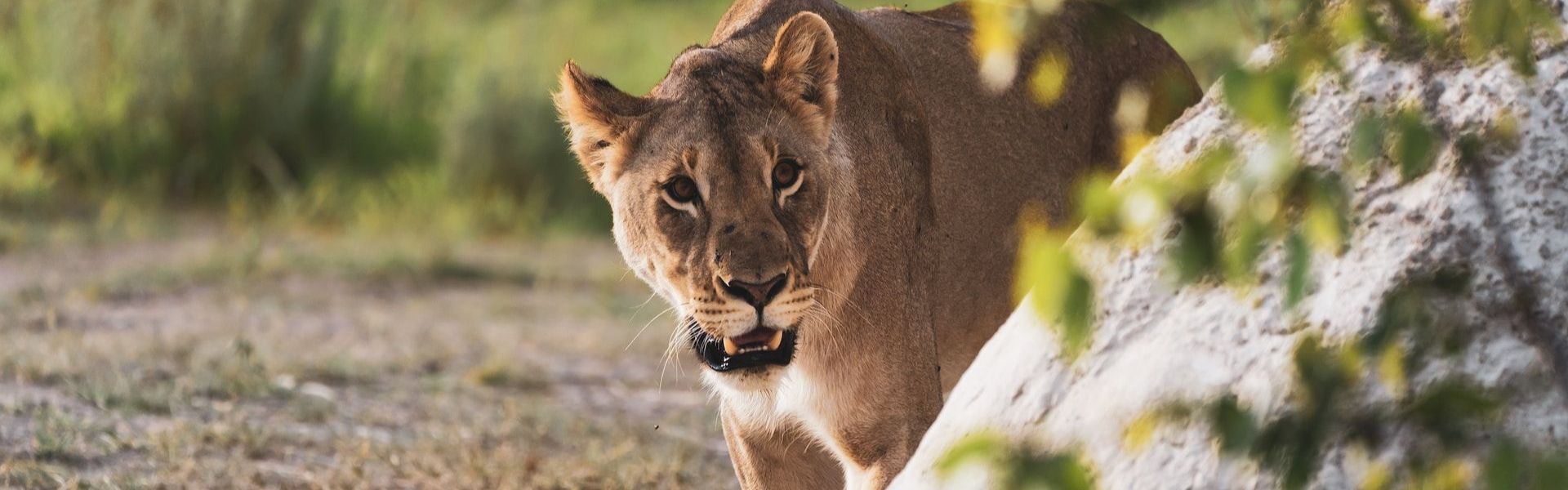
The park supports elephants that migrate across borders, along with buffalo, hippos, roan and sable antelopes, tsessebe, zebras, wildebeest, reedbuck, lechwe, sitatunga, and crocodiles. Predators include lions, leopards, cheetahs, and spotted hyenas. The Mahango area and Kavango River are internationally recognized as Important Bird Areas, hosting species such as wattled cranes, African skimmers, pygmy geese, slaty egrets, and southern ground hornbills. Despite biodiversity richness, long‑term studies have noted declines due to woody encroachment.
Surrounding Areas
Bwabwata sits at the heart of the Kavango–Zambezi Transfrontier Conservation Area (KaZa TFCA), linking Angola, Botswana, Namibia, Zambia, and Zimbabwe. Settlements like Kongola in the east and Divundu in the west provide entry points. The Trans‑Caprivi Highway (B8) runs through the park, connecting Namibia to neighbouring countries, while smaller roads link Mahango to Botswana.
Activities
Game Drives: Explore sandy tracks near the Kwando and Okavango rivers to spot elephants, antelopes, and predators.
Birdwatching: Mahango and the Kavango River are hotspots for rare and globally threatened bird species.
Boat Trips: Scenic river excursions reveal hippos, crocodiles, and diverse birdlife.
Community Campsites: Stay at Nǁgoabaca, Nambwa, or Bum Hill, operated by local conservancies.
Hiking and Walks: Guided trails allow visitors to experience savanna landscapes and learn about local ecology.
Cultural Encounters: Meet the Khwe San bushmen communities, who maintain traditional practices and manage tourism initiatives.
Best Time to Visit
Dry Season (May–October): Ideal for wildlife viewing as animals congregate near rivers and floodplains.
Wet Season (November–March): Lush vegetation and active birdlife, though heavy rains may make roads challenging.
Transitional Months (April, early November): Balanced conditions with fewer visitors and excellent opportunities for photography.
Visitor Tips
Access: The park is traversed by the Trans‑Caprivi Highway, but permits are required for off‑road travel.
Vehicles: A 4x4 is recommended for sandy tracks and remote areas.
Accommodation: Community campsites inside the park and lodges on its borders provide options.
Supplies: Carry essentials, as facilities are limited within the park.
Clothing: Light tropical wear, sturdy boots, and sun protection are essential.
Safety: Respect park rules, avoid off‑track driving, and follow guides for safe exploration.
Community Support: Engage with local conservancies, supporting tourism initiatives and sustainable livelihoods.