
Ultimate Guide to Gross Barmen Safari
Find Gross Barmen Safari Tours from Verified Namibia Operators
The Ultimate Guide to Gross Barmen Safari
Magnificent Namibia Game Reserves
Gross Barmen, historically known as Otjikango, is a settlement and recreational spa located on the Swakop River in central Namibia, about 25 km southwest of Okahandja in the Otjozondjupa Region. Its proximity to Windhoek makes it a popular weekend destination. Today, it is best known for its thermal hot springs and as a managed recreational centre under Namibia Wildlife Resorts (NWR).
History
Originally inhabited by the Herero people, the site was called Otjikango (“large fountain”). In 1844, Rhenish missionaries Carl Hugo Hahn and Franz Heinrich Kleinschmidt established the first mission station to the Herero here, naming it Barmen after the German town where the Rhenish Missionary Society was headquartered. Gross Barmen became a key point in early Namibian history, with the Old Bay Path trade route linking Windhoek to Walvis Bay passing through it. Missionary activity continued under Rev. Peter Heinrich Brincker, who rebuilt the station after repeated attacks during the mid-19th century conflicts. By the 1870s, Gross Barmen had a school and church serving hundreds of residents. However, the mission station was destroyed during the Herero War in 1904, when German colonial forces burned the settlement.
Ecology
Gross Barmen lies along the Swakop River in a semi-arid environment. The area is characterized by savannah vegetation, scattered acacia trees, and riverine habitats. The hot springs, emerging from a depth of 2,500 metres at 65 °C, are a unique ecological feature, cooled to around 40 °C for recreational use.
Wildlife
While Gross Barmen is not a game reserve, its riverine environment supports birdlife and small mammals typical of central Namibia. Historically, the area was more significant for human settlement and missionary activity than for wildlife conservation.
Surrounding Areas
Gross Barmen is located near Okahandja and within easy reach of Windhoek, making it accessible for day trips and weekend getaways. The ruins of the missionary house remain visible, offering cultural and historical interest. The site also connects to Namibia’s broader colonial and missionary history, with ties to Otjimbingwe and Okahandja.
Activities
Thermal Baths: The hot springs are the main attraction, offering therapeutic bathing in naturally heated water.
Historical Exploration: Visitors can view the ruins of the old missionary station and learn about the site’s role in Namibia’s colonial past.
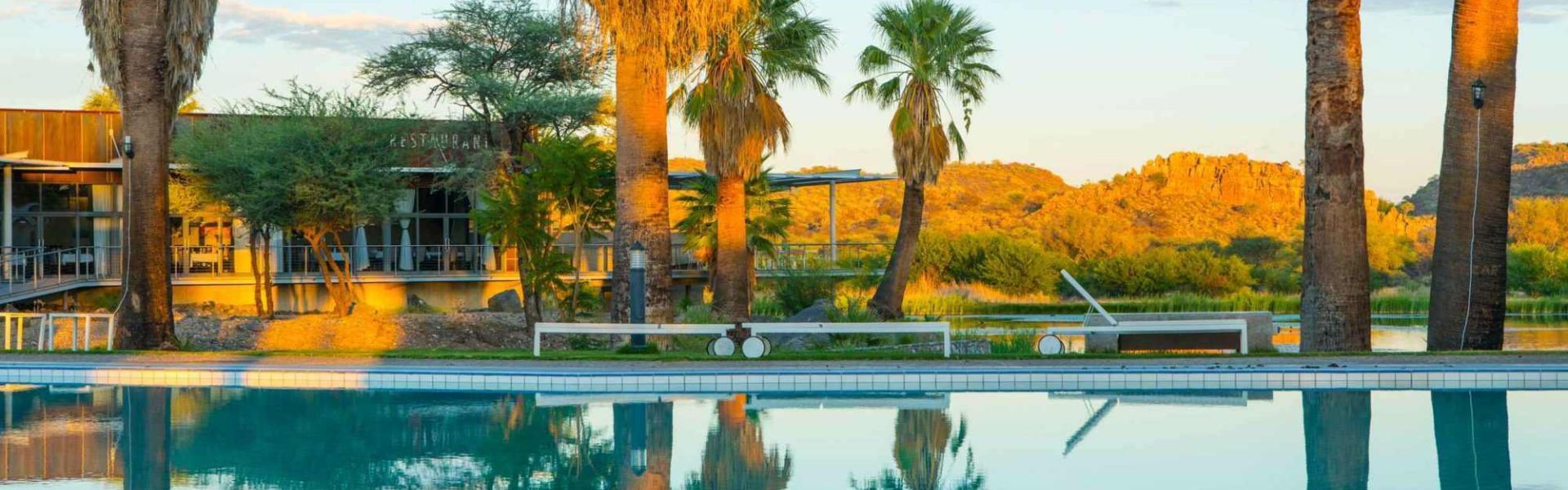
Relaxation: The resort provides facilities for rest and leisure, including swimming pools and accommodation.
Photography: Capture the contrast of historic ruins, modern spa facilities, and the surrounding savannah landscape.
Weekend Retreats: Its proximity to Windhoek makes Gross Barmen ideal for short breaks and family outings.
Best Time to Visit
Dry Season (May–October): Comfortable weather for outdoor relaxation and exploration of historical sites.
Wet Season (November–March): The area becomes greener, though occasional rains may affect travel.
Transitional Months (April, early November): Balanced conditions with fewer visitors, ideal for spa use and photography.
Visitor Tips
Access: Located on District Road 1972, easily reachable from Windhoek and Okahandja.
Facilities: Managed by Namibia Wildlife Resorts, offering thermal baths, accommodation, and leisure amenities.
Supplies: Day visitors should plan ahead, as facilities are primarily geared toward overnight guests.
Clothing: Light wear for daytime, warm layers for evenings, and swimwear for the thermal baths.
Community Support: Using NWR facilities helps sustain local tourism and conservation initiatives.