
Ultimate Guide to Mudumu Safari
Find Mudumu Safari Tours from Verified Namibia Operators
The Ultimate Guide to Mudumu Safari
Magnificent Namibia National Parks
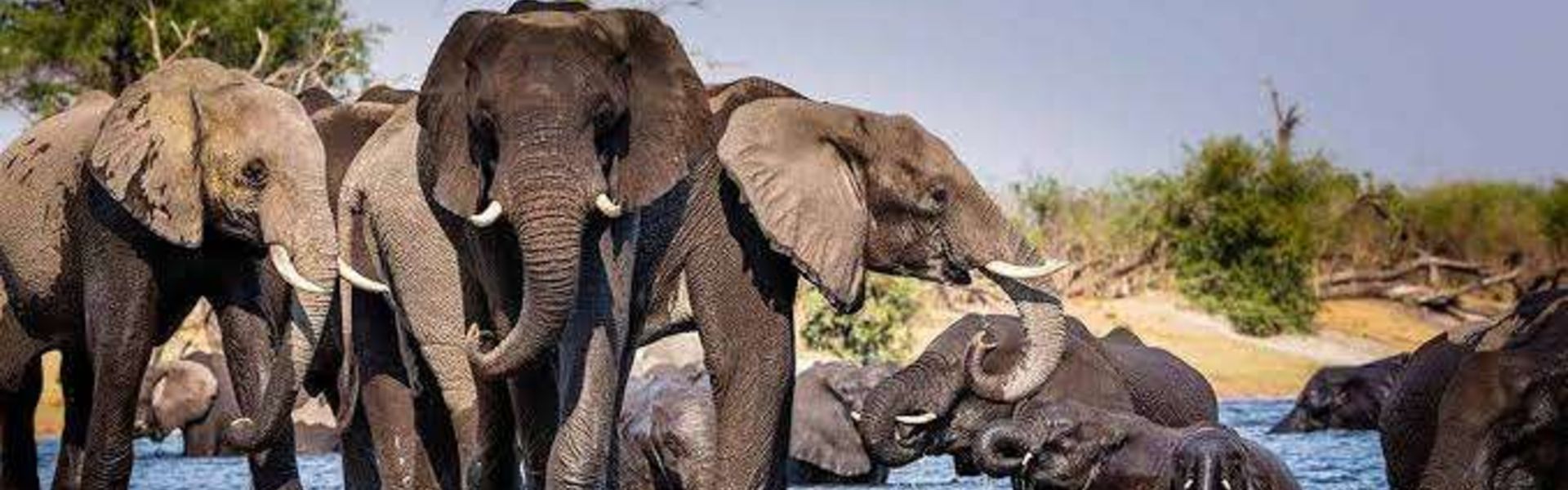
Mudumu National Park is a wilderness reserve in Namibia’s Zambezi Region (formerly Caprivi), proclaimed in 1990. Covering 737 square kilometres, it lies along the Kwando River and forms part of the Kavango–Zambezi Transfrontier Conservation Area (KaZa TFCA), Africa’s largest cross‑border conservation initiative. Its unfenced boundaries make it a vital corridor for elephants and other migratory species moving between Botswana, Angola, Namibia, and Zambia.
History
Although the approved size was initially 1,010 km², the park was officially established at 737 km² just before Namibia’s independence. Since then, Mudumu has been managed as part of Namibia’s northeastern park network, alongside Bwabwata, Khaudum, Mangetti, and Nkasa Rupara. Conservation projects such as NamParks, co‑funded by Germany, have helped improve infrastructure, reintroduce species, and strengthen partnerships between government and local communities.
Geography
The park lies about 35 km south of Kongola, bordered by Botswana to the west and communal conservancies to the east. Its terrain is flat, dominated by mopane woodlands, floodplains, and riparian forests. A fossilized river course, the Mudumu Mulapo, runs through the centre, draining seasonal waters. The C49 road passes through the park, linking Kongola and Sangwali villages, while other tracks require permits and 4x4 vehicles.
Climate
Mudumu receives 550–700 mm of rainfall annually, with peak rains in January and February. Flooding can occur in wet years, though the park is generally drier than Nkasa Rupara. Winters are cooler and dry, while summers are hot and humid.
Ecology
Vegetation includes mopane woodlands, wild syringa, leadwood, and mangosteen trees. The Kwando River floodplain supports grasslands and dense riparian forests, providing habitats for diverse wildlife.
Wildlife
Mudumu is rich in large mammals:
Elephants: A major migratory population.
Predators: Lions, leopards, cheetahs, spotted hyenas, and African wild dogs.
Other species: Buffalo, hippos, crocodiles, giraffes, eland, sable antelope, impala, zebras, wildebeest, sitatunga, red lechwe, and spotted‑necked otters.
Birdlife: Over 430 species, including African fish eagles, skimmers, and western banded snake eagles.
Aquatic life: Tiger fish and tilapia are common in the Kwando River.
Fire Management
Both natural and human‑caused fires occur annually. Firebreaks are created during wet months, and early burning programs are implemented in winter to reduce risks.
Tourism
Visitors enjoy walking safaris, birdwatching, and game drives. The park has two privately managed lodges and community‑run concessions. Permits are required for most roads, and travel during the rainy season is recommended in convoys. Mudumu is also a malaria‑risk area, so precautions are necessary.
KaZa TFCA
Mudumu is central to the Kavango–Zambezi Transfrontier Conservation Area, which links multiple countries and iconic sites such as Victoria Falls and the Okavango Delta. KaZa aims to restore migration routes, expand biodiversity, and ensure rural communities benefit economically from conservation.
Management
Mudumu is managed under integrated park management, grouping protected areas, conservancies, and forestry zones into complexes. Stakeholders collaborate on anti‑poaching, fire control, and wildlife monitoring. The Ngenda Ranger Station serves as headquarters, with infrastructure developed through NamParks. Trophy hunting is permitted under strict regulation, alongside eco‑tourism initiatives.