

Ultimate Guide to Gonarezhou Safari
Find Gonarezhou Safari Tours from Verified Zimbabwe Operators
The Ultimate Guide to Gonarezhou Safari
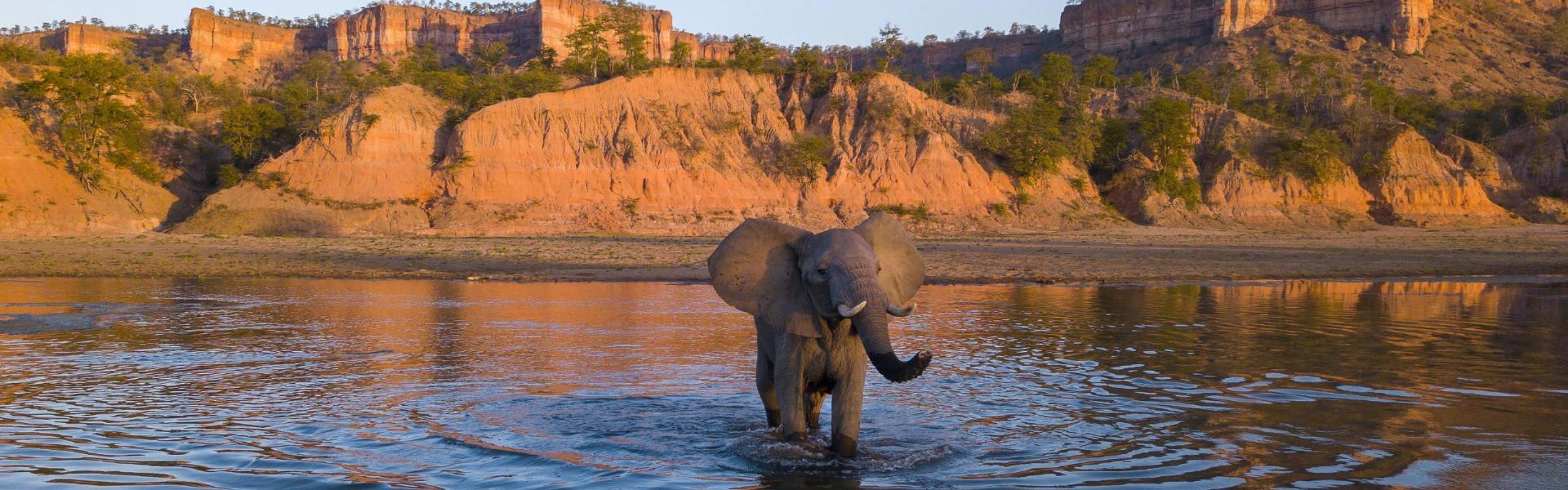
Gonarezhou SafariGonarezhou National Park, located in southeastern Zimbabwe, is one of the country’s most spectacular and remote wilderness areas. Covering 5,053 square kilometers, it is the second-largest national park in Zimbabwe after Hwange. Its name, Gonarezhou, comes from the Shona language and means “The Place of Elephants,” a fitting description given the park’s large elephant population. Because of its vast size, rugged terrain, and location away from major tourist routes, much of Gonarezhou remains pristine and untouched, offering visitors a rare chance to experience true wilderness.
Landscape & Features
The park forms part of the Great Limpopo Transfrontier Park, a cross-border conservation area linking Gonarezhou with Kruger National Park in South Africa and Limpopo National Park in Mozambique. This allows animals to roam freely across international boundaries, creating one of Africa’s largest wildlife sanctuaries.
Gonarezhou is famous for its dramatic landscapes. The most iconic feature is the Chilojo Cliffs, towering sandstone formations that rise 180 meters above the Runde River and stretch for about 20 kilometers. These cliffs glow red at sunset and are among the most photographed landmarks in Zimbabwe. Other notable features include the vast natural pans of Tembwahata and Machanu, located at the junction of the Save and Runde Rivers, which attract large numbers of wildlife. The park also contains the Naymtongwe Plateau, the Ntambambomvu Red Hills, the Mwenezi River Valley, and the Samalema Gorge, where the Mwenezi River cuts through solid rock to form a braided gorge.
History
Gonarezhou was first designated as a game reserve in 1936 and later proclaimed a national park in 1975. Its history has been turbulent, with closures during the Rhodesian War and the Mozambique civil war. The park reopened in 1994 but suffered from underinvestment during Zimbabwe’s economic crisis. In 2007, the Frankfurt Zoological Society partnered with the Zimbabwe Parks and Wildlife Management Authority to provide financial and technical support. Since 2017, the park has been managed under the Gonarezhou Conservation Trust, a co-management model that ensures tourism revenue is reinvested directly into the park’s sustainability.
Wildlife
The park is home to a wide variety of wildlife, including elephants, giraffes, hippos, buffalo, zebras, wildebeest, lions, leopards, cheetahs, and hyenas. Historically, Gonarezhou was a stronghold for the endangered Cape wild dog, and recent sightings suggest that the species may be making a comeback thanks to the park’s connection with neighboring reserves. Birdlife is equally impressive, with hundreds of species recorded, making it a paradise for birdwatchers.
Activities
Visitors to Gonarezhou can enjoy:
Game Drives: Explore the park’s diverse habitats and spot large mammals.
Walking Safaris: Experience the wilderness up close with guided walks.
Birdwatching: Observe rare and colorful species across different ecosystems.
Scenic Viewing: Visit the Chilojo Cliffs and river valleys for breathtaking views.
Camping: Stay at designated campsites for an immersive bush experience.
Accommodation
The main accommodation option within the park is Swimuwini Rest Camp, located along the Mwenezi River. Managed by the National Parks and Wildlife Authority, it offers self-catering facilities and serves as a convenient base for exploring the southern section of the park.
Best Time to Visit
The dry season, from May to October, is the best time to visit, as wildlife congregates around rivers and pans, making sightings easier. The wet season, from November to April, transforms the park into a lush paradise, ideal for birdwatching and photography, though access may be more challenging.
Visitor Tips
Carry sufficient supplies, as facilities inside the park are limited.
Guided tours are recommended for safety and deeper insights.
Respect conservation rules, as Gonarezhou’s ecosystems are fragile.
Combine a visit with Kruger or Limpopo National Parks for a broader Transfrontier safari experience.