

Ultimate Guide to Thuli Safari
Find Thuli Safari Tours from Verified Zimbabwe Operators
The Ultimate Guide to Thuli Safari
Thuli SafariThuli Parks and Wildlife Land is a protected area in southwestern Zimbabwe, situated along the west bank of the Shashe River within the Thuli Circle. It is made up of the Thuli Safari Area and three small botanical reserves-Pioneer, South Camp, and Tolo River-covering less than 1 km² combined. Together, these reserves are administered as a single unit by the National Parks and Wildlife Authority, with headquarters located just outside the protected area near the village of Tuli.
History
The Thuli Safari Area was first proclaimed in 1975, having previously been managed as a Controlled Hunting Area since 1958. In 2006, Thuli Parks and Wildlife Land became Zimbabwe’s contribution to the Greater Mapungubwe Transfrontier Conservation Area, a cross-border initiative linking protected areas in Zimbabwe, Botswana, and South Africa.
Landscape & Ecology
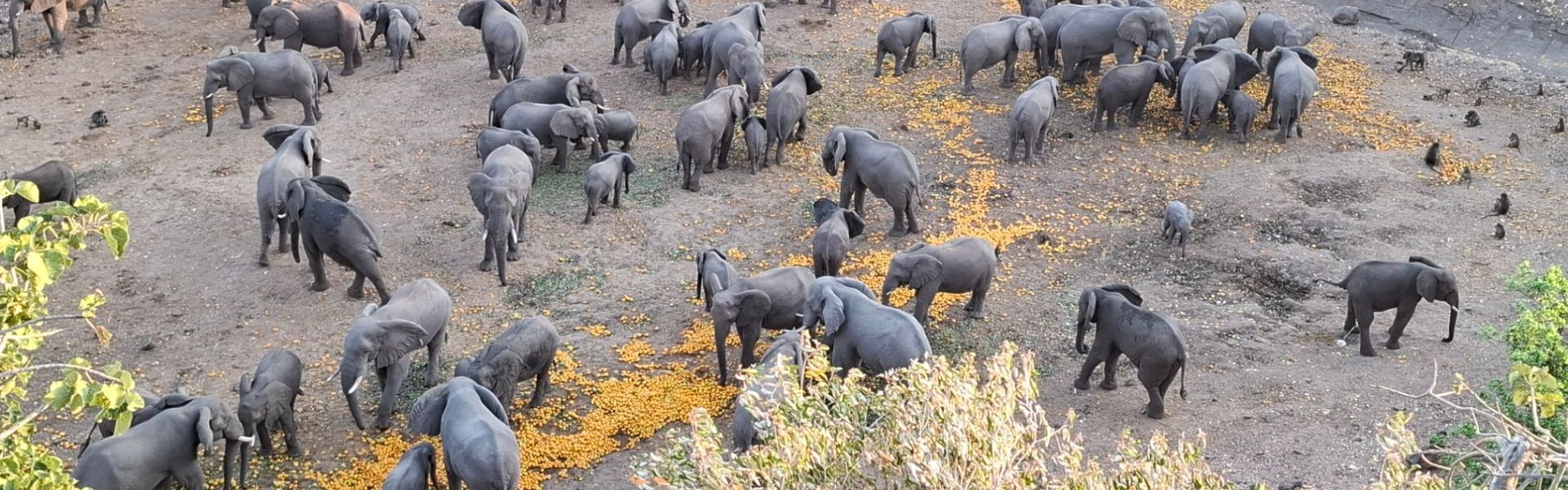
The park’s terrain is largely scrubland dominated by mopane and combretum bush. Along the Shashe River valley, riverine vegetation such as fig (Ficus) and winter thorn (Faidherbia albida) thrives, providing shade and food for wildlife. The area is home to elephants, black rhinoceroses, lions, leopards, cheetahs, and African wild dogs, many of which move freely across borders into Botswana and South Africa.
Geology
The landscape is mostly flat but becomes rugged near the Shashe River. The underlying bedrock is Jurassic basalt, dated to about 186 million years ago. The geology includes inwardly dipping lava flows and a well-preserved volcanic caldera, making the area of interest to geologists as well as ecologists.
Archaeology & History
The region has historical significance as the site of Fort Tuli, established by the Pioneer Column in 1890. The fort served as a resting and supply base for oxen and horses before crossing the Shashe River. Although the original fort was later relocated in the 1970s, its legacy remains tied to the colonial history of Zimbabwe.
Accommodation
There are no hotels or self-catering lodges within Thuli Parks and Wildlife Land. However, camping sites are available at the park headquarters and within the safari area. The Shashe Wilderness Camp, operated by Wildlife and Environment Zimbabwe, is located just north of the park’s headquarters and provides basic facilities for visitors.
Access
Road access is via the village of Tuli, which can be reached from Beitbridge through Nottingham Estate or from Gwanda via Guyu and Hwali. Roads are often poor, and four-wheel drive vehicles are required, especially for crossing the Shashe River. A small dirt airstrip is also available at Tuli.
Activities
Visitors to Thuli Parks and Wildlife Land can enjoy:
Game Viewing: Spot elephants, rhinos, lions, and other predators in the safari area.
Camping: Experience the wilderness at designated campsites.
Birdwatching: Riverine habitats attract diverse bird species.
Cultural Exploration: Learn about the history of Fort Tuli and its role in Zimbabwe’s colonial past.
Best Time to Visit
The dry season (May-October) is the best time to visit, as wildlife is easier to spot and roads are more accessible. The wet season (November-April) brings lush vegetation but makes travel more difficult.
Visitor Tips
Four-wheel drive is essential for accessing the park.
Bring supplies, as facilities are limited.
Respect conservation rules, as the area is part of a transfrontier ecosystem.
Combine a visit with nearby Botswana or South Africa for a broader safari experience.