

Ultimate Guide to Great Limpopo Safari
Find Great Limpopo Safari Tours from Verified Zimbabwe Operators
The Ultimate Guide to Great Limpopo Safari
Great Limpopo SafariThe Great Limpopo Transfrontier Park is one of Africa’s most ambitious conservation projects, covering an immense area of about 35,000 square kilometers. Known as a “peace park,” it is designed to link several protected areas across three countries: Limpopo National Park in Mozambique, Kruger National Park in South Africa, and Gonarezhou National Park in Zimbabwe. It also incorporates smaller sanctuaries such as the Manjinji Pan Sanctuary and Malipati Safari Area in Zimbabwe, along with communal lands like Sengwe in Zimbabwe and Makuleke in South Africa. By connecting these regions, the park restores ancient migratory routes for wildlife that were once blocked by political boundaries, creating a vast ecosystem where animals can roam freely across borders.
History
The idea of the park was formalized on November 10, 2000, when a memorandum of understanding was signed under the name Gaza-Kruger-Gonarezhou Transfrontier Park. In October 2001, the name was changed to the Great Limpopo Transfrontier Park. Although the treaty faced delays in ratification, the vision of a cross-border sanctuary gained momentum.
One of the most significant milestones was the removal of fences between the parks, allowing wildlife to reclaim their traditional migratory paths. In October 2001, the first group of elephants-40 in total, including three breeding herds-was translocated from the overpopulated Kruger National Park to Limpopo National Park in Mozambique. This was part of a larger plan to move 1,000 elephants over two and a half years, helping balance populations across the region. Another key development was the opening of the Giriyondo Border Post in March 2004, which facilitated easier movement for tourists between South Africa and Mozambique.
Landscape & Features
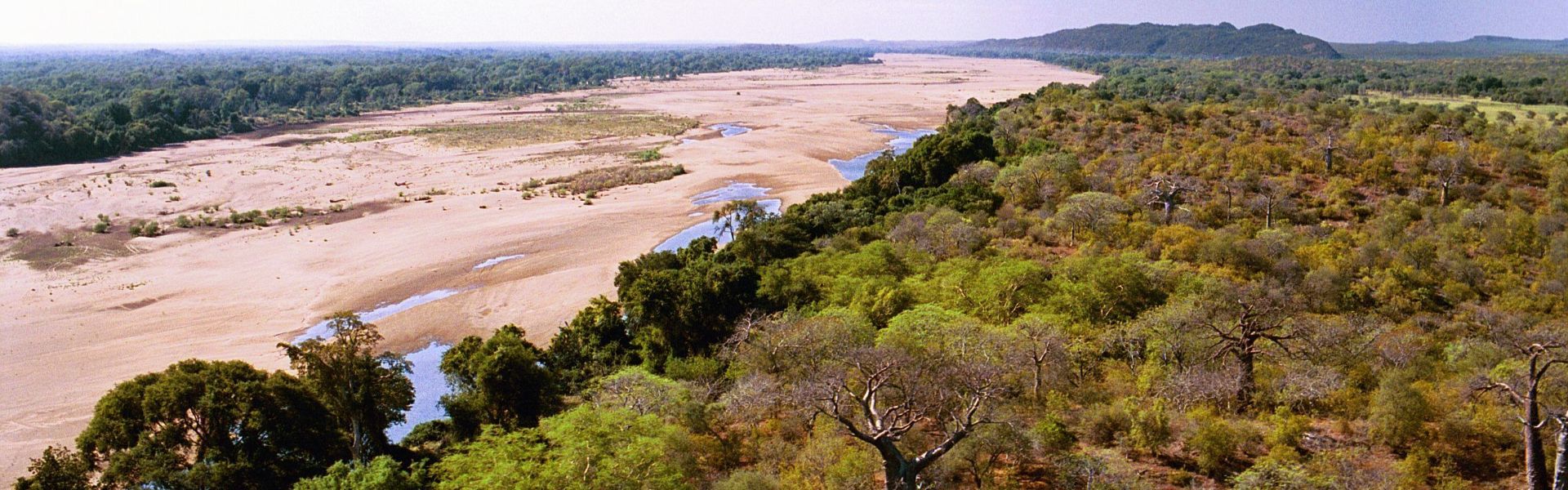
The park encompasses diverse ecosystems, ranging from mopane woodlands and bushveld to river valleys and floodplains. Its sheer size and variety of habitats make it one of the most ecologically rich regions in southern Africa. Visitors can experience landscapes that shift from rugged escarpments to open savannahs, each supporting unique wildlife communities.
Wildlife
The Great Limpopo Transfrontier Park is home to an impressive range of wildlife. Large mammals such as elephants, rhinos, giraffes, buffalo, zebras, wildebeest, lions, leopards, cheetahs, hyenas, and mongooses thrive within its boundaries. The park is also recognized as a Lion Conservation Unit, underscoring its importance in safeguarding one of Africa’s most iconic predators.
Activities
Visitors to the Great Limpopo Transfrontier Park can enjoy:
Game Drives: Explore vast landscapes and encounter diverse wildlife.
Cross-Border Safaris: Experience the unique opportunity to travel seamlessly between Mozambique, South Africa, and Zimbabwe within the park.
Birdwatching: Spot rare and migratory species across varied habitats.
Walking Safaris: Guided treks provide close encounters with nature.
Cultural Experiences: Engage with local communities in Sengwe and Makuleke, who play a role in conservation efforts.
Best Time to Visit
The dry season, from May to October, is the most favorable time to visit, as animals gather around water sources and visibility is excellent. The wet season, from November to April, brings lush greenery and abundant birdlife, though travel conditions can be more challenging.
Visitor Tips
Carry valid travel documents, as the park spans three countries.
Guided tours are recommended for safety and deeper insights.
Respect conservation rules, as the park’s success depends on careful management.
Plan for extended stays to fully appreciate the scale and diversity of this transfrontier wilderness.