

Ultimate Guide to Hwange Safari
Find Hwange Safari Tours from Verified Zimbabwe Operators
The Ultimate Guide to Hwange Safari
Hwange SafariHwange National Park, formerly known as Wankie Game Reserve, is Zimbabwe’s largest natural reserve, covering an impressive 14,600 square kilometers. Located in the northwest of the country, it lies along the main road between Bulawayo and Victoria Falls, with the nearest town being Dete. Established in 1928, Hwange has become one of Africa’s most renowned wildlife sanctuaries, hosting over 100 mammal species and more than 400 bird species. Its vast landscapes, ranging from Kalahari sands to mopane woodlands, make it a diverse and ecologically rich destination.
History
Hwange was founded in 1928 and has since grown into a cornerstone of Zimbabwe’s conservation efforts. It is also considered for inclusion in the Kavango-Zambezi Transfrontier Conservation Area, a five-nation initiative aimed at creating one of the largest conservation landscapes in the world.
The park has faced challenges with poaching, most notably in 2013 when cyanide poisoning at waterholes led to the deaths of over 100 elephants, marking one of the worst illegal wildlife killings in Southern Africa in decades. Authorities responded with stricter anti-poaching laws, including mandatory nine-year sentences for offenders. Hwange also gained global attention in 2015 when Cecil the lion, a long-term resident of the park, was killed by a trophy hunter. The incident sparked international outrage and renewed debates on big game hunting. Two years later, Cecil’s son Xanda was also killed, further intensifying conservation concerns.
Biodiversity
Hwange’s biodiversity is extraordinary. The park lies on the edge of the Kalahari Desert, where vegetation is sparse and adapted to dry conditions. Zambezi teak, sand camwood, and Kalahari bauhinia dominate the woodlands, while seasonal wetlands create grasslands that support grazing herbivores. Mopane woodlands cover much of the northern and northwestern areas.
Hwange is home to 19 large herbivores and eight large carnivores, including elephants, lions, leopards, cheetahs, hyenas, and Cape wild dogs. It is the only protected area in Zimbabwe where gemsbok and brown hyena occur. The park’s elephant population is one of the largest in Africa, though it has grown beyond the natural carrying capacity, leading to debates over culling and resource management.
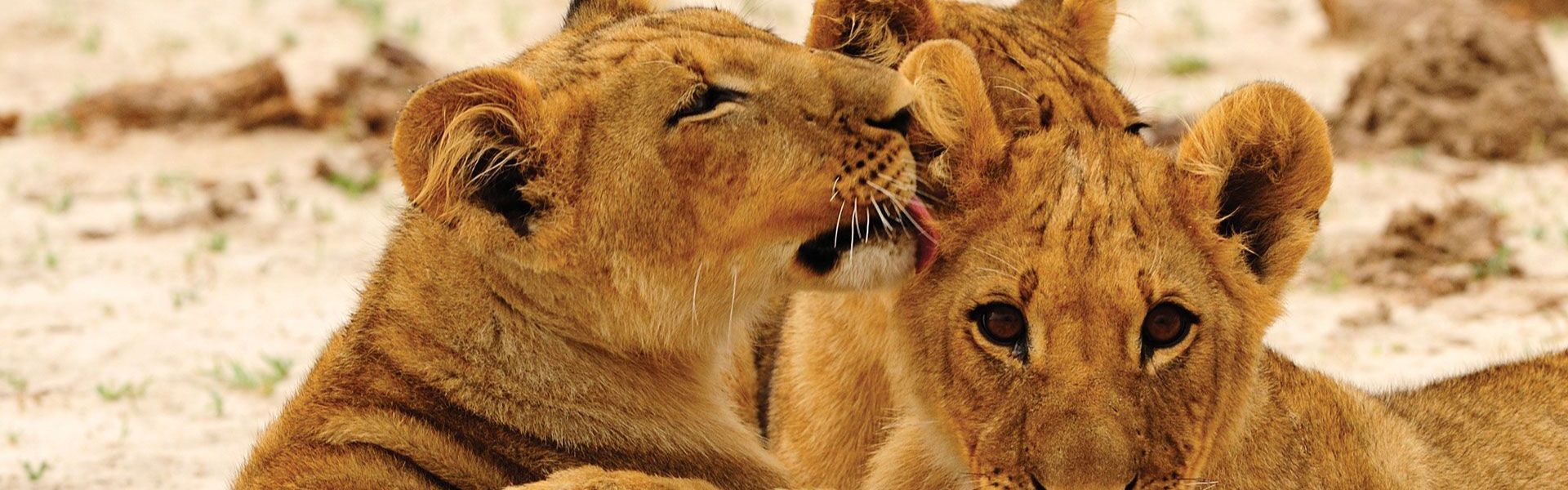
Birdlife is equally diverse, with species such as the southern ground hornbill, martial eagle, kori bustard, pearl-spotted owlet, and Cape griffon. Hwange is recognized as a Lion Conservation Unit, highlighting its importance in safeguarding lion populations alongside the Okavango Delta.
Conservation Projects
Hwange hosts several major conservation initiatives. The National Leopard Project surveys leopard populations to establish baseline data for comparison with hunting areas and communal lands. The Painted Dog Project, based in Dete, works to protect and expand the range of African wild dogs, one of the continent’s most endangered carnivores. These projects reflect Hwange’s role as a hub for scientific research and wildlife protection.
Geography & Geology
The park’s geology is dominated by Kalahari sands, with basalt lava flows in the northwest and granite-gneiss formations in the central areas. Seasonal wetlands and pans, such as Ngweshla and Nehimba, provide vital water sources, often supplemented by groundwater pumping during the dry season. Rivers like the Deka, Lukosi, and Gwabadzabuya drain parts of the park, while fossil drainage channels create unique wetland habitats.
Archaeological & Cultural Sites
Hwange is not only a natural treasure but also a cultural one. Archaeological evidence shows human presence dating back tens of thousands of years, with Stone Age foragers leaving tools and engravings of animal hoofprints on sandstone walls. Iron Age communities built stone-walled sites, including Mtoa and the Bumbusi National Monument, which remain important historical landmarks within the park.
Activities
Visitors to Hwange can enjoy:
Game Drives: Explore diverse habitats and spot large mammals.
Walking Safaris: Guided treks offer close encounters with wildlife.
Birdwatching: With over 400 species, Hwange is a paradise for ornithologists.
Cultural Tours: Visit archaeological sites and learn about the region’s history.
Photography: Capture iconic scenes of elephants at pans and lions near waterholes.
Best Time to Visit
The dry season, from May to October, is the best time to visit, as wildlife congregates around waterholes and pans, making sightings easier. The wet season, from November to April, brings lush vegetation and abundant birdlife, though access may be more challenging.
Visitor Tips
Carry binoculars for birdwatching and photography.
Guided tours are recommended for safety and deeper insights.
Respect conservation rules, as Hwange’s ecosystems are under pressure from poaching and overpopulation of elephants.
Combine a visit with Victoria Falls or nearby reserves for a richer safari experience.