

Ultimate Guide to Kgalagadi Safari
Find Kgalagadi Safari Tours from Verified South Africa Operators
The Ultimate Guide to Kgalagadi Safari
Kgalagadi SafariKgalagadi Transfrontier Park is one of southern Africa’s largest and most iconic conservation areas, straddling the border between South Africa and Botswana. Covering 38,000 km², about three-quarters of the park lies in Botswana and one-quarter in South Africa. It combines the Kalahari Gemsbok National Park in South Africa and the Gemsbok National Park in Botswana. The name Kgalagadi means “place of thirst,” reflecting the arid desert environment that defines the park.
History
The South African portion, Kalahari Gemsbok National Park, was established in 1931 to protect gemsbok and other migratory game from poaching. In 1948, an informal agreement was made between Bechuanaland Protectorate and South Africa to create a joint conservation area. By 1992, a joint management committee was formed, and in 1999 both countries signed a bilateral agreement to manage the parks as a single ecological unit. On 12 May 2000, Presidents Festus Mogae of Botswana and Thabo Mbeki of South Africa officially launched the Kgalagadi Transfrontier Park, making it southern Africa’s first peace park. In 2002, land was set aside for the Khomani San and Mier communities, creating the !Ae!Hai Heritage Park, which includes the community-run !Xaus Lodge.
Ecology
The park lies within the southern Kalahari Desert, characterized by red dunes, sparse vegetation, scattered camelthorn trees, and the dry riverbeds of the Nossob and Auob Rivers. These rivers rarely flow, but underground water sustains grasses and trees along the beds. After heavy thunderstorms, brief surface flows may occur, transforming the desert landscape. The terrain supports hardy desert-adapted plants and provides critical habitat for migratory herds and predators.
Wildlife
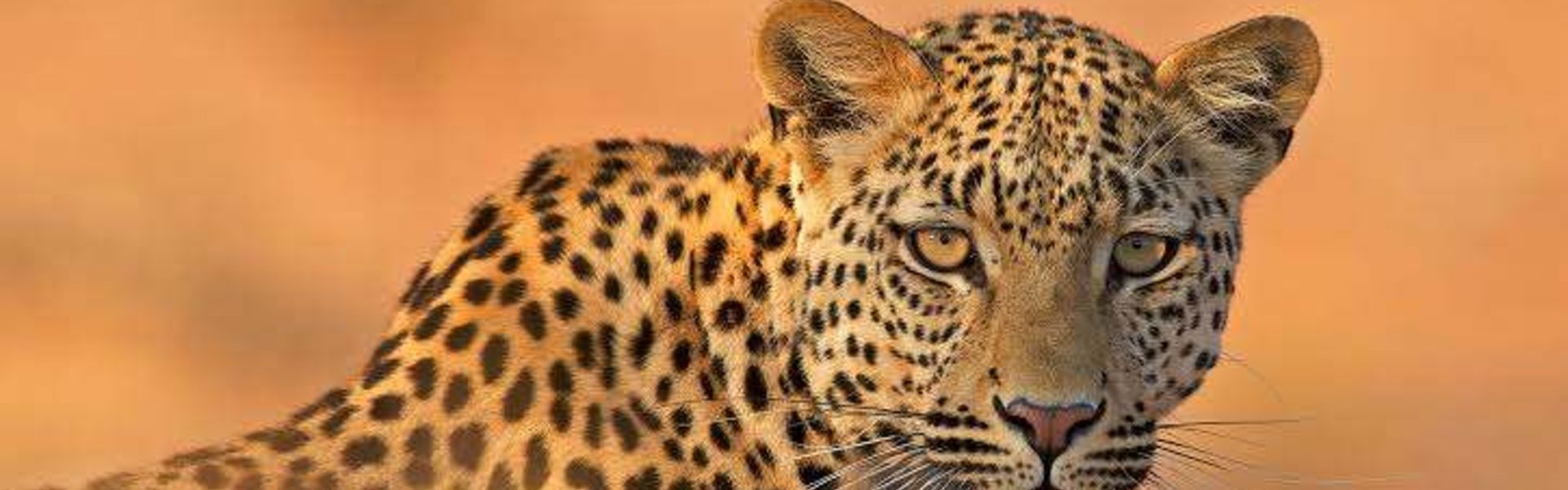
Kgalagadi is a predator stronghold and biodiversity hotspot. Lions, cheetahs, leopards, spotted hyenas, and brown hyenas thrive here, alongside smaller carnivores such as African wildcats, bat-eared foxes, Cape foxes, jackals, caracals, honey badgers, mongooses, and meerkats. Large ungulates include gemsbok, springbok, blue wildebeest, eland, kudu, giraffe, steenbok, warthog, klipspringer, and red hartebeest. Birdlife is abundant, with over 200 species including ostriches, bustards, storks, waterfowl, and around 30 raptor species. Reptiles and amphibians are also diverse, with venomous snakes such as Cape cobra, puff adder, horned adder, and black mamba, as well as tortoises, terrapins, agamas, geckos, skinks, frogs, and bullfrogs.
Surrounding Areas
The park is remote, with access mainly through Twee Rivieren Camp on the South African side. Nearby communities include the Khomani San and Mier people, who manage cultural tourism initiatives. The !Ae!Hai Heritage Park has been recognized as Africa’s first International Dark Sky Sanctuary, offering unparalleled stargazing opportunities.
Activities
Game drives and predator sightings – Visitors can explore the park’s vast landscapes by vehicle, with excellent chances of spotting lions, cheetahs, and leopards at waterholes.
Birdwatching – With over 200 species, including raptors and desert specialists, the park is a prime destination for bird enthusiasts.
Photography – The red dunes, dry riverbeds, and dramatic skies provide stunning backdrops for wildlife and landscape photography.
Cultural experiences – The !Xaus Lodge offers insights into the traditions of the Khomani San and Mier communities, including craft-making and storytelling.
Stargazing – As a designated Dark Sky Sanctuary, the park offers some of the clearest night skies in Africa, perfect for astronomy and night photography.
Best Time to Visit
Summer (November–March) – Very hot, with daytime temperatures often exceeding 40°C. Wildlife is harder to spot but dramatic thunderstorms can briefly transform the desert.
Winter (May–September) – Cooler temperatures and sparse vegetation make it the best time for game viewing, though nights can drop below freezing.
Transitional seasons (April and October) – Pleasant weather with moderate temperatures, offering a balance between comfort and wildlife activity.
Visitor Tips
Plan for extreme temperatures – Summers can be scorching while winter nights are freezing, so pack clothing for both extremes.
Carry sufficient supplies – Wilderness camps provide only shelter and wash water; visitors must bring food, drinking water, and firewood.
Choose accommodation wisely – Rest camps like Twee Rivieren offer full facilities, while wilderness camps provide a more rustic experience.
Respect cultural heritage – Engage with the Khomani San and Mier communities at !Xaus Lodge to support local traditions and tourism.
Prepare for remoteness – The park is vast and isolated, so ensure your vehicle is in good condition and fuelled before entering.
Take advantage of stargazing – The Dark Sky Sanctuary designation makes night skies here exceptional, so bring binoculars or a telescope.