
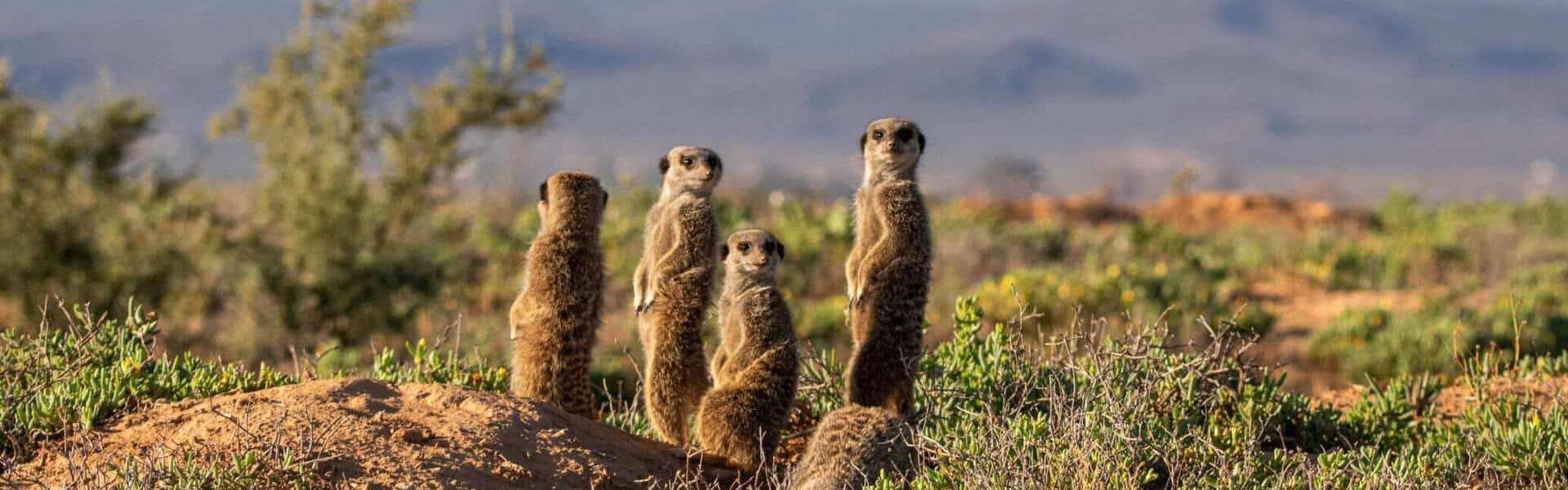

Ultimate Guide to Meerkat Safari
Find Meerkat Safari Tours from Verified South Africa Operators
The Ultimate Guide to Meerkat Safari
Meerkat SafariMeerkat National Park, located in the Northern Cape of South Africa, is a unique reserve that combines ecological conservation with cutting-edge astronomical research. It encompasses the Square Kilometre Array’s MeerKAT, PAPER, and HERA telescopes, making it the only national park in South Africa dedicated to both biodiversity and astronomy. Declared in 2020, the park added 3.4% to South Africa’s national parks estate and represents a new model of conservation that integrates science, environment, and heritage.
History
The park was created when the National Research Foundation (NRF) purchased privately owned rangeland, removed livestock, and placed the land under the protection of SANParks. This initiative was part of a partnership between the NRF and the Square Kilometre Array (SKA) project, one of the world’s largest radio astronomy endeavors. The establishment of Meerkat National Park was also intended to expand protection for vulnerable ecosystems in the Nama Karoo region. The Astronomy Geographic Advantage Act of 2007 gave the Minister of Science and Technology authority to protect areas of strategic importance for astronomy, ensuring the long-term viability of the Karoo site for radio telescopes.
Ecology
Following its declaration, extensive rehabilitation was undertaken, including the removal of livestock, fences, and invasive mesquite trees. This allowed wildlife numbers to increase and native vegetation to recover. The park is home to healthy populations of quiver trees, iconic desert plants that are vulnerable to climate change. Vegetation types include Bushmanland Basin Shrubland, Bushmanland Vloere aquatic zones, Northern Upper Karoo, Upper Karoo Hardeveld, and Western Upper Karoo. In total, 223 plant species have been documented, highlighting the park’s botanical richness.
Wildlife
Meerkat National Park supports a wide range of biodiversity. There are 29 mammal species, including aardvark, aardwolf, black-backed jackal, caracal, springbok, steenbok, porcupine, and rock hyrax, as well as three bat species. Birdlife is prolific, with between 215 and 264 species, including 25 near-endemic and two endemic species: the red lark and Sclater’s lark. Raptors such as martial eagles, secretarybirds, and Verreaux’s eagles patrol the skies, while bustards, korhaans, and smaller passerines thrive in the Karoo habitats. Amphibians include African bullfrogs, sand frogs, and Karoo toads, while reptiles number at least 23 species, including puff adders, horned adders, Cape cobras, and leopard tortoises. Invertebrates such as termites, honey bees, and harvester ants play vital ecological roles, with termite mounds (heuweltjies) shaping the landscape.
Surrounding Areas
The park lies in the remote Northern Cape, within the broader Karoo region. Its isolation makes it ideal for astronomy, free from radio interference. The surrounding communities benefit from conservation and research partnerships, while the park itself contributes to protecting unrepresented ecoregions and vulnerable species. The presence of world-class telescopes has also made the area a hub for international scientific collaboration.
Activities
Astronomy tours – Visitors can explore the MeerKAT radio facility and learn about the Square Kilometre Array project, gaining insight into cutting-edge astronomical research.
Wildlife viewing – Game drives and guided walks allow visitors to see springbok, steenbok, jackals, and other Karoo-adapted species in their natural habitat.
Birdwatching – With over 250 species, including endemic larks and raptors, the park is a paradise for bird enthusiasts.
Botanical exploration – The quiver tree forests and diverse vegetation types provide opportunities to study rare and threatened plants.
Photography – The combination of desert landscapes, quiver trees, wildlife, and futuristic telescopes offers unique photographic opportunities.
Educational programs – Special tours and workshops highlight the park’s dual role in conservation and astronomy, making it a learning destination.
Best Time to Visit
Winter (May–September) – Cooler temperatures make exploration comfortable, and wildlife is easier to spot in sparse vegetation.
Summer (October–April) – Hot conditions prevail, but this is the best time for birdwatching, as migratory species arrive and breeding activity peaks.
Special astronomy events – The park only allows visitors on preselected days, often aligned with astronomical programs or conservation events, offering rare opportunities to experience both science and nature.
Visitor Tips
Plan ahead – Access is restricted to specific days; check schedules before visiting.
Prepare for remoteness – The park is in an isolated region; carry sufficient food, water, and fuel.
Dress for extremes – Summers are hot, while winter nights can be cold; layered clothing is essential.
Bring binoculars and cameras – Essential for birdwatching, wildlife viewing, and capturing the telescopes and landscapes.
Respect scientific facilities – The telescopes are sensitive to interference; follow all rules regarding electronic devices and radio signals.
Support conservation goals – Be mindful of the park’s role in protecting vulnerable ecosystems and species, and avoid disturbing habitats.