

Ultimate Guide to Tankwa Karoo Safari
Find Tankwa Karoo Safari Tours from Verified South Africa Operators
The Ultimate Guide to Tankwa Karoo Safari
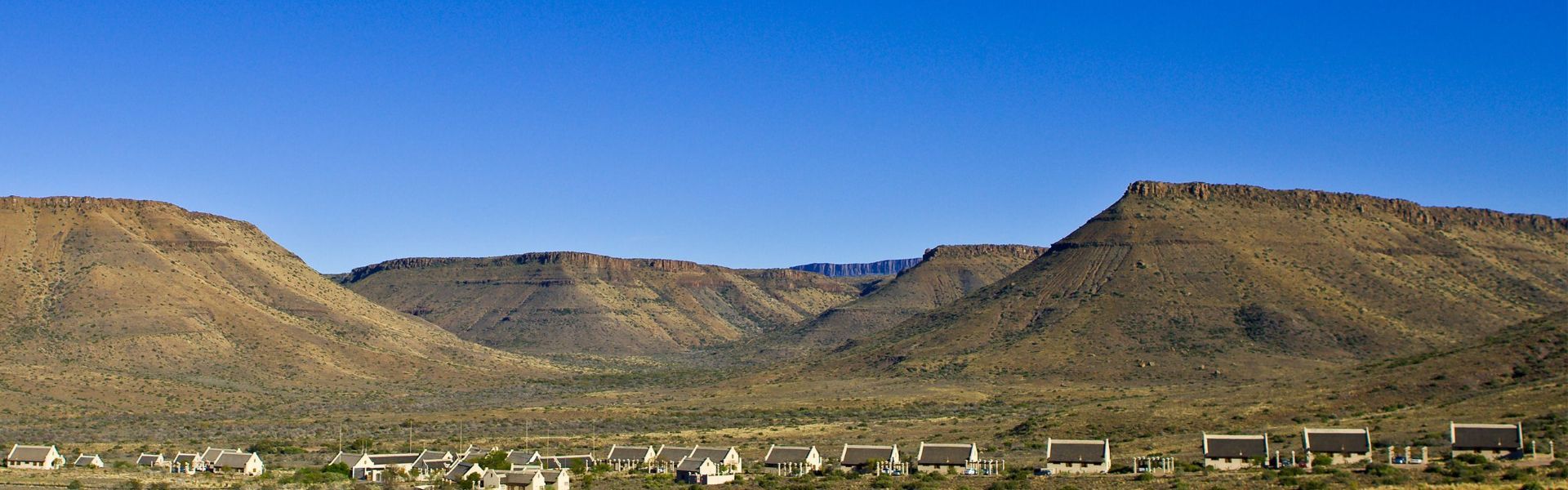
Tankwa Karoo SafariTankwa Karoo National Park, located along the border of the Northern Cape and Western Cape, is one of South Africa’s most arid and striking reserves. Situated about 70 km west of Sutherland, the park lies within the Succulent Karoo biome, a globally recognized biodiversity hotspot. Covering 1,463 km² today, it protects unique desert-adapted plants, rare bird species, and a variety of mammals. Its stark beauty, wide-open plains, and rugged mountains make it a destination for those seeking solitude and dramatic desert landscapes.
History
The park was established in 1998 when Conrad Strauss sold 280 km² of sheep farm land to SANParks. Initially covering 270 km², the park has since expanded to 1,463 km², making it one of the largest protected areas in the Succulent Karoo. Before its proclamation, the only protected Succulent Karoo habitat was a tiny 2 km² patch in the Gamkaberg Nature Reserve, highlighting the importance of Tankwa Karoo in safeguarding this biome. The expansion of the park has allowed for the reintroduction of game species that historically roamed the area, ensuring ecological restoration of overgrazed land.
Ecology
Tankwa Karoo is bounded by the Roggeveld Mountains to the east, the Cederberg to the west, the Kouebokkeveld Mountains to the north, and the foothills of the Koedoesberge and Klein Roggeveld Mountains to the south. The Tankwa River flows through the southern boundary, and the park’s headquarters are located at Roodewerf. The climate is extremely arid, with some areas receiving less than 100 mm of rainfall annually. Summers are scorching, with January temperatures averaging nearly 39°C, while winters are cold, with July minimums dropping to 5–7°C. Vegetation is sparse shrubland and dwarf shrubland, but unique succulent genera such as Tanquana, Braunsia, and Didymaotus thrive here.
Wildlife
The park is home to a wide range of mammals, including aardvark, aardwolf, bat-eared fox, black-backed jackal, Cape fox, caracal, chacma baboon, kudu, springbok, steenbok, and leopard. Smaller species such as meerkats, porcupines, and honey badgers are also present. Birdlife is exceptional, with 187 species recorded, including black-headed canary, Ludwig’s bustard, black-eared sparrow-lark, Karoo korhaan, and Verreaux’s eagle. Peak birding season is from August to October, when migratory species arrive. Reptiles and amphibians are also diverse, with species adapted to the harsh desert environment.
Surrounding Areas
Tankwa Karoo lies in a remote region, with the nearest towns being Ceres (180 km), Sutherland (120 km), Calvinia (110 km), and Middelpos (52 km). Its isolation makes it a destination for those seeking tranquility and unspoiled desert scenery. The surrounding Succulent Karoo biome stretches across South Africa and Namibia, but only a small percentage is formally protected, making Tankwa Karoo vital for conservation.
Activities
Game viewing – Explore the park’s plains and rocky outcrops to spot antelope, predators, and smaller mammals adapted to desert life.
Birdwatching – With nearly 200 species, including endemic larks and bustards, the park is a paradise for bird enthusiasts, especially in spring.
Scenic drives – Travel through vast open landscapes, mountain passes, and river valleys, experiencing the stark beauty of the Karoo.
Photography – Capture dramatic desert scenery, succulents, and wildlife against the backdrop of rugged mountains.
Stargazing – The park’s isolation and clear skies make it one of the best places in South Africa for astronomy and night photography.
Hiking and exploration – Walk through dwarf shrubland and rocky terrain to experience the unique vegetation and solitude of the Karoo.
Best Time to Visit
Spring (August–October) – Best for birdwatching and wildflowers, as rainfall brings life to the arid landscape.
Summer (November–March) – Extremely hot, with temperatures often exceeding 40°C; suitable for experienced travelers prepared for desert conditions.
Winter (May–July) – Cold nights but mild days, offering comfortable conditions for exploration and photography.
Visitor Tips
Prepare for remoteness – The park is far from towns; carry sufficient food, water, and fuel.
Dress for extremes – Summers are scorching, while winter nights are freezing; layered clothing is essential.
Bring binoculars and cameras – Birding and photography are highlights, especially during spring.
Respect conservation rules – Stick to designated roads and trails to protect fragile vegetation and wildlife.
Plan for limited facilities – Accommodation and services are basic; self-sufficiency is key.
Enjoy the silence – The park is known for its solitude; embrace the tranquility and vastness of the Karoo.