

Ultimate Guide to Mokala Safari
Find Mokala Safari Tours from Verified South Africa Operators
The Ultimate Guide to Mokala Safari
Mokala SafariMokala National Park, established on 19 June 2007, is located in the Plooysburg area southwest of Kimberley in South Africa’s Northern Cape. Covering 26,485 hectares, the park is named after the camel thorn tree (mokala in Setswana), a species typical of the arid western interior. Mokala is known as a sanctuary for endangered species and rare plants, while also offering visitors striking savanna and Karoo landscapes. With about 70 km of accessible roads, it provides opportunities for exploration and wildlife viewing in a malaria-free environment.
History
Mokala was created to replace the former Vaalbos National Park, which was deproclaimed due to land claims and diamond prospecting rights. In 1998, SANParks studied five potential areas for a replacement, eventually selecting Wintershoek, a 19,611-hectare tract of land. In 2005, the land was purchased, and reintroduction of wildlife began. The first animals, a group of giraffes, were released in June 2006, and the park was officially proclaimed a year later. The area also holds cultural significance, with San rock engravings and Second Boer War battlefields, including the nearby battlefield of Belmont, adding historical depth to the reserve.
Climate
The Northern Cape is characterized by dry, semi-desert conditions with fluctuating temperatures. Rainfall averages around 400 mm annually, always lower than evaporation rates. Summers (December–February) are hot, often reaching 33–36°C, with occasional peaks above 40°C. Thunderstorms occur in the central and eastern areas during summer, while winter rainfall is more common in the west. Winters (June–August) bring mild daytime temperatures around 22°C, but nights can drop below freezing, creating sharp contrasts between day and night.
Landscape
Mokala lies in a transition zone between the savanna biome and the Nama Karoo biome. The savanna areas are flat and sandy, dotted with camel thorns, umbrella thorns, puzzle bushes, and sociable weaver nests. The Nama Karoo sections feature rocky lava outcrops, calcrete, and shale formations. The southern part of the park is more plains-like, with tall grasses and scattered camel thorns, while the central regions resemble Karoo habitats with long rows of rocky outcrops interspersed with scrub and grass. Run-off from the slopes supports richer vegetation at the base of outcrops, creating microhabitats for wildlife.
Wildlife
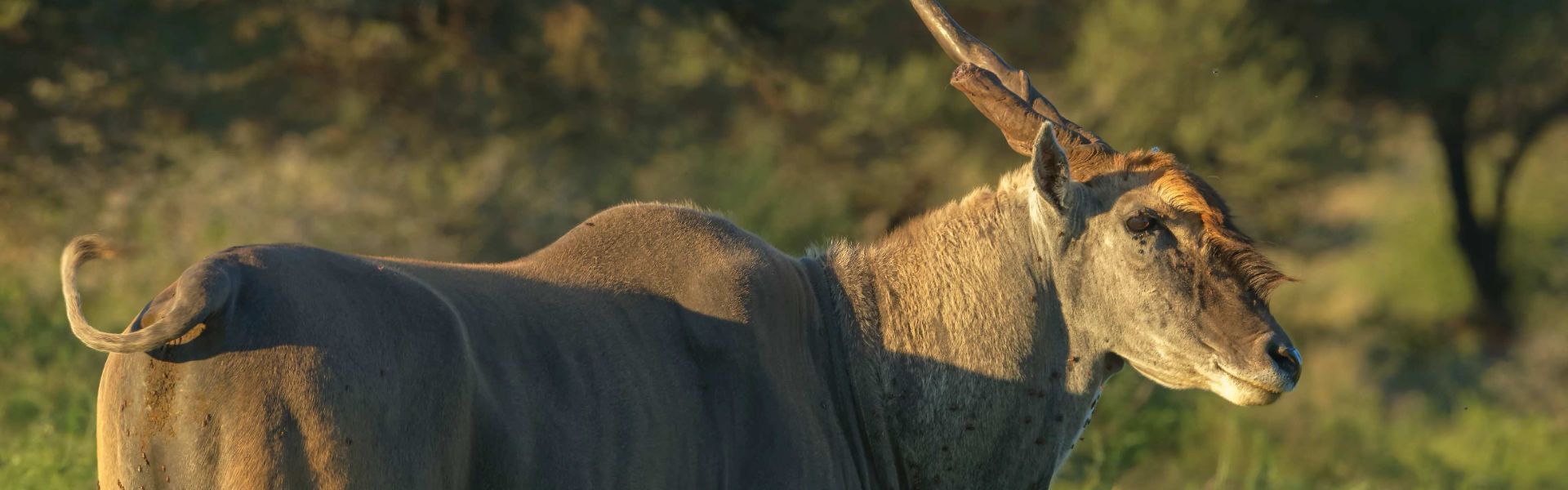
Mokala’s primary purpose is to protect endangered species. It is home to Cape buffalo, black rhino, roan antelope, and other rare animals. White rhinos, giraffes, and numerous antelope species roam the plains, while predators such as caracals and jackals are also present. Birdlife is diverse, with endemic species thriving in the arid conditions. The black-chested prinia is common, while warblers, buntings, and swallows are often seen near lodges. The park is malaria-free, making it safe for visitors year-round.
Flora
Vegetation is dominated by iconic trees such as camel thorn (Vachellia erioloba), umbrella thorn (Vachellia tortilis), blackthorn (Senegalia mellifera), and buffalo thorn (Ziziphus mucronata). Grasses include Schmidtia pappophoroides, Eragrostis lehmanniana, and Cynodon dactylon, which support grazing wildlife. The combination of savanna and Karoo vegetation creates a mosaic of habitats that sustain high biodiversity.
Surrounding Areas
Mokala lies southwest of Kimberley, accessible via the Hopetown road (N12). The park is not heavily signposted, but directions are clear once on the gravel roads leading to the entrance. The Riet River flows along the eastern edge near Lilydale Lodge, adding scenic value. The surrounding region is rich in cultural history, with Boer War battlefields and San engravings providing context to the natural beauty.
Activities
Game drives – Explore 70 km of accessible roads to see rhinos, buffalo, antelope, and other wildlife in diverse habitats.
Birdwatching – Sunrise birding between 07h30 and 09h00 is ideal, with endemic species like black-chested prinia and Cape buntings frequently observed.
Bush walks – Guided walks allow close encounters with plants, birds, and smaller mammals, while learning about the ecology of the savanna and Karoo.
Photography – Capture dramatic landscapes, sociable weaver nests, and wildlife against the backdrop of camel thorn trees.
Cultural exploration – Visit nearby San rock engravings and Boer War battlefields to connect with the area’s heritage.
Picnics and waterhole viewing – Lodges and camps overlook waterholes where animals gather, offering relaxed wildlife viewing.
Best Time to Visit
Dry season (May–September) – Best for game viewing as animals congregate near waterholes and vegetation is sparse.
Wet season (October–April) – The park becomes green, bird activity peaks, and thunderstorms add drama to the landscape.
Winter nights (June–August) – Cold nights contrast with warm days, offering unique experiences for visitors prepared for extremes.
Visitor Tips
Plan your route – The park is reached via gravel roads; ensure your vehicle is suitable and fuelled before arrival.
Choose accommodation wisely – Options include Mosu Lodge, Haak-en-Steek campsite, and Lilydale Lodge, each offering different experiences.
Rustic camping – Motswedi campsite provides private facilities but no power points; ideal for self-sufficient travelers.
Book meals in advance – Restaurants at Mosu and Lilydale require pre-booking; Lilydale only serves breakfast and lunch.
Pack for climate extremes – Summers are hot, while winter nights can be freezing; layered clothing is essential.
Bring binoculars and cameras – Birding and wildlife photography are highlights, especially at waterholes and hides.
Respect conservation rules – Stick to designated roads and trails to protect sensitive habitats and species.