

Ultimate Guide to Luambe Safari
Find Luambe Safari Tours from Verified Zambia Operators
The Ultimate Guide to Luambe Safari
Luambe SafariLuambe National Park, located in Eastern Province of Zambia, is one of the smaller but ecologically significant parks in the Luangwa River Valley. Covering only 300 square kilometers, it lies on the flat valley bottom between South Luangwa National Park to the south and North Luangwa National Park to the north. Despite its modest size, Luambe plays an important role in preserving the biodiversity of the valley, acting as a vital link between its larger neighbors.
Ecology
The park’s landscape is dominated by Zambezian and Mopane woodlands, a savanna type adapted to the hotter, drier conditions of the valley floor. Elevations range between 500–700 meters above sea level, with vegetation alternating between dense mopane stands and open grasslands. The Luangwa River is the lifeline of the park, flooding during the rainy season and leaving behind lagoons as waters recede. These lagoons sustain wildlife during the dry months, creating a dynamic ecosystem where land and water interact to support rich biodiversity.
Biodiversity
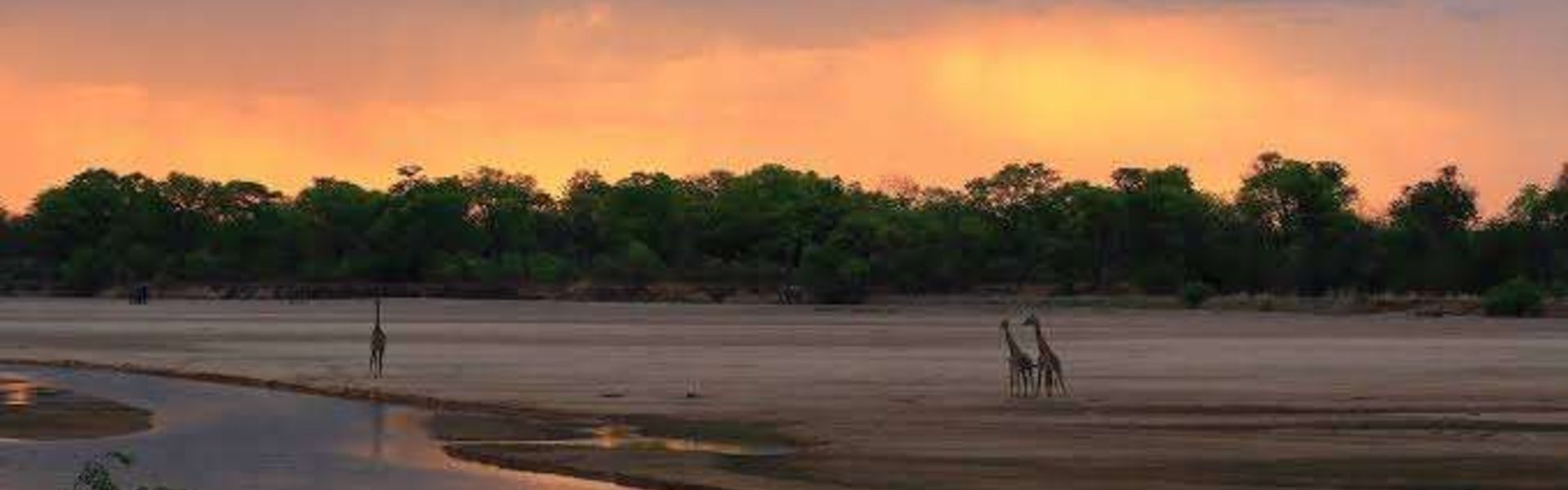
Luambe hosts a variety of wildlife typical of the Luangwa Valley. The lagoons attract hippopotamuses, crocodiles, antelopes, and bird species during the dry season. The park also supports populations of zebra, giraffe, elephants, and buffalo, though numbers were drastically reduced by poaching in the past. Birdlife is abundant, with lagoons and woodlands providing habitats for waterfowl, raptors, and savanna specialists.
Conservation & Threats
For decades, Luambe suffered from neglect and lack of funding, leading to severe poaching and a collapse in wildlife populations. By the late 1990s, only a few shy animals remained. In 1999, conservation efforts began through Luangwa-Wilderness e.V., a non-profit association working with the Zambia Wildlife Authority (ZAWA) and local communities. Inspired by successful models in North Luangwa, these efforts focused on rebuilding wildlife populations, restoring habitats, and involving communities in conservation.
Recovery Efforts
In recent years, the construction of a lodge within Luambe National Park has supported tourism and conservation. Wildlife numbers have shown signs of recovery, with improved protection and community engagement. The long-term vision is for Luambe to be managed entirely by Zambians, with tourism revenues reinvested into conservation and local development.
Surrounding Areas
Luambe sits strategically between South Luangwa and North Luangwa National Parks, making it a potential corridor for wildlife movement. Plans exist to establish ecological corridors linking the northern and southern parks, similar to the Great Limpopo Transfrontier Park in southern Africa, which connects Mozambique, South Africa, and Zimbabwe. Such initiatives would enhance genetic diversity and long-term sustainability of wildlife populations in the Luangwa Valley.
Activities
Visitors to Luambe can enjoy:
Walking Safaris – exploring woodlands and lagoons with guides.
Game Viewing – sightings of hippos, crocodiles, antelopes, and recovering populations of larger mammals.
Birdwatching – lagoons and woodlands attract diverse bird species.
Photography – dramatic river scenes and seasonal lagoons provide excellent opportunities.
Best Time to Visit
The dry season (May to October) is the best time to visit, as lagoons attract wildlife and walking safaris are most rewarding. The wet season (November to April) transforms the park into lush greenery, with vibrant birdlife, though access becomes more difficult due to flooding.
Visitor Tips
Accommodation is limited, but a lodge now operates within the park.
Carry binoculars and cameras to capture birdlife and lagoon scenery.
Respect conservation rules, as Luambe is still recovering from decades of poaching.