
Ultimate Guide to Mosi-oa-Tunya Safari
Find Mosi-oa-Tunya Safari Tours from Verified Zambia Operators
The Ultimate Guide to Mosi-oa-Tunya Safari
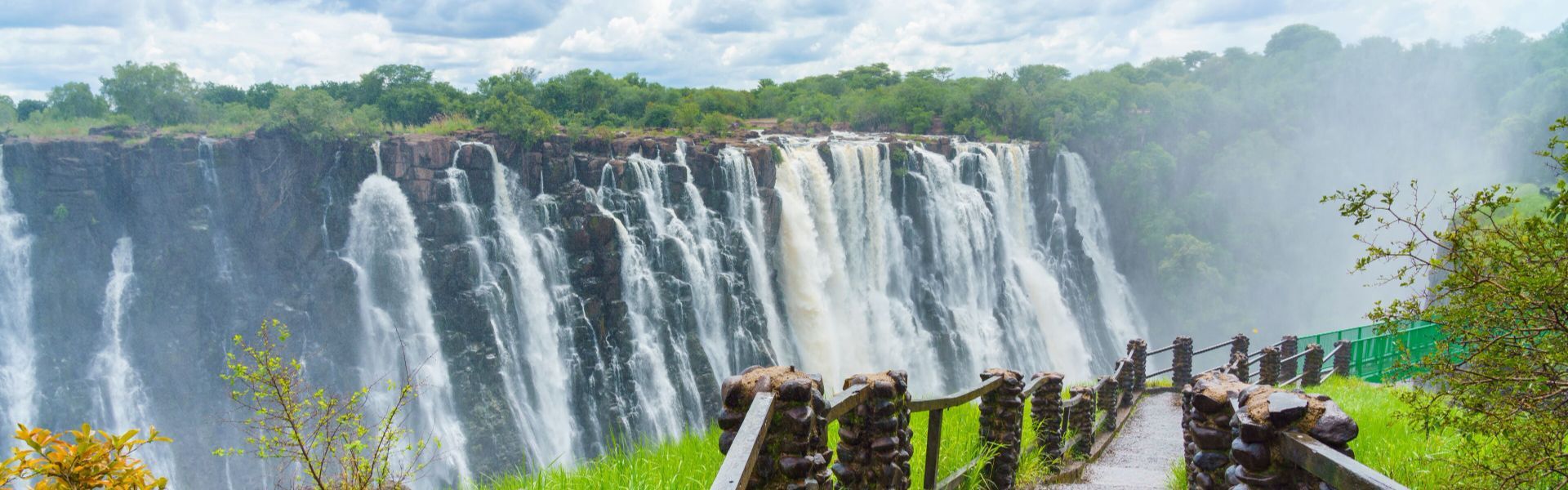
Mosi-oa-Tunya SafariMosi-oa-Tunya National Park, located in Zambia’s Southern Province, is one of Africa’s most celebrated natural landmarks. Covering 66 square kilometers (25 square miles), the park is best known for protecting one-half of the world-famous Victoria Falls, locally called Mosi-oa-Tunya meaning “The Smoke that Thunders.” The Zambezi River forms the international boundary between Zambia and Zimbabwe, so the falls are shared by both nations. On the Zimbabwean side lies the twin Victoria Falls National Park, together creating one of the most iconic transboundary conservation areas in Africa.
UNESCO World Heritage Status
In 1989, Mosi-oa-Tunya National Park was inscribed as a UNESCO World Heritage Site under criteria (vii) and (viii), recognizing its outstanding natural beauty and geological significance. The designation highlights the park’s role in preserving the world’s largest curtain of falling water during the rainy season, as well as its unique ecosystems along the Zambezi River. The park is managed by the Zambia Wildlife Authority, which oversees conservation, tourism, and community engagement.
Landscape & Sections
The park stretches from the Songwe Gorge below the falls in a northwest arc along about 20 kilometers of Zambian riverbank, forming the southwestern boundary of Livingstone city. It is divided into two main sections:
The Falls Section – encompassing the rainforest sustained by the spray of Victoria Falls, with rare plant species and dramatic viewpoints.
The Wildlife Section – a fenced area of woodland, grassland, and riverine forest that hosts a variety of animals and birds.
Together, these sections offer visitors both breathtaking scenery and traditional safari experiences.
Wildlife
The wildlife section of the park supports diverse habitats, including miombo woodland, tall riverine forests with palms, and open grasslands. Species commonly seen include Angolan giraffes, Burchell’s zebras, warthogs, sable antelope, buffalo, impalas, and other antelopes. Birdlife is abundant, with raptors, waterbirds, and woodland species thriving in the varied ecosystems.
The park is also notable for its southern white rhinoceroses, which were reintroduced from South Africa after Zambia’s indigenous black rhinos were extirpated. Despite challenges such as poaching—two rhinos were attacked in 2007—the population has grown steadily, and by 2022 there were 10 white rhinos, including calves, under 24-hour surveillance.
Other Wildlife Encounters
During the dry season, African elephants often cross the Zambezi River from Zimbabwe into the park. Hippos and crocodiles are frequently seen along the riverbanks, while vervet monkeys and baboons are common throughout the park. In 2009, a commercial wildlife company introduced a “walking with lions” experience, with plans to expand into the Dambwa Forest section for breeding programs.
Historical & Cultural Sites
Within the wildlife section lies the Old Drift Cemetery, where some of the earliest European settlers in the region were buried. These pioneers camped by the river but succumbed to malaria, mistakenly blaming the yellow-and-green-barked “fever trees” instead of the mosquito. Their relocation to higher ground eventually led to the founding of Livingstone town, named after the famous explorer.
The Falls Section
The falls section includes the rainforest opposite the Eastern Cataract, sustained by constant spray. Rare plants such as pod mahogany, ebony, ivory palm, wild date palm, creepers, and lianas thrive here. Small antelopes and warthogs inhabit the forest paths. Visitors can explore landmarks like the Knife-Edge Bridge, built in the 1960s, which offers dramatic views of the Rainbow Falls and the Boiling Pot below the Second Gorge. In 2005, a new statue of David Livingstone was erected in the park, commemorating his first sighting of the falls from Livingstone Island.
Activities & Attractions
Visitors to Mosi-oa-Tunya can enjoy:
Viewing Victoria Falls – the world’s largest curtain of falling water in the rainy season.
Wildlife Safaris – game drives and guided walks in the wildlife section.
Birdwatching – over 35 raptor species breed in the gorges, including the rare Taita falcon.
Cultural Exploration – visiting Old Drift Cemetery and Livingstone Island.
Photography – capturing dramatic landscapes, waterfalls, and wildlife interactions.
Regional Context
Mosi-oa-Tunya National Park is part of broader conservation efforts in southern Africa. It is under consideration for inclusion in the Kavango–Zambezi Transfrontier Conservation Area, a five-nation initiative linking protected areas across Angola, Botswana, Namibia, Zambia, and Zimbabwe. This would create one of the largest conservation landscapes in the world, ensuring ecological connectivity and sustainable tourism.