
Ultimate Guide to Central Island Safari
Find Central Island Safari Tours from Verified Kenya Operators
The Ultimate Guide to Central Island Safari
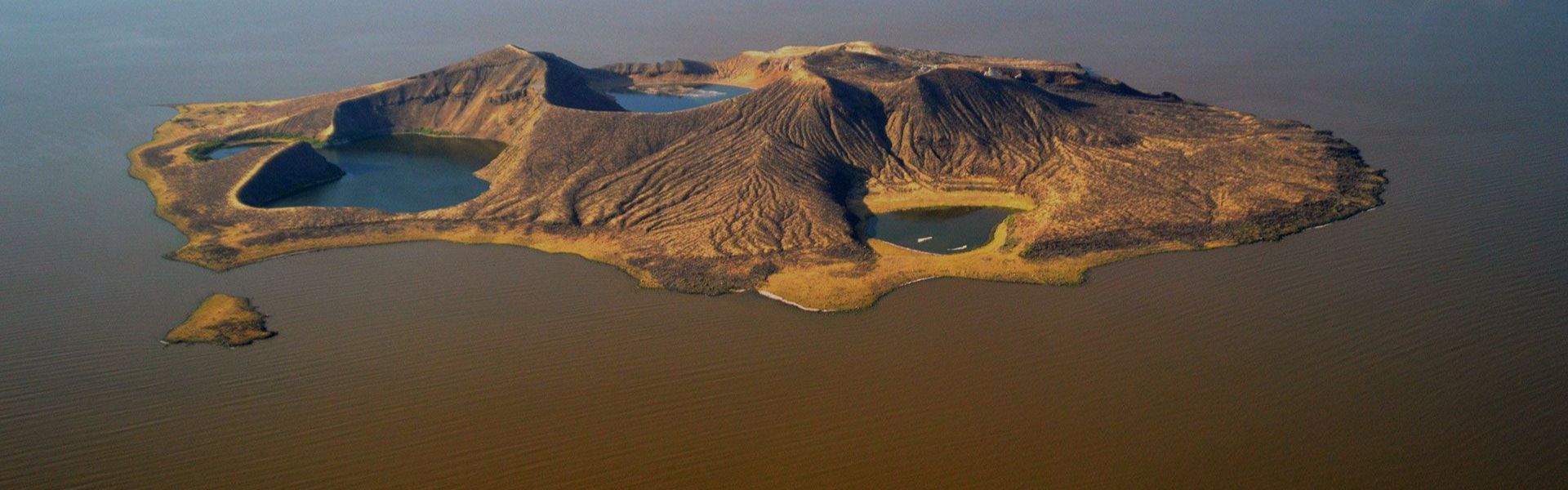
Central Island SafariCentral Island, also called Crocodile Island, lies in the middle of Lake Turkana in northern Kenya. It is a volcanic island that forms part of Central Island National Park, managed by the Kenya Wildlife Service. The island is about 3 km wide and is dominated by basaltic rock formations, craters, and cones.
The island contains more than a dozen volcanic craters, three of which are filled with small crater lakes. The two largest lakes occupy craters nearly a kilometer wide and about 80 m deep, with their floors lying close to sea level. The highest point of the island rises to 550 m, standing roughly 190 m above the lake’s surface. Along the eastern side runs a chain of explosion craters, while smaller islands to the southeast mark partially submerged crater rims. Beneath the lake surface, additional cones and lava plugs extend the volcanic landscape.
Geology & Activity
Central Island is geologically young, with its most recent tuffs and lavas possibly dating to the Holocene period. Fumarolic activity has long been observed, particularly along the northeast to southeast rim of the central crater. In the 1930s, visitors reported sprays of sulfur from fumaroles, and in 1974, intense emissions of molten sulfur and steam clouds were seen from the mainland evidence of the island’s continuing volcanic activity.
Wildlife
The crater lakes and surrounding waters of Lake Turkana support a remarkable range of wildlife. The island is best known for its large population of Nile crocodiles, which breed in the crater lakes. Hippos are also found here, along with diverse birdlife including flamingos, herons, and other water birds that thrive in the volcanic lakes. The stark volcanic terrain combined with aquatic habitats makes Central Island a unique ecological site.
Best Time to Visit
The most rewarding time to visit Central Island is during the dry seasons (December–March and July–October), when boat access across Lake Turkana is easier and visibility is clearer for photography. The rainy seasons (April–June and November) bring dramatic skies and lush surroundings, but travel can be more challenging due to rough lake conditions.
Activities
Crater Lake Exploration: Visit the three crater lakes, each with distinct volcanic and ecological features.
Wildlife Viewing: Observe Nile crocodiles, hippos, and birdlife around the lakes and shores.
Birdwatching: Spot flamingos, herons, and migratory water birds.
Volcanic Landscape Tours: Explore craters, cones, and lava plugs with guided walks.
Photography: Capture striking views of Lake Turkana, volcanic formations, and wildlife.
Boat Excursions: Travel across Lake Turkana to reach the island and enjoy panoramic vistas.
Visitor Tips
Travelers should plan for guided visits, as access is only possible by boat from the mainland. Carry plenty of water, sun protection, and sturdy shoes, since the volcanic terrain can be rough. The dry season offers the safest and most comfortable conditions, while the rainy season appeals to adventurous visitors seeking dramatic landscapes. For safety, always coordinate with local guides or Kenya Wildlife Service rangers before crossing the lake.