

Ultimate Guide to Mount Longonot Safari
Find Mount Longonot Safari Tours from Verified Kenya Operators
The Ultimate Guide to Mount Longonot Safari
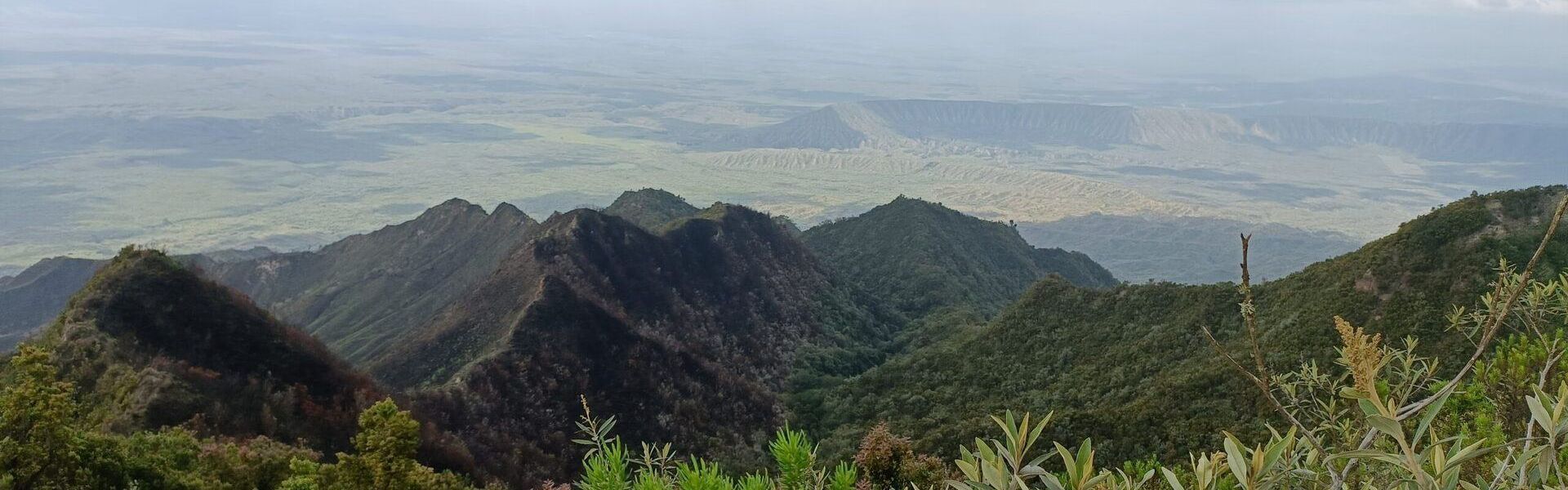
Mount Longonot SafariMount Longonot is a striking stratovolcano located southeast of Lake Naivasha in Kenya’s Great Rift Valley, about 60 km northwest of Nairobi. Rising to 2,776 m (9,108 ft), it is protected within Mount Longonot National Park, managed by the Kenya Wildlife Service. The name “Longonot” comes from the Maasai word Olongongot, meaning “mountains of many spurs” or “steep ridges.”
A popular hiking destination, the park features a 3.1 km trail from the gate to the crater rim, followed by a 7.2 km loop around the rim. The full circuit of 13.5 km takes about 4-5 hours, with steep and eroded sections that challenge even experienced hikers.
Geology
Mount Longonot formed within a massive 8 × 12 km caldera, created by eruptions of trachytic lava about 21,000 years ago. The current summit cone, capped by a 1.8 km crater, developed inside this earlier caldera. Several parasitic cones and lava flows mark its flanks. Geodetic studies between 2004 and 2006 confirmed the presence of active magmatic systems beneath the volcano, suggesting ongoing geothermal potential.
Flora & Fauna
The crater floor is covered by a forest of small trees, while steam vents dot the crater walls. Wildlife includes zebras, giraffes, buffaloes, hartebeests, and Thomson’s gazelles, along with diverse bird species. The slopes and crater provide excellent opportunities for birdwatching and game viewing, enhanced by the unique volcanic vegetation.
Notable Events
On March 21, 2009, bushfires swept up the mountain and into the crater, trapping wildlife and consuming drought‑stricken vegetation. This highlighted the vulnerability of the ecosystem to climate extremes.
Best Time to Visit
The best time to visit Mount Longonot is during the dry seasons (January-March and June-October), when trails are more accessible and visibility is clear. Rainy seasons (April–May and November-December) bring lush greenery but make hiking more difficult due to slippery paths.
Activities
Hiking & Trekking: Climb from the park gate to the crater rim and complete the 7.2 km loop.
Wildlife Viewing: Spot zebras, giraffes, buffaloes, and gazelles on the slopes.
Birdwatching: Observe diverse bird species around the crater and forest.
Scenic Viewing: Enjoy panoramic views of the Rift Valley and Lake Naivasha from the rim.
Photography: Capture dramatic volcanic landscapes and wildlife encounters.
Geological Exploration: Learn about the caldera, crater, and geothermal features.
Visitor Tips
Visitors should prepare for steep, eroded trails and carry sufficient water, sturdy hiking boots, and sun protection. Guided hikes are recommended for safety and to enrich the experience with geological and ecological insights. The hike around the crater rim is demanding but rewarding, offering some of the most spectacular views in the Rift Valley.