

Ultimate Guide to Nairobi Safari
Find Nairobi Safari Tours from Verified Kenya Operators
The Ultimate Guide to Nairobi Safari
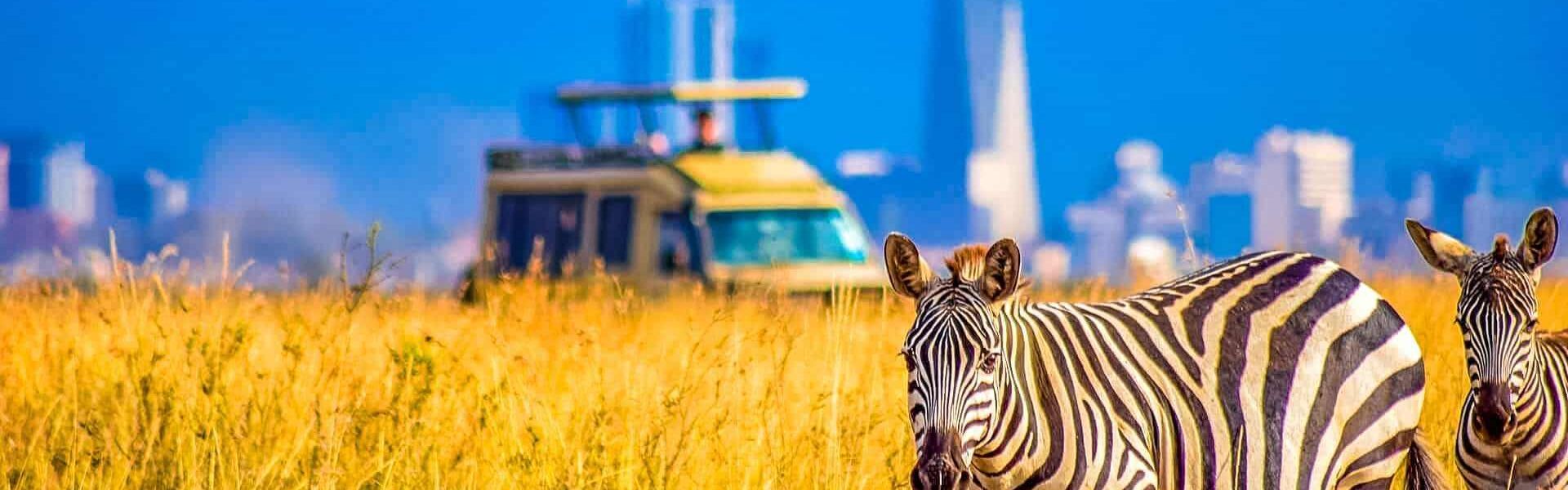
Nairobi SafariNairobi National Park, established in 1946, lies just 7 km (4.3 mi) south of Nairobi’s city center. Covering 117 km² (45 mi²), it is Kenya’s first national park and one of the most unique protected areas in the world—where lions, giraffes, and rhinos roam against the backdrop of Nairobi’s skyline. The park is fenced on three sides, but its southern boundary along the Mbagathi River remains open, allowing wildlife to migrate into the Kitengela plains.
Despite its small size and proximity to the city, the park boasts a large and varied wildlife population and is one of Kenya’s most successful rhinoceros sanctuaries, earning it the nickname “Kifaru Ark.”
History
In the late 19th century, the Athi plains around Nairobi teemed with wildlife, coexisting with Maasai pastoralists and Kikuyu farmers. As Nairobi grew, conflicts between humans and animals increased, leading to the creation of a game reserve. Conservationist Mervyn Cowie campaigned for a national park system, and in 1946, Nairobi National Park was officially opened, becoming Kenya’s first national park.
Maasai pastoralists were displaced during its creation. Cowie served as director until 1966. In 1989, President Daniel arap Moi famously burned 12 tons of ivory inside the park, a symbolic act that boosted Kenya’s conservation image worldwide.
Geography & Habitat
The park sits at elevations between 1,533 and 1,760 m (5,030-5,774 ft) and has a dry climate. Its habitats include:
Open grass plains with scattered acacia bushes.
Highland dry forest in the western uplands.
Riverine forest along the southern boundary.
Rocky valleys and gorges with acacia and euphorbia species.
Several plants found on the rocky hillsides are unique to Nairobi, such as Euphorbia brevitorta and Murdannia clarkeana.
Wildlife
Nairobi National Park hosts a remarkable diversity of species, including lion, leopard, cheetah, black rhino, buffalo, giraffe, zebra, wildebeest, hippo, hyena, warthog, and antelopes such as impala, eland, and gazelles.
The park is a critical dry‑season refuge, as herbivores migrate south to the Athi‑Kapiti plains during the rains and return when outside areas dry up. Over 500 bird species have been recorded, including resident and migratory species.
The David Sheldrick Wildlife Trust operates an orphanage for elephants and rhinos near the main entrance, rescuing and rehabilitating calves before releasing them into secure sanctuaries.
Conservation Challenges
The park faces pressures from Nairobi’s rapid urban growth, pollution, and land use changes. Human‑wildlife conflicts are common, especially with lions threatening livestock. Industrial waste along the northern boundary contaminates water systems. Efforts with local Maasai landowners in Kitengela aim to balance conservation with community benefits.
Since 2005, the park has been recognized as part of a Lion Conservation Unit.
Best Time to Visit
The best time to visit is during the dry seasons (July-October and January-March), when wildlife concentrations are highest inside the park. The wet seasons bring lush vegetation and migratory birds, but animals disperse into the plains.
Activities
Game Drives: Spot lions, rhinos, giraffes, and zebras against Nairobi’s skyline.
Birdwatching: Observe up to 500 species, including migratory birds.
Safari Walk: Learn about Kenya’s plants and animals in an educational setting.
Animal Orphanage Visits: See rescued elephants, rhinos, and other species.
Ivory Burning Site Monument: Visit the historic conservation landmark.
Photography: Capture iconic images of wildlife with the city skyline backdrop.
Educational Tours: Attend lectures and guided visits at the Wildlife Conservation Education Centre.
Visitor Tips
Nairobi National Park is ideal for half‑day or full‑day trips from the city. Early morning or late afternoon drives offer the best wildlife sightings. Guided tours enrich the experience with conservation history. Visitors should prepare for dry conditions, carry water, and bring binoculars for birdwatching.