
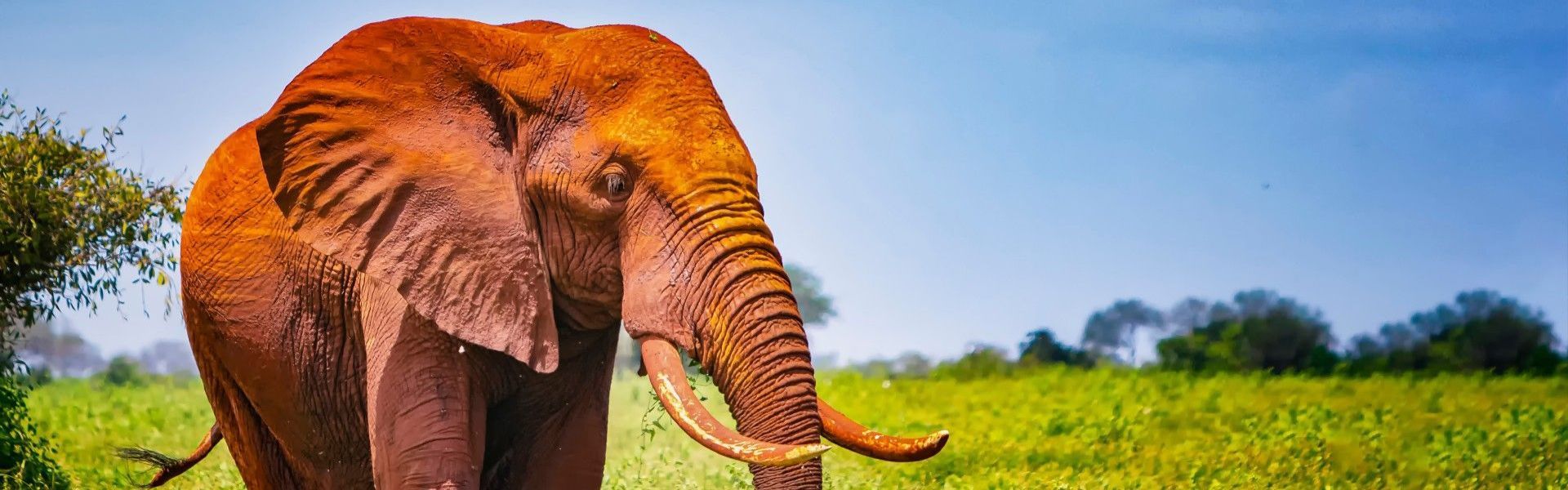

Ultimate Guide to Tsavo East Safari
Find Tsavo East Safari Tours from Verified Kenya Operators
The Ultimate Guide to Tsavo East Safari
Tsavo East SafariTsavo East National Park, established in April 1948, is one of Kenya’s largest and most iconic protected areas. Covering 13,747 km² (5,308 mi²), it forms part of the greater Tsavo Conservation Area together with Tsavo West National Park, creating a combined wilderness of about 22,000 km² (8,500 mi²). The park lies in Taita‑Taveta County, formerly part of Coast Province, and is traversed by the Tsavo River, which flows west to east.
The park was carved out of the semi‑arid Taru Desert, transforming it into a sanctuary for wildlife and a cornerstone of Kenya’s conservation legacy. Today, Tsavo East is celebrated for its vast landscapes, dramatic geological features, and extraordinary biodiversity.
Geography & Natural Features
Tsavo East is generally flat, dominated by semi‑arid grasslands and savanna plains. The Galana River cuts across the park, creating a lifeline for wildlife. Several striking landmarks define the park’s scenery:
Yatta Plateau: The world’s longest lava flow, stretching 290 km (180 mi), formed by ancient eruptions from Ol Donyo Sabuk.
Mudanda Rock: A massive 1,600 m (5,200 ft) inselberg that acts as a natural water catchment. Its dam below attracts elephants and other animals, offering spectacular viewing opportunities.
Lugard Falls: A series of white‑water rapids on the Galana River, named after explorer Frederick Lugard.
Aruba Dam: Built in 1952 across the Voi River, creating a reservoir that draws countless animals and water birds.
While Tsavo East is dry and open, Tsavo West is more mountainous and wetter, with swamps, Lake Jipe, and the famous Mzima Springs, as well as a black rhino sanctuary.
Archaeology & Human History
Evidence of human presence in Tsavo dates back thousands of years. Archaeological research reveals a thriving Late Stone Age economy (6,000-1,300 years ago), with communities hunting, fishing, and herding near the Galana River. Trade with the Swahili Coast began as early as 700 CE, involving ivory, animal skins, and possibly slaves. Artifacts such as cowry shells and beads testify to these exchanges.
In the late 19th century, British and German explorers documented the Orma pastoralists and Watha hunter‑gatherers living in the region. Colonial expansion brought dramatic change: in 1898, the British built the railway through Tsavo, an endeavor infamous for the Tsavo Man‑Eaters two lions that killed over 135 workers before being shot by John Henry Patterson.
When Tsavo East was gazetted in 1948, the Orma and Watha were forcibly removed from their lands. After independence in 1963, hunting was banned, and management passed to what became the Kenya Wildlife Service (KWS).
Wildlife
Tsavo East is a biodiversity stronghold, home to vast numbers of animals.
Mammals:
The famous Tsavo lions, whose males often lack manes.
Large populations of elephants, including legendary tuskers such as Dida and Satao.
Other species include buffalo, giraffe, zebra, hartebeest, kudu, impala, waterbuck, warthog, and antelopes like dik‑dik and oribi.
Predators such as leopard, cheetah, hyena, jackal, serval, caracal, and African wild dogs.
Smaller mammals include mongooses, civets, pangolins, porcupines, and galagos.
Birds: Over 500 bird species thrive here, including ostriches, secretary birds, hornbills, kingfishers, kestrels, buzzards, and herons.
Legendary Elephants
Tsavo East is renowned for its tuskers—elephants with exceptionally long tusks.
Dida, a female tusker, lived to about 65 years before dying naturally in 2022. She was revered as a matriarch who guided generations.
Satao, one of Africa’s most famous tuskers, was tragically killed by poachers in 2014.
Satao II, another giant, was killed in 2017.
These elephants symbolize both the grandeur of Tsavo and the ongoing threats of poaching.
Conservation Challenges
Tsavo East faces several pressures:
Human‑Wildlife Conflict: Elephants raiding farms in Taita-Taveta and lions attacking livestock. Farmers have innovated by using beehive fences to deter elephants.
Poaching: Despite strong anti‑poaching measures, tuskers like Satao fell victim to ivory hunters.
Drought: Climate change has intensified droughts, leading to water scarcity, food shortages, and wildlife deaths. Severe droughts in 2021–2022 caused widespread losses of elephants, zebras, and buffaloes.
Best Time to Visit
The best time to visit Tsavo East is during the dry seasons (June-October and January-March), when animals congregate around rivers and dams. The wet seasons bring lush vegetation and bird migrations, though wildlife disperses more widely.
Activities
Game Drives: Spot lions, elephants, giraffes, and zebras across vast plains.
Birdwatching: Observe hundreds of species, from ostriches to raptors.
Scenic Viewing: Visit Mudanda Rock, Lugard Falls, and the Yatta Plateau.
Photography: Capture dramatic landscapes and iconic tuskers.
Cultural History: Learn about the Tsavo Man‑Eaters and archaeological heritage.
Camping & Safaris: Experience wilderness under the stars.
Visitor Tips
Tsavo East is vast and remote, so visitors should plan for long drives and carry sufficient water. Guided safaris enrich the experience with ecological and historical insights. The park is ideal for travelers seeking raw, untamed wilderness rather than luxury tourism.