
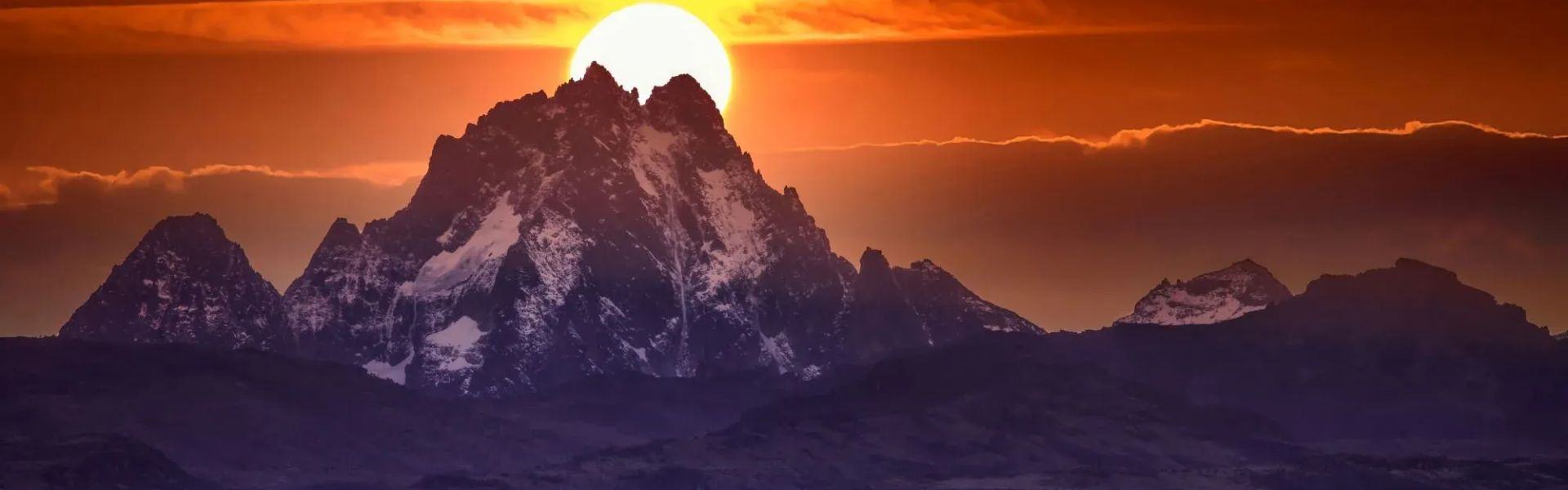

Ultimate Guide to Mount Kenya Safari
Find Mount Kenya Safari Tours from Verified Kenya Operators
The Ultimate Guide to Mount Kenya Safari
Mount Kenya SafariMount Kenya National Park, known in Swahili as Hifadhi ya Taifa ya Mlima Kenya, was established in 1949 to protect the mountain’s environment, wildlife, and water catchment areas. The park surrounds Mount Kenya, Africa’s second‑highest peak, and is a vital drainage basin supplying water to surrounding communities and farmlands.
The park covers 715 km² (276 mi²), most of it above the 3,000 m (9,800 ft) contour line. It is encircled by the Mount Kenya Forest Reserve, which adds another 705 km² (272 mi²). Together, the park and reserve form a UNESCO World Heritage Site (designated in 1997) and a UNESCO Biosphere Reserve (since 1978), totaling 1,420 km² (550 mi²).
History
Originally gazetted as a forest reserve, the area was later declared a national park to safeguard its biodiversity and scenic beauty. The Kenyan government emphasized four main reasons for its creation:
Promoting tourism for local and national economies.
Preserving an area of great scenic beauty.
Conserving the rich biodiversity of flora and fauna.
Protecting the water catchment vital for agriculture and communities.
Geography & Environment
Mount Kenya is an extinct stratovolcano, and its slopes are covered with volcanic sediment that enriches the soil, making the surrounding region highly favorable for agriculture. The park’s terrain includes glaciers, alpine moorlands, bamboo forests, and montane woodlands.
Wildlife
The park hosts a wide variety of species. At lower elevations, black‑and‑white colobus monkeys, other primates, and Cape buffaloes are common. Elephants roam the forests, and electrified fences have been installed along some borders to prevent them from raiding nearby farmland. Predators such as lions, leopards, and hyenas are present, with one record noting a massive male lion weighing 272 kg (600 pounds) shot near the mountain in 1993.
Birdlife is diverse, with species ranging from forest dwellers to high‑altitude specialists. The park also supports smaller mammals and unique alpine flora, including giant lobelias and groundsels.
Best Time to Visit
The best time to visit Mount Kenya National Park is during the dry seasons (January-March and June–October), when hiking trails are accessible and views are clear. The rainy seasons (April-May and November-December) bring lush vegetation and dramatic scenery, though trekking can be more challenging.
Activities
Mountain Climbing & Trekking: Ascend Mount Kenya’s peaks, including Point Lenana, popular with hikers.
Wildlife Viewing: Spot elephants, buffaloes, monkeys, and predators in forested zones.
Birdwatching: Observe diverse bird species across different elevations.
Scenic Viewing: Enjoy panoramic vistas of glaciers, alpine moorlands, and surrounding farmland.
Photography: Capture dramatic landscapes, wildlife, and unique alpine plants.
Camping & Nature Walks: Experience the mountain’s forests and moorlands up close.
Visitor Tips
Visitors should prepare for varying climates, from warm forest zones to cold alpine conditions. Sturdy hiking boots, layered clothing, and sun protection are essential. Guided treks are recommended for safety and navigation, especially for those attempting higher peaks. The park is ideal for adventurous travelers seeking both wildlife encounters and mountain climbing experiences.