

Ultimate Guide to Mount Elgon Safari
Find Mount Elgon Safari Tours from Verified Kenya Operators
The Ultimate Guide to Mount Elgon Safari
Mount Elgon SafariMount Elgon National Park straddles the Kenya–Uganda border, about 140 km northeast of Lake Victoria. Covering 1,279 km² (494 mi²), the Ugandan side accounts for 1,110 km², while the Kenyan side covers 169 km². The Kenyan section was gazetted in 1968, and the Ugandan section in 1992. The park is named after Mount Elgon, an extinct shield volcano that dominates the landscape and serves as a vital water catchment for the Nzoia River (flowing into Lake Victoria) and the Turkwel/Suam River (flowing into Lake Turkana).
Climate
The park experiences a moist to moderately dry climate, with annual rainfall exceeding 1,270 mm (50 in). Dry seasons occur from June-August and December-March, though rain can fall at any time.
Vegetation
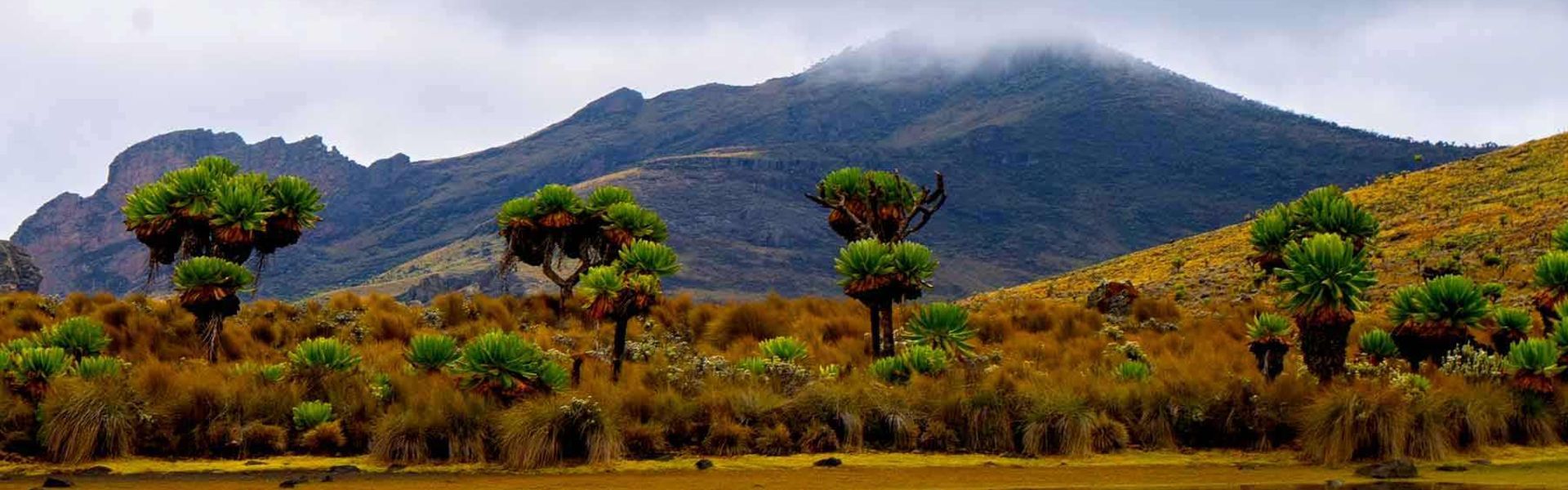
Mount Elgon’s slopes host diverse vegetation zones that change with elevation. Lower slopes are covered with wet montane forests featuring Elgon olive and Aningeria species. Higher elevations transition into Afrocarpus and bamboo zones, followed by Hagenia forests and eventually moorlands with tussock grasses, heathers, giant lobelias, and groundsels. The botanical richness includes orchids, African juniper, elderberry, and rare high‑altitude plants such as Ranunculus keniensis and Romulea keniensis.
Wildlife
The lower slopes are frequented by elephants and buffaloes, while smaller antelopes, duikers, and primates such as black‑and‑white colobus, blue monkeys, and red‑tailed monkeys inhabit the forests. Predators like leopards and hyenas are also present.
Birdlife is abundant, with at least 144 species, including Jackson’s spurfowl, Hartlaub’s turaco, Tacazze sunbird, eastern bronze‑naped pigeon, and the endangered lammergeier. Invertebrates include the endangered Maathai’s longleg dragonfly, discovered in 2005, and a remarkable diversity of butterflies half of Uganda’s species have been recorded here.
Conservation & History
Before colonial times, indigenous communities managed the mountain sustainably. Later, the Ugandan side was gazetted as a forest reserve in 1929, upgraded to a crown forest in 1940, and eventually declared a national park in 1994. The Kenyan side became a national park earlier, in 1968. Conservation challenges have included encroachment, settlement, and timber harvesting, but efforts continue to protect the ecosystem.
Attractions
Mount Elgon offers dramatic scenery: cliffs, caves, waterfalls, gorges, mesas, calderas, hot springs, and volcanic peaks. The caves Kitum, Chepnyali, and Mackingeny are especially famous, with elephants and buffaloes visiting at night to lick salt from the crystalline walls. The Endebess Bluff provides panoramic views of escarpments and rivers. On the Kenyan side, Koitoboss Peak (4,155 m) is accessible by a two hour hike. Other highlights include Jackson’s Pool and Jackson’s Peak, named after explorer Frederick Jackson, and ancient cave paintings near Budadiri.
Best Time to Visit
The best time to visit is during the dry seasons (June-August and December-March), when trails are accessible and hiking conditions are favorable. Rainy months bring lush vegetation and vibrant birdlife, though paths can be slippery.
Activities
Game Drives: Explore lower slopes to spot elephants, buffaloes, and antelopes.
Birdwatching: Observe rare species such as the lammergeier and Tacazze sunbird.
Hiking & Trekking: Climb to Koitoboss Peak or hike to Endebess Bluff.
Cave Exploration: Visit Kitum, Chepnyali, and Mackingeny caves to see salt‑licking elephants.
Nature Walks: Self‑guided trails through forests and moorlands.
Camping & Photography: Capture volcanic landscapes, waterfalls, and wildlife.
Cultural Visits: See ancient cave paintings and learn about local traditions.
Visitor Tips
Visitors should prepare for varied weather, as rain can occur even in dry seasons. Sturdy hiking boots, warm clothing for higher altitudes, and sun protection are essential. Guided tours are recommended for cave exploration and wildlife safety. The park is ideal for adventurous travelers seeking a mix of hiking, wildlife, and cultural history.