
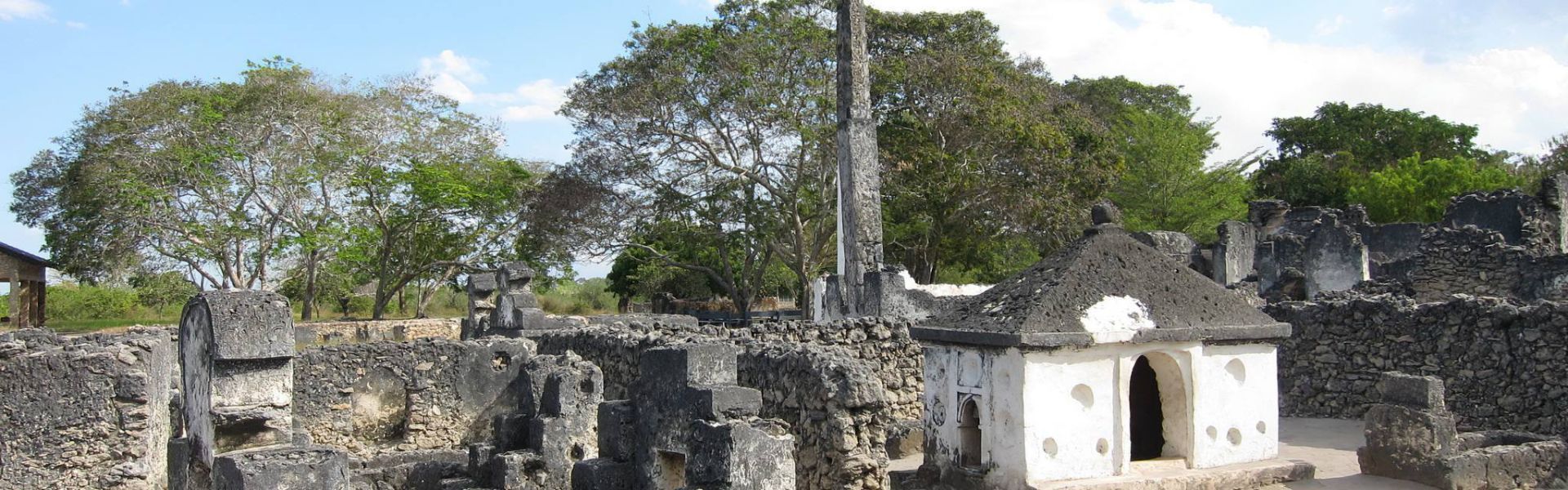
The Ultimate Guide to Kaole Safaris

Kaole Ruins is a very old and special place in Tanzania, East Africa. It is near the town of Bagamoyo. This place has old buildings that are now in ruins. "Ruins" means buildings that are broken and very old. These ruins tell us stories about people who lived here many, many years ago.
Kaole Ruins is important because it shows us the history of trade and culture. People from different parts of the world came here. They traded things like cloth, beads, and food. They also shared their ideas and ways of life. This made Kaole a rich and diverse place.
Today, Kaole Ruins is a protected site. This means people take care of it so it does not get more broken. Many people visit Kaole Ruins. They come to learn about the past. They see the old mosques, which are Muslim prayer houses, and old tombs, which are places where people are buried. Visiting Kaole helps us understand how people lived and traded a long time ago. It is a quiet and beautiful place that holds many secrets of history.
UNIQUE FEATURES.
Kaole Ruins has some very special things that make it unique. These features help us understand its importance.
The Old Mosques.
There are two very old mosques at Kaole. These mosques were built a long, long time ago. One mosque is from the 13th century, which is about 800 years ago. The other is from the 15th century, about 600 years ago. These mosques are made of coral stones and lime mortar. Coral stones are pieces of rock from the sea.
These mosques are important because they are some of the oldest mosques in East Africa. They show that Islam, a religion, came to this part of Africa many centuries ago. People prayed in these mosques. They show how people lived their religious lives.
The Pillar Tombs.
Another unique feature of Kaole is the pillar tombs. A "tomb" is a place where a dead person is buried. "Pillar" means a tall, thin column. These tombs have tall stone pillars on top of them. Some pillars are very tall, like small towers.
These pillar tombs are special because they are not common everywhere. They show a unique way of burying important people. Historians believe that these tombs belong to important leaders or rich traders from long ago. The pillars might have shown how important the person was. Some people believe the pillars also had special meanings or were used to guide sailors at sea.
The Well.
There is also an old well at Kaole. A well is a deep hole in the ground to get water. This well was very important for the people living there. It provided fresh water for drinking, cooking, and other daily needs. Even today, the well still has water.
The well shows how people managed to live in this area. Water was very important for survival, especially for a community that traded and needed water for their ships.
Historical Artifacts.
When people dig at Kaole, they find many old things. These are called artifacts. They find pieces of pottery, beads, and coins. Some pottery comes from China and other faraway places. This shows that Kaole was a big trading center. People from different countries came here to trade.
These artifacts help us understand what life was like. They show what people used, what they ate, and what they traded. They are like puzzle pieces that help us put together the story of Kaole.
Mangrove Forests.
Around Kaole, there are also natural mangrove forests. Mangroves are special trees that grow in salty water near the coast. They have roots that stick out of the water. These forests are important for nature. They are home to many kinds of fish, birds, and other animals.
The mangroves also protected the old town of Kaole. They made it harder for enemies to attack from the sea. They also provided wood for building and other uses. The combination of historical ruins and natural beauty makes Kaole very special.
ESTABLISHMENT OF KAOLE RUINS.
The history of how Kaole was established is very interesting. It was not built all at once. It grew over many years.
Early Settlements.
People started living in the Kaole area a very long time ago, even before the famous ruins were built. These early people were probably fishermen and farmers. They lived near the coast because it was good for fishing and getting food.
Arrival of Traders.
Around the 8th or 9th century, which is over 1,000 years ago, traders from the Middle East and Persia started coming to the East African coast. They traveled by dhows, which are special sailing boats. They came to trade for gold, ivory (elephant tusks), and slaves from the African interior.
Kaole was a good place for trade because it had a safe harbor. Ships could come close to the land easily. The local people and the foreign traders started to interact. They exchanged goods and ideas.
Growth as a Swahili Tow
Over time, Kaole grew into a Swahili town. "Swahili" is a culture and language that developed on the East African coast. It is a mix of African and Arab cultures. The people of Kaole became part of this Swahili culture.
They built houses, markets, and other buildings. The two mosques we see today were built during this time, showing the spread of Islam. The pillar tombs also show that important families lived here and had unique burial customs.
Kaole became a busy port. It was a place where goods from Africa met goods from Asia. It was part of a big trade network that connected Africa, Asia, and the Middle East.
Decline of Kaole.
Kaole was important for several centuries. But then, it started to decline. This happened around the 15th or 16th century. There are a few reasons why this might have happened:
● New Trade Routes: Maybe new trade routes opened up, and ships started going to other ports instead of Kaole.
● Changing Sea Levels: The sea level might have changed, making the harbor less useful for big ships.
● Conflicts: There might have been wars or conflicts that made the area unsafe.
● Rise of Bagamoyo: Nearby Bagamoyo started to grow and became a more important port, taking away trade from Kaole.
As trade moved away, people slowly left Kaole. The buildings were left empty and started to break down. Over hundreds of years, they became the ruins we see today.
Rediscovery and Protection.
In recent times, people became interested in these old places again. Archeologists, who study old things, came to Kaole. They dug up artifacts and studied the ruins. They learned a lot about its history.
Now, Kaole Ruins is managed by the Tanzanian government. It is a national heritage site. This means it is protected for future generations to learn from and enjoy.
LOCATION AND ACCESSIBILITY.
Kaole Ruins is located in a specific place that makes it easy to visit.
Geographical Location.
Kaole Ruins is on the coast of the Indian Ocean. It is about 5 kilometers (about 3 miles) south of the town of Bagamoyo. Bagamoyo itself is about 75 kilometers (about 47 miles) north of Dar es Salaam, which is a very big city in Tanzania.
The ruins are very close to the sea. This was important in the past for trade. Today, it offers a nice view of the ocean and the nearby mangrove forests.
How to Get There (Accessibility).
Getting to Kaole Ruins is quite easy, especially from Dar es Salaam or Bagamoyo.
● From Dar es Salaam to Bagamoyo:
○ By Road: The most common way is by road. You can take a public bus (called a "dala-dala") from Dar es Salaam to Bagamoyo. This ride takes about 1.5 to 2 hours, depending on traffic.
○ By Taxi/Private Car: You can also hire a taxi or use a private car. This is faster and more comfortable.
● From Bagamoyo to Kaole Ruins:
○ By Bajaji or Bodaboda: Once you are in Bagamoyo, you can easily get to Kaole Ruins. The best way is to use a "bajaji" (a three-wheeled auto-rickshaw) or a "bodaboda" (a motorcycle taxi). They are common and not expensive for this short distance. The ride takes about 10-15 minutes.
○ Walking: If you like walking and it's not too hot, you can even walk from Bagamoyo town to the ruins. It's a pleasant walk along a dusty road, but it might take about an hour.
The road to Kaole Ruins is mostly unpaved, meaning it's a dirt road, but it is usually in good condition for vehicles. The site itself is well-marked, and there are signs to guide visitors.
TRANSPORTATION.
As mentioned, transportation to Kaole Ruins involves a few steps, especially if you are coming from further away.
Long-Distance Travel (to Bagamoyo).
● Buses (Dala-dalas): These are the most common and cheapest way for local people and budget travelers. They leave regularly from various bus stations in Dar es Salaam, like Ubungo or Tegeta. They can be crowded, but they are a real local experience.
● Coaches/Mini-buses: Some slightly more comfortable mini-buses might also be available for the route to Bagamoyo.
● Taxis/Ride-sharing: For more convenience, you can hire a taxi or use ride-sharing apps (like Bolt or Uber, if available in Dar es Salaam) to take you directly to Bagamoyo. This is more expensive but faster and more private.
● Private Car Hire: Many tour operators or hotels can arrange private car hire with a driver. This is the most comfortable option.
Local Transportation (from Bagamoyo to Kaole).
● Bajaji: These are small, motorized three-wheelers. They are very popular in Bagamoyo. They are open-air and can carry two or three people. They are good for short distances and can handle the dirt roads to Kaole.
● Bodaboda: These are motorcycle taxis. They are very fast and can get through traffic easily. They are good for one person. Always make sure the driver gives you a helmet for safety.
● Walking: For those who enjoy walking and want to see the local life along the way, walking is an option. It's a good way to experience the area slowly.
When arranging transportation, especially bajajis or bodabodas, it's good to agree on the price before you start the journey. This helps avoid misunderstandings. The local people are generally friendly and helpful if you need directions.
ACCOMMODATION.
Visiting Kaole Ruins also brings benefits to the local people living around the area.
Accommodation Options.
Since Kaole Ruins is very close to Bagamoyo town, most visitors stay in Bagamoyo. Bagamoyo has different types of places to stay:
● Budget Guesthouses: These are simple, affordable places for travelers who want to save money. They offer basic rooms and facilities.
● Mid-range Hotels: There are also hotels that offer more comfort, like air conditioning, private bathrooms, and sometimes a swimming pool.
● Boutique Hotels/Lodges: Some places are smaller, more unique, and offer a special experience, often with a focus on local culture or a nice view of the ocean.
● Resorts: A few larger resorts might be found outside the main town, offering more luxury and activities.
Staying in Bagamoyo allows visitors to explore the town's other historical sites, like the old German Boma, the first Catholic mission, and the slave market.
BENEFITS TO LOCAL COMMUNITIES.
Tourism at Kaole Ruins helps the local community in several ways:
● Job Creation:
○ Tour Guides: Local people work as guides at the ruins. They tell visitors about the history and unique features. This gives them a job and income.
○ Craft Sellers: People sell local crafts, souvenirs, and artworks near the ruins or in Bagamoyo town. Visitors buy these items, which helps the sellers earn money.
○ Food and Drink Vendors: Small shops or stalls sell snacks, drinks, and local food to visitors.
○ Transportation Providers: Bajaji and bodaboda drivers get customers from tourists going to Kaole.
○ Hotel Staff: Local people work in the hotels, guesthouses, and restaurants in Bagamoyo.
● Economic Growth: When tourists spend money on accommodation, food, transport, and souvenirs, this money goes into the local economy. It helps businesses grow and supports families.
● Awareness and Preservation: When people visit Kaole, they learn about its importance. This helps create awareness among locals and visitors about the need to protect historical sites. It can encourage the community to take pride in their heritage.
● Infrastructure Improvement: Sometimes, money from tourism or government funds (because of tourism) can be used to improve roads, water supply, or other services in the area, which benefits everyone.
● Cultural Exchange: Tourists interact with local people, learning about their culture and traditions. This can be a positive experience for both sides.
By visiting Kaole Ruins, tourists not only learn about history but also contribute directly to the well-being of the people living around this important site.
CHALLENGES AND SOLUTION.
Even though Kaole Ruins is a special place, it faces some challenges. But there are also ways to solve these problems.
Challenges.
● Weather and Nature:
○ Erosion: The ruins are very old and made of coral stone. Rain, wind, and the salty air from the ocean can slowly damage them. This is called erosion.
○ Vegetation Growth: Plants and trees can grow on the ruins. Their roots can break the old walls and stones.
● Lack of Funds:
○ Taking care of old ruins needs money. Sometimes, there is not enough money to do all the necessary repairs and maintenance.
○ This can mean there are not enough staff to clean, protect, and guide visitors.
● Limited Infrastructure:
○ While transportation to Bagamoyo is good, the last part of the road to Kaole can be dusty or muddy, depending on the season.
○ There might be limited facilities for visitors at the site itself, like proper restrooms or shaded areas.
● Local Community Involvement:
○ Sometimes, local people might not fully understand the importance of the ruins or how to benefit from tourism in a sustainable way.
○ There can be issues with littering if visitors or locals do not dispose of waste properly.
● Awareness and Marketing:
○ Not everyone knows about Kaole Ruins. It is less famous than some other historical sites in Tanzania. This means fewer visitors sometimes.
Solutions.
● For Weather and Nature:
○ Conservation Work: Experts can regularly check the ruins and do repairs. They can use special materials and methods to make the old stones stronger and protect them from erosion.
○ Vegetation Management: Regularly clear plants and trees from the ruins. This needs careful work so as not to damage the structures.
● For Lack of Funds:
○ Government Support: The government can provide more money for the care of the ruins.
○ International Aid: Organizations from other countries that care about heritage can offer financial help or expert advice.
○ Visitor Fees: Money collected from entrance fees can be used directly for maintenance.
○ Donations: Encouraging visitors and other groups to donate money.
● For Limited Infrastructure:
○ Road Improvement: Improve the road leading to the ruins, especially during the rainy season.
○ Visitor Facilities: Build better and cleaner restrooms, provide more shaded seating areas, and maybe a small visitor center with more information.
● For Local Community Involvement:
○ Education: Educate local communities about the history and importance of Kaole Ruins. Help them understand how tourism can bring benefits.
○ Training: Train local people to be good guides, craft makers, and service providers.
○ Community Programs: Involve the community in decision-making about the ruins and tourism development. Encourage them to keep the area clean.
● For Awareness and Marketing:
○ Promote the Site: Use social media, websites, and travel agencies to tell more people about Kaole Ruins.
○ Combine Tours: Offer tours that combine Kaole Ruins with other nearby attractions like Bagamoyo town and Saadani National Park.
○ Create Educational Materials: Develop brochures, maps, and signs that provide clear and interesting information for visitors.
By working on these solutions, Kaole Ruins can be better protected, more enjoyable for visitors, and bring more lasting benefits to the local community.
OPPORTUNITY.
Kaole Ruins has many opportunities for the future. These are chances to make the site better and more beneficial.
Increased Tourism.
● More Visitors: With better marketing and facilities, more people can come to Kaole. More visitors mean more income for the site and the local community.
● Longer Stays: Encourage visitors to stay longer in Bagamoyo and explore Kaole and other nearby attractions. This means more spending in the local economy.
● Diverse Tourism: Attract different types of tourists, like students, researchers, cultural tourists, and even eco-tourists interested in the mangroves.
Educational Development.
● Learning Center: Create a small learning center or museum at the site. This can have more detailed information, maps, and displays of artifacts. It would be a great place for students and researchers.
● School Programs: Develop special programs for local schools to visit the ruins. This helps young people learn about their own history and heritage.
● Research Opportunities: The ruins still hold many secrets. More archaeological research can be done to uncover new information and artifacts. This can attract scholars from around the world.
Community Empowerment.
● More Local Jobs: As tourism grows, more jobs will be created for local people in guiding, hospitality, craft making, and transportation.
● Entrepreneurship: Encourage local people to start small businesses related to tourism, like selling food, drinks, or handmade souvenirs.
● Skills Training: Provide training for locals in tourism-related skills, like English language, customer service, and craft production.
Conservation and Preservation.
● Advanced Conservation: With more resources, advanced conservation techniques can be used to protect the ruins from further decay. This ensures the site lasts for many more centuries.
● Environmental Protection: The surrounding mangrove forests are also important. There's an opportunity to develop eco-tourism activities that also help protect the natural environment.
● Digital Preservation: Use technology like 3D scanning and virtual reality to create digital copies of the ruins. This helps preserve them even if the physical structures face challenges, and can be used for virtual tours.
Cultural Exchange and Storytelling.
● Cultural Events: Organize small cultural events or festivals at the site that showcase local traditions, music, and dance. This can attract more visitors and celebrate local culture.
● Storytelling: Encourage local elders and guides to share traditional stories and legends related to the ruins and the history of the area. This adds a rich layer to the visitor experience.
By taking advantage of these opportunities, Kaole Ruins can become an even more vibrant and important historical and cultural destination, benefiting both the heritage itself and the people who live near it.
CONCLUSION.
Kaole Ruins is a truly remarkable place in Tanzania. It is much more than just old broken buildings. It is a window into a rich and complex past, showing us how different cultures met and traded on the East African coast many centuries ago.
The unique features, like the ancient mosques and the mysterious pillar tombs, tell stories of faith, power, and a way of life that has long gone. The establishment of Kaole as a bustling Swahili trading town, and its eventual decline, reminds us that even great centers can change over time.
Its location near Bagamoyo makes it accessible for visitors, and the local transportation options make the journey an interesting part of the experience. The presence of tourism at Kaole brings real benefits to the local community, providing jobs and helping the economy grow.
However, Kaole Ruins also faces challenges, especially from nature and the need for more resources. But with careful conservation, better facilities, and strong community involvement, these challenges can be overcome.
Looking to the future, Kaole Ruins has many opportunities. It can attract more visitors, become a better place for education and research, and empower the local people even more. By embracing these opportunities, Kaole can continue to be a source of pride, learning, and economic benefit for generations to come.
Visiting Kaole Ruins is not just seeing old stones; it is stepping back in time to understand the deep history and cultural connections of East Africa. It is a place that deserves our attention and protection.