
The Ultimate Guide to Lake Natron Game Area Safaris

Lake Natron Game Control Area. This is a very special place in Tanzania, a country in East Africa. When we talk about a "Game Control Area" (GCA), it means it's a protected region, but it's different from a "National Park." In a GCA, the government works to keep wild animals and nature safe, but sometimes, local people who have lived there for a very long time can still use the land in certain ways, like grazing their animals, under careful rules. The main goal is to protect the wildlife and their homes.
The most famous and unique part of this area is Lake Natron itself. Imagine a lake that looks almost red or pink from far away! This lake is not like other lakes. Its water is extremely salty, much saltier than the ocean. It also has many special chemicals, like sodium carbonate, which make it very alkaline. This means the water is very strong, almost like a cleaning soap. Because of these very special and harsh conditions, only a few kinds of plants and animals can live in or around the lake. It's a very extreme environment.
UNIQUE FEATURES OF LAKE NATRON GAME CONTROLLED AREA.
The Lesser Flamingo: A Pink Army.
· The most amazing and important animal connected to Lake Natron is the Lesser Flamingo. These are beautiful, tall, pink birds. Millions of them come to Lake Natron every year. When we say "millions," we mean a huge, unbelievable number of birds, covering the lake in a moving pink carpet.
● Why Lake Natron? These flamingos choose Lake Natron for a very important reason: it is their main breeding ground in all of Africa. This means almost all Lesser Flamingos in East Africa are born here.
● Safety from Predators: The lake's water is so salty and alkaline that it forms a crust of salt around the edges. This crust is very hard to walk on for most animals. This makes it a perfect, safe place for the flamingos to build their nests. Their nests are small mounds (little hills) of mud, and they lay their eggs on top. Most predators (animals that hunt other animals), like hyenas or jackals, cannot reach the nests because of the harsh, salty water and the tough salt crust. This keeps the eggs and baby flamingos (called chicks) safe.
● Food Source: The lake might seem empty, but it has tiny, special plants called spirulina algae. These algae grow very well in the salty, alkaline water. The Lesser Flamingos eat these algae, which gives them their pink color! So, Lake Natron provides both a safe home and food for these incredible birds.
Ol Doinyo Lengai: The Mountain of God.
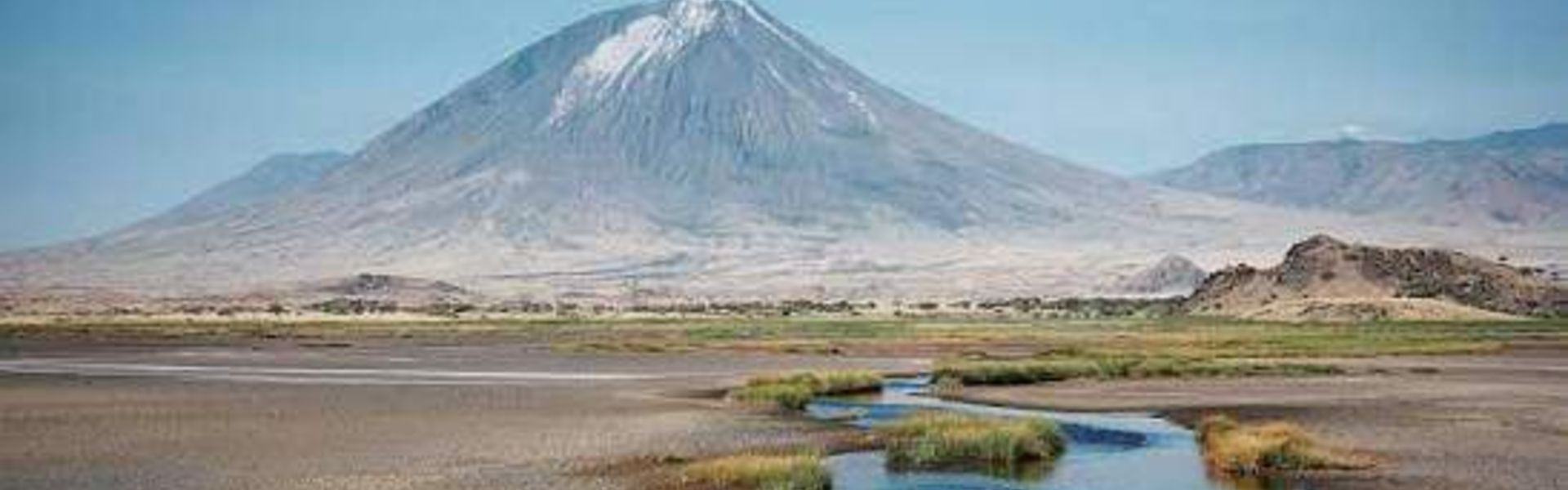
· Another very unique feature of the Lake Natron area is the Ol Doinyo Lengai volcano. This is not just any volcano; it is one of the most active volcanoes in Tanzania, and it is very special in the world.
● Unique Lava: Most volcanoes erupt with hot, sticky, red-orange lava. But Ol Doinyo Lengai erupts with a very different kind of lava. It is called "natrocarbonatite lava," and it is much cooler and flows more like mud. When it cools, it turns white, making the volcano look like it has snow on top, even in a hot country!
● "Mountain of God": The Maasai people, who are the local community living in this area, call Ol Doinyo Lengai "Mountain of God." It is a very sacred (holy) place for them, and they believe their God lives there.
● Hiking and Views: For adventurous visitors, climbing Ol Doinyo Lengai offers incredible views of Lake Natron and the surrounding Rift Valley. It's a challenging climb, often done at night to avoid the heat.
Other Wildlife and Landscape.
· While the flamingos are the stars, the Lake Natron Game Control Area also has other wildlife and a beautiful, rugged landscape:
● Mammals: You can see animals like zebras, wildebeest, giraffes, and different types of antelopes such as impalas, Grant's gazelles, and Thomson's gazelles. Sometimes, even bigger animals like elephants and buffalos might pass through, especially near water sources away from the main lake.
● Birds: Besides flamingos, many other bird species live around the lake and in the surrounding dry plains, especially birds that can live in dry areas.
● The Great Rift Valley: The area is part of the Great Rift Valley, a huge crack in the Earth's surface. This gives the landscape dramatic cliffs, hills, and wide-open spaces.
ESTABLISHMENT OF LAKE NATRON GAME CONTROLLED AREA.
· The Lake Natron Game Control Area was established to make sure this incredibly unique place and its animals are protected. Here's why and how:
● Why Protection Was Needed: For a long time, people have known that Lake Natron is vital for Lesser Flamingos. Without this lake, the flamingos would have nowhere safe to breed, and their numbers could drop very quickly. There were also concerns about human activities, like possible mining (digging for minerals) near the lake, which could harm the delicate balance of the water and the flamingos.
● Purpose of a GCA: Establishing it as a Game Control Area means that the Tanzanian government has put rules in place to manage the land. The main purpose is conservation, which means protecting nature and wildlife for the future. It helps to:
○ Prevent Harmful Activities: Stop big industries or activities that could pollute the lake or scare away the flamingos.
○ Manage Human Presence: Control how many tourists visit and where they go, so they don't disturb the animals or the environment.
○ Support Local Communities: Work with the Maasai people who live there to ensure their traditional way of life can continue while also protecting the wildlife.
● A Long History of Protection: While the exact date of its official establishment as a GCA might be a specific legal point, the area has been recognized as important for conservation for many decades. It is part of Tanzania's larger network of protected areas, showing the country's commitment to its natural heritage.
LOCATION AND ACCESSIBILITY.
· The Lake Natron Game Control Area is located in the northern part of Tanzania. It is in the Arusha Region, which is a popular area for safaris. It is quite close to the border with Kenya, making it a remote but important cross-border ecosystem.
· Getting to Lake Natron is an adventure in itself because it is in a very remote and wild area. It's not like driving on a smooth highway.
● By Road: The Adventurous Journey
○ Starting Point: Most people start their journey from Arusha city, which is the main hub for safaris in northern Tanzania.
○ Type of Road: The roads are mostly unpaved dirt tracks. This means they are not smooth and can be very bumpy, dusty in the dry season, and extremely muddy and difficult to pass during the rainy season.
○ Vehicle Needed: You absolutely need a strong 4x4 vehicle (a car with four-wheel drive) to travel here. A regular car would get stuck or damaged.
○ Time Taken: The journey from Arusha can take a long time, usually 6 to 8 hours, or even more, depending on the road conditions and how many stops you make. It's a slow drive, but the scenery is amazing.
○ Experienced Driver: It's best to travel with an experienced safari driver who knows these challenging roads well.
○ Scenery: As you drive, you pass through dry plains, small Maasai villages, and see incredible views of the Rift Valley, including Ol Doinyo Lengai getting closer.
● By Air: A Faster, More Expensive Option
○ Some visitors choose to fly to a small airstrip located closer to Lake Natron. This saves a lot of driving time.
○ Cost: Flying is much more expensive than driving.
○ Still Need a Car: Even if you fly, you will still need a 4x4 vehicle to pick you up from the airstrip and take you to your accommodation and around the lake, as there are no paved roads from the airstrip.
TRANSPORTATION.
· Once you have arrived in the Lake Natron Game Control Area, getting around to see the sights is also an adventure:
● 4x4 Safari Vehicles: The Main Way
○ These strong vehicles are essential for moving around the area. They can handle the rough dirt tracks and allow you to reach different viewpoints of the lake, visit local villages, or go to nearby waterfalls.
○ Game Drives: You'll use these vehicles for "game drives" (driving around to look for animals).
● Walking Safaris: A Closer Look
○ Lake Natron is one of the few places where you can do walking safaris with a local guide. This means you get out of the car and walk through the bush.
○ Safety: You will always be with an experienced, armed guide for safety, especially as there can be wild animals.
○ What You See: Walking allows you to see smaller details, learn about plants, and feel truly connected to the environment. You can walk to the lake shore to see the flamingos up close (but not too close to disturb them) or walk to nearby waterfalls like Engare Sero.
● Local Transportation:
○ The Maasai people who live here often walk long distances between their homes and villages.
○ They might also use donkeys to carry goods or sometimes bicycles on the less rough paths. There is no public transport like buses in this remote area.
ACCOMMODATION.
· Staying near Lake Natron is an experience of being truly immersed in nature. The accommodation options are generally simpler and more eco-friendly, fitting the remote environment.
Accommodation Options.
● Tented Camps: These are the most common type of accommodation. They usually have large, comfortable tents with proper beds, and often an attached bathroom with a toilet and shower. They are designed to be low-impact on the environment.
● Basic Lodges: There might be a few small, basic lodges that offer more permanent structures, but they still keep a natural feel.
● Campsites: For those who want a more adventurous and budget-friendly option, there are designated campsites where you can pitch your own tent.
● Eco-friendly Focus: Many places to stay here try to be "eco-friendly." This means they use solar power, save water, and try not to harm the environment. They often work closely with the local Maasai community.
BENEFIT OF LOCAL COMMUNITY. (The Maasai People).
· The local community living around Lake Natron is mainly the Maasai people. They are a famous tribe known for their traditional way of life, colorful clothes, and reliance on cattle. The presence of the Game Control Area and the tourists who visit bring many benefits to them:
● Direct Employment:
○ Guides: Many Maasai men work as local guides for walking safaris and cultural visits. They know the land, animals, and culture very well.
○ Camp Staff: They work in the tented camps and lodges as cooks, cleaners, security guards, and general staff.
○ Drivers: Some Maasai are trained as safari drivers.
● Selling Handicrafts and Souvenirs:
○ Maasai women are famous for their beautiful beadwork. They make colorful necklaces, bracelets, earrings, and other items.
○ They sell these handmade crafts directly to tourists, which provides a very important source of income for their families.
● Cultural Tourism:
○ Tourists can visit Maasai villages (called "bomas") with a local guide. This is a chance to learn about their unique culture firsthand.
○ You can see their traditional mud and dung houses, learn about their customs, listen to their songs, and watch their traditional dances.
○ Visitors usually pay a fee to visit the village, and this money goes directly to the community, helping them with their daily needs and community projects.
● Conservation Awareness and Partnership:
○ Working with conservation organizations and tourists helps the Maasai understand the importance of protecting their environment and wildlife.
○ They become partners in conservation, as they see how wildlife can bring benefits (like jobs and income) to their communities. This helps reduce conflicts between people and animals.
● Community Development Projects:
○ Sometimes, money from tourism or help from conservation groups goes towards important community projects.
○ Examples include building or improving schools for children, digging boreholes (deep wells) to get clean water, or helping to set up health clinics in remote areas. This directly improves the quality of life for the Maasai people.
CHALLENGES AND SOLUTIONS.
· Living in such a unique and remote area, where wildlife and humans share the land, brings several challenges. However, people are working hard to find solutions.
A. Remoteness and Poor Roads.
● Challenge: The area is very far from big towns, and the roads are very bad. This makes it difficult for tourists to visit, which limits how much money tourism can bring. It also makes life hard for local people because it's difficult to get supplies (like food, medicine, or building materials) to the villages. Getting to a hospital in an emergency can also be very slow.
● Solution:
○ Careful Road Improvement: The government and partners could improve some main roads leading to the area. This would make travel easier and faster, attracting more visitors. However, this must be done very carefully to avoid harming the environment or disturbing wildlife too much.
○ Community Support: Supporting local businesses and services within the area can reduce the need for people to travel far for basic needs.
B. Human-Wildlife Conflict.
● Challenge: People and wild animals live very close to each other.
○ Crops: Animals like zebras or wildebeest might eat crops from farms, which means less food for the farmers.
○ Livestock: Predators like hyenas or jackals might attack livestock (farm animals like goats or cows) belonging to the Maasai. This makes the Maasai lose their wealth and can make them angry at the wild animals.
○ Water: Sometimes, people and animals compete for the same water sources, especially during dry seasons.
● Solution:
○ Education and Awareness: Teach local communities about animal behavior and how to live safely with wildlife.
○ Protective Measures: Help farmers build better, stronger fences around their farms to keep animals out. Encourage Maasai to build more secure enclosures (called "bomas" or "kraals") for their livestock at night.
○ Alternative Livelihoods: Help communities find other ways to earn money that don't conflict with wildlife, like through beekeeping or growing crops that animals don't like.
○ Compensation Schemes: In some cases, programs might offer a small payment to farmers who lose livestock to predators, to reduce their anger and encourage them not to harm the predators.
C. Water Scarcity.
● Challenge: The Lake Natron area is naturally very dry and hot. Fresh water is scarce (hard to find) for both people and animals. During long dry seasons, water sources can dry up, making life very difficult.
● Solution:
○ Rainwater Harvesting: Help communities build systems to collect and store rainwater during the rainy season.
○ Boreholes: Dig deep wells (boreholes) to access underground water. This must be done carefully to ensure it doesn't lower the water table too much and affect natural springs that wildlife depends on.
○ Water Sharing Plans: Develop plans to share water resources fairly between humans and wildlife, especially during dry periods.
D. Environmental Protection (The Soda Ash Threat).
● Challenge: In the past, there was a big plan to build a soda ash factory near Lake Natron. This factory would have taken water from the lake and added chemicals back into it. This would have been a huge danger to the Lesser Flamingos because it could change the special water conditions they need to survive and breed. It could have destroyed their only breeding ground in Africa.
● Solution:
○ Strong Opposition: Many environmental groups, scientists, and people from all over the world spoke out against the factory. They showed how important the lake is for flamingos and the environment.
○ Government Decision: Because of this strong opposition and scientific evidence, the Tanzanian government decided not to allow the factory to be built. This was a huge victory for conservation.
○ Ongoing Monitoring: It's important to keep monitoring the area to make sure no other harmful projects are planned and that the lake's unique ecosystem remains safe. Strong laws and rules are needed to protect the lake forever.
E. Limited Infrastructure.
● Challenge: Because it's a remote area, there are not many modern services. There might not be enough good schools for children, enough health clinics for medical help, or reliable communication (like phone signals or internet). This affects the quality of life for local people.
● Solution:
○ Partnerships: Government, non-government organizations (NGOs), and tourism companies can work together to slowly improve basic services.
○ Mobile Clinics/Schools: Sometimes, mobile clinics (medical teams that travel) or support for local teachers can help bridge the gap.
○ Solar Power: Introducing solar power can help bring electricity to schools and clinics.
OPPORTTUNITY.
· Despite the challenges, the Lake Natron Game Control Area has many exciting opportunities for the future.
A. Unique Niche Tourism.
● Different from Safari: Lake Natron offers a very special kind of tourism that is different from the usual "Big Five" safari experience in national parks. It attracts visitors who are looking for something unique and adventurous.
● Bird Watching Paradise: For bird lovers, seeing millions of flamingos is an unforgettable experience. This can attract many bird watchers from around the world.
● Adventure Tourism: Climbing Ol Doinyo Lengai, doing walking safaris, and experiencing the rugged Rift Valley landscape appeals to adventure travelers.
● Cultural Immersion: The strong presence of the Maasai culture offers a deep and authentic cultural experience, which many tourists seek.
● Sustainable Growth: With careful planning, tourism can grow in a way that protects the environment and benefits local people, making it a model for sustainable tourism.
B. Research and Education.
● Scientific Study: The lake's extreme environment is like a natural laboratory. Scientists can study the unique algae, the flamingos' ability to live in such harsh conditions, and the special lava of Ol Doinyo Lengai. This research helps us understand more about life on Earth and even about other planets!
● Environmental Education: The area can be used to teach local students and visitors about the importance of wetlands, bird conservation, and living with nature. It's a living classroom.
C. Community Development.
● Increased Livelihoods: As tourism grows, more jobs and income opportunities will become available for the Maasai people. This can lead to better living standards.
● Improved Services: Money from tourism and partnerships can directly fund improvements in local infrastructure, such as better schools, more reliable water sources, and improved health services.
● Empowerment: When communities are involved in tourism and conservation, they gain more control over their future and can make decisions that benefit their people and their land.
D. Global Conservation Success Story.
● If the challenges are managed well, and the unique ecosystem of Lake Natron continues to be protected, it can become a shining example of successful conservation for the whole world.
● It shows that even in difficult environments, and with human populations living nearby, nature can be protected through strong efforts and partnerships. This can inspire other conservation projects globally.
CONCLUSION.
· The Lake Natron Game Control Area is a truly extraordinary and incredibly important place in Tanzania. It is a natural wonder, home to millions of Lesser Flamingos, the unique Ol Doinyo Lengai volcano, and the resilient Maasai people.
· While it faces significant challenges, such as its remote location, the harsh environment, and the need to balance human and wildlife needs, there are immense opportunities for its future. By continuing strong conservation efforts, carefully developing sustainable tourism, and ensuring that the local Maasai communities are central to all plans and truly benefit, Lake Natron can continue to thrive.
· It is a place where nature's incredible power and beauty meet human culture and resilience. Protecting Lake Natron is not just important for Tanzania, but for the entire world, ensuring that this vital breeding ground for flamingos and its unique ecosystem remain safe for generations to come.