
The Ultimate Guide to Pugu Hills Safaris

The Pugu Hills Forest Reserve, located in Kisarawe District of Pwani Region, Tanzania, is part of one of the oldest surviving lowland coastal forests in the world. Historically known as Mogo Forest, it shares ecological and cultural ties with the adjacent Kazimzumbwi Forest Reserve, forming a vital green corridor near Dar es Salaam.
- The forest is named after the Mpugupugu tree, a rare species endemic to the area and deeply rooted in local Zaramo traditions.
- It has long held spiritual significance, with sacred caves and ritual sites used by surrounding communities for generations.
Establishment as a Protected Area.
- 1947: The forest was first gazetted as a reserve under colonial administration, recognizing its ecological value and vulnerability to urban expansion.
- 2006: It was officially designated as the Pugu/Kazimzumbwi Nature Forest Reserve, managed by the Tanzania Forest Services Agency (TFS) under the Ministry of Natural Resources and Tourism.
- The reserve spans 120.1 km², encompassing hills, bamboo forests, caves, and the source of the Msimbazi River.
Conservation Goals and Management.
- Protect endemic biodiversity: It hosts 14 endemic plant species, 2 endemic mammals, and 1 endemic bird subspecies.
- Preserve cultural heritage: Sacred caves and ritual sites are protected as part of the forest’s intangible value.
- Support sustainable tourism: Its proximity to Dar es Salaam makes it accessible for eco-tourism, hiking, birdwatching, and environmental education.
Management efforts aim to balance conservation with community benefit, including:
- Local employment through guiding and forest patrols
- Educational outreach and cultural preservation
- Controlled access for spiritual practices and recreation
LOCATION AND ACCESSIBILITY.
Location: Where Nature Meets the City.
· The Pugu Hills Forest Reserve, officially part of the Pugu/Kazimzumbwi Nature Forest Reserve, is nestled in the Kisarawe ward of Kisarawe District, within Pwani Region, Tanzania. It borders the Pugu ward of Ilala Municipal Council in Dar es Salaam to the east, making it one of the closest forest reserves to the city.
- It lies approximately 20 kilometers southwest of Dar es Salaam’s city center, and just 12 km from Julius Nyerere International Airport, making it a convenient escape for both residents and travelers.
- The reserve spans a hilly landscape rich in biodiversity, with scenic viewpoints overlooking the city and the Indian Ocean beyond.
Accessibility: Easy Entry, Rich Experience.
Despite its ecological richness, Pugu Hills is surprisingly accessible, which adds to its appeal for day trips, educational visits, and community engagement.
- By Road: A paved tarmac road connects Dar es Salaam to the reserve. The drive takes about 1 to 1.5 hours, depending on traffic and your starting point.
- Public Transport: Local buses (daladala) and motorcycle taxis (bodaboda) can take visitors to Minaki, near the reserve entrance. From there, it’s a short walk or ride to the forest gate.
- Private Vehicles: Visitors can drive directly to the reserve entrance, located opposite Minaki Secondary School. Parking is available, and entry with a vehicle costs around 5,000 TZS.
On-Site Navigation and Support
- Marked hiking trails of varying difficulty, including routes to Msolo Hill Peak and Kinyanyiko View Tower.
- Guided tours available from local experts like Ayubu or Zebbo, who offer cultural insights and ecological knowledge.
- Mobile payments are accepted for entry and guiding services—cash is rarely used.
NB:
· Its proximity to Dar es Salaam makes Pugu Hills a gateway for urban communities to reconnect with nature, and a model for accessible conservation. It’s a place where school groups, researchers, and weekend explorers can engage with biodiversity without needing extensive travel or resources.
ACCOMODATION.
· Accommodation options around Pugu Hills Forest Reserve, with a focus on accessibility, visitor experience, and community relevance:
On-Site Accommodation: Camping in the Reserve
While Pugu Hills does not yet offer formal lodges or hotels inside the reserve, it does provide designated camping areas for nature enthusiasts and researchers.
- Camping is permitted with prior arrangement through the Tanzania Forest Services Agency (TFS).
- Visitors can pitch tents near Lake Minaki or along forest trails, with access to basic facilities like water and eco-toilets.
- Ideal for school groups, hiking clubs, and eco-tourists seeking immersive forest experiences.
- Activities like forest bathing, birdwatching, and meditation are popular among campers.
· This setup supports low-impact tourism and encourages deeper engagement with the forest’s biodiversity and cultural heritage.
Nearby Accommodation: Lodges and Hotels in Kisarawe & Dar es Salaam
Given its proximity to Dar es Salaam, visitors often stay in nearby hotels or homestays, especially around:
Kisarawe Town (Closest Local Option).
- Homestays and guesthouses offer affordable, community-based lodging.
- One example is a family-run homestay near the reserve that provides meals, local guidance, and cultural immersion.
- These options are ideal for travelers interested in local interaction and sustainable tourism.
Julius Nyerere International Airport Area (12–15 km away).
- Several budget motels and mid-range hotels cater to overnight visitors and transit travelers.
- Good for those combining forest visits with onward travel to national parks or Zanzibar.
Dar es Salaam City (20–25 km away)
- A wide range of hotels, lodges, and B&Bs are available, from budget to luxury.
- Popular choices include Golden Tulip City Center, Chelsea Hotel, and Landmark Mbezi Beach Resort, offering comfort and easy access to urban amenities.
Booking and Logistics.
- Most accommodations accept mobile money payments (M-Pesa, Airtel Money).
- Advance booking is recommended, especially during weekends or school holidays.
- For camping, contact the TFS Pugu-Kazimzumbwi office directly via their official page or email: pugu@nature-reserves.go.tz.
TRANSPORTATION.
Transportation to and within Pugu Hills Forest Reserve, with a focus on accessibility, affordability, and community relevance:
Getting There: From Dar es Salaam to Pugu Hills.
· Pugu Hills is located just 20–25 km southwest of Dar es Salaam city center, making it one of the most accessible forest reserves in Tanzania.
Main Transport Options.
- Private Vehicle: The most flexible option. The drive takes 45–60 minutes, depending on traffic. The route is mostly paved, with the final stretch near Minaki Secondary School leading to the forest gate.
- Taxi or Ride Services: Taxis from Dar es Salaam cost around $20–25 USD one way. Some local ride-hailing apps may offer lower rates.
- Public Transport:
- Take a daladala (minibus) heading toward Kisarawe or Minaki.
- From Minaki, use a bodaboda (motorcycle taxi) to reach the reserve entrance.
- This option is budget-friendly and supports local transport providers.
Train Option.
- You can take a Tanzania Railways train from Dar es Salaam to Pugu Station, then a short taxi ride to the reserve.
- This route takes about 48 minutes total and costs $10–21 USD, offering a scenic and relaxed alternative.
On-Site Mobility and Navigation.
· Once inside the reserve:
- Walking and Hiking are the primary modes of movement. Trails range from 6 km to 14 km, with options for gentle strolls or more challenging treks.
- Guided Tours: Local guides like Ayubu or Zebbo offer walking tours with cultural and ecological insights. Mobile payments are accepted.
- Biking: Some trails are suitable for mountain biking, though bikes must be brought in by visitors.
Entry and Transport Costs.
- Entry Fee: ~5,000 TZS for Tanzanian citizens; ~$30 USD for non-residents.
- Vehicle Entry: Additional 5,000 TZS if driving into the reserve.
- Guiding Services: Around 30,000 TZS per group, payable via mobile money.
NB:
· The ease of access to Pugu Hills makes it a model for urban-nature integration, allowing city dwellers, school groups, and tourists to engage with conservation without long travel. It also supports local transport economies, from daladala drivers to community guides.
UNIQUE FEATURES.
Pugu Hills Forest Reserve stands out in Tanzania’s conservation landscape not just for its biodiversity, but for its rare blend of ecological, cultural, geological, and urban proximity features. Here’s a narrative breakdown of what makes it truly unique compared to other reserves:
One of the Oldest Forest Ecosystems on Earth
Pugu Hills, together with Kazimzumbwi Forest, forms part of one of the oldest surviving lowland coastal forests in the world. This ancient lineage gives it:
- A genetic reservoir of rare and endemic species.
- A living archive of evolutionary history, unmatched by younger reserves like Maswa or Kijereshi.
Endemic Biodiversity in a Compact Space.
Despite its modest size (120.1 km²), Pugu Hills hosts:
- 14 endemic plant species, including the symbolic Mpugupugu tree.
- 2 endemic mammals and 1 endemic bird subspecies.
- Over 80 bird species, including the Forest Weaver, Livingstone Turaco, and Zanzibar Red Bishop.
· This density of endemism is rare, even compared to larger reserves like Mpanga Kipengere or Amani.
Geological Rarity: Kaolinite Deposits.
· Pugu Hills contains one of the largest kaolinite deposits in the world—a white clay mineral used in ceramics and cosmetics. These former mining sites now host bat colonies and serve as unique geological and ecological attractions.
Cultural and Spiritual Significance.
· Unlike many reserves focused solely on wildlife, Pugu Hills protects:
- Sacred caves and ritual sites used by local Zaramo communities.
- Spaces for worship, meditation, and cultural ceremonies, integrated into conservation planning.
· This spiritual layer adds depth to its conservation value, making it a living cultural landscape.
Urban-Nature Interface.
Pugu Hills is just 20 km from Dar es Salaam, making it:
- One of the most accessible forest reserves in Tanzania.
- A model for urban conservation, where city dwellers can engage with nature without long travel.
- A hub for school trips, weekend hikes, and community outreach, unlike remote reserves that require extensive logistics.
Diverse Activities in a Single Reserve.
- Hiking, birdwatching, and forest bathing
- Canoeing and sport fishing at Lake Minaki
- Camping and bonfires under bamboo groves
- Photography and ecological research on lowland forest evolution
· This variety of experiences—spiritual, recreational, educational—is rarely found in one location.
TOURISM ACTIVITIES AND EXPERIENCE.
Pugu Hills Forest Reserve offers a rich tapestry of ecotourism, cultural immersion, and spiritual reflection, all within reach of Dar es Salaam. Here's a narrative breakdown of the tourism activities and the experiences they offer:
Hiking and Nature Walks.
Pugu Hills features scenic trails ranging from 6 to 14 kilometers, winding through bamboo groves, rocky outcrops, and ancient forest.
- Msolo Hill Peak and Kinyanyiko View Tower offer panoramic views of Dar es Salaam, the Indian Ocean, and the surrounding hills.
- Trails are suitable for all fitness levels, with guides available to share ecological and cultural insights.
- The forest’s quietude and bird calls create a deeply meditative hiking experience, ideal for reflection and photography.
Birdwatching and Wildlife Encounters.
With over 80 bird species and rare mammals like colobus monkeys, elephant shrews, and dik-diks, the reserve is a haven for wildlife lovers.
- Early morning walks reveal species like the Livingstone Turaco, Zanzibar Red Bishop, and Forest Weaver.
- Bat caves, including the Horseshoe Bat Cave, offer dramatic dusk spectacles as thousands of bats take flight.
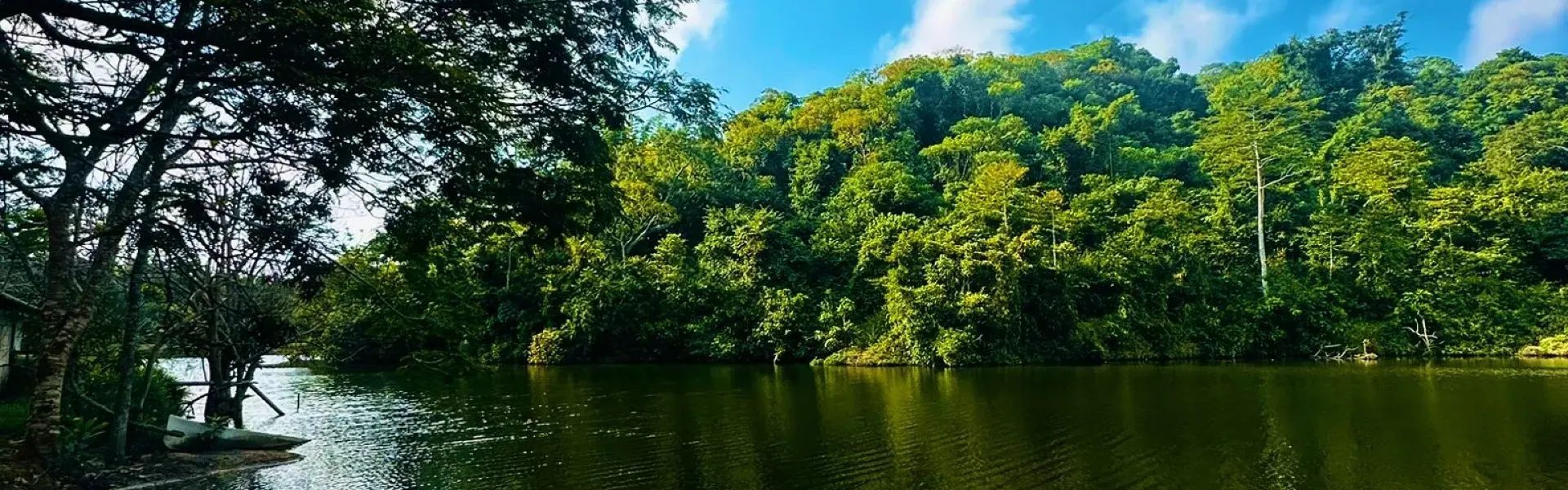
Canoeing and Sport Fishing at Lake Minaki.
· Lake Minaki, nestled within the reserve, provides a tranquil setting for:
- Canoeing along its 1.2 km stretch, ideal for families and couples.
- Sport fishing for kambare and peerage fish—visitors may catch and release or cook on-site, but cannot take fish outside the reserve.
- The lake’s calm waters and birdlife make it a peaceful escape, perfect for picnics and sunset views.
Camping and Bonfires.
· Designated campsites allow for overnight stays under the stars, with:
- Luxury tents for groups of 2 to 5+ people.
- Evening bonfires, barbecues, and storytelling sessions.
- A chance to wake up to forest sounds and misty bamboo groves—a rare immersive experience so close to the city.
Worship, Meditation, and Cultural Sites.
· Pugu Hills is deeply rooted in Zaramo traditions, with sacred caves and ritual sites woven into the forest.
- Visitors can engage in spiritual reflection, guided meditation, or cultural learning.
- Some tours include local herbal practices, food preparation, and traditional beauty treatments, offering a community-led cultural experience.
Photography and Research.
· The reserve’s biodiversity, geological features (like kaolinite deposits), and cultural sites make it ideal for.
- Nature photography, especially at sunrise or sunset from hilltops.
- Field research on coastal forest ecology, endemic species, and cultural landscapes.
Reviews highlight.
- A real forest in the city with relaxing trails and bamboo bubbles perfect for meditation.
- No long waits—just nature, fresh air, and stunning sunsets.
- Guides like Ayubu and Zebbo bring the forest to life with stories and ecological knowledge.
BENEFITS OF LOCAL COMMUNITIES.
The relationship between Pugu Hills Forest Reserve and its surrounding communities is layered—offering both tangible benefits and ongoing challenges. Here's a narrative breakdown of how local communities benefit from the reserve, especially when conservation is paired with inclusive development:
Environmental and Ecosystem Services.
- Watershed protection from the forest helps maintain clean water sources for nearby villages.
- The forest acts as a climate buffer, reducing heat and supporting rainfall patterns vital for agriculture.
- Soil conservation from forest cover helps prevent erosion, especially in hilly farming areas.
· These services are often invisible but deeply impactful—supporting farming, health, and resilience to climate change.
Livelihood Opportunities.
- Eco-tourism jobs: Locals work as guides, cooks, porters, and hospitality staff for hiking, canoeing, and camping visitors.
- Crafts and cultural services: Women’s groups and youth cooperatives offer traditional food, herbal treatments, and handmade souvenirs.
- Microfinance and VICOBA groups: Community banks help locals start small businesses, reducing dependence on forest exploitation.
These income streams are especially important in Kisarawe and Pugu wards, where formal employment is limited.
Education and Conservation Awareness.
- Environmental education campaigns led by NGOs like COWEPO raise awareness about forest protection and sustainable use.
- Youth clubs and school programs teach conservation values, often involving tree planting and wildlife monitoring.
- Community conservation committees give locals a voice in forest management decisions.
· This builds long-term stewardship and pride in the forest’s global significance.
Sustainable Resource Use.
- Agroforestry and village nurseries provide alternatives to charcoal and firewood collection.
- Locals are trained in sustainable harvesting of medicinal plants and non-timber forest products.
- Controlled access zones allow for regulated use of forest resources without degrading biodiversity.
· These strategies help balance livelihood needs with ecological integrity.
Cultural and Spiritual Value.
- Sacred caves and ritual sites in the forest are central to Zaramo traditions, offering spiritual grounding and cultural continuity.
- Community-led tours share these traditions with visitors, creating cultural pride and income.
· This reinforces identity while promoting respectful tourism.
Challenges and Cautions.
While benefits exist, studies show that restricted access to forest products has negatively impacted some livelihoods and cultural practices. Displacement, land tenure changes, and limited access to social services have also been reported. That’s why community involvement in planning and benefit-sharing is essential to make conservation equitable.
CHALLENGES,SOLUTIONS AND OPPORTUNITIES
Pugu Hills Forest Reserve—its challenges, the solutions being pursued, the opportunities it holds, and a thoughtful overview to conclude. This breakdown reflects both ecological realities and community-centered perspectives you value.
Challenges Faced.
Pugu Hills faces a complex mix of environmental, social, and governance challenges:
- Deforestation and illegal logging: Valuable species like Milicia excelsa have been overexploited, leaving degraded patches.
- Charcoal production and fire outbreaks: Hundreds of charcoal kilns and frequent fires have scarred the forest, especially near settlements.
- Encroachment and land use change: Urban expansion from Dar es Salaam and Kisarawe has led to settlement and farming within reserve boundaries.
- Weak enforcement and governance gaps: Limited capacity of forest officers and lack of consistent patrols have allowed violations to persist.
- Loss of biodiversity: Endemic species are threatened by habitat fragmentation and invasive plants like Lantana camara.
- Community tensions: Restrictions on forest access have strained relations with locals who depend on it for cultural and livelihood needs.
Solutions Being Implemented.
Efforts to address these challenges are multi-pronged and evolving.
- Upgrading to Nature Reserve status: In 2021, Pugu and Kazimzumbwi were elevated to Nature Forest Reserve status, increasing legal protection and management resources.
- Community-based conservation: Initiatives like MJUMITA and TFCG promote participatory forest management, giving locals a voice in decision-making.
- Youth and women engagement: Events like the Kisarawe Ushoroba Festival mobilize youth and women in eco-tourism, tree planting, and conservation education.
- Forest landscape restoration (FLR): Supported by WWF and district councils, FLR includes reforestation, invasive species removal, and ecosystem rehabilitation.
- Eco-tourism development: Hiking, canoeing, and cultural tours generate income while raising awareness of forest value.
- Environmental education and research: Schools, NGOs, and researchers use the reserve for training and biodiversity studies, fostering long-term stewardship.
Opportunities Ahead.
Despite its challenges, Pugu Hills holds immense promise:
- Urban nature tourism: Its proximity to Dar es Salaam and JNIA Airport makes it ideal for day trips, spiritual retreats, and educational tours.
- Cultural heritage preservation: Sacred caves and Zaramo traditions offer unique cultural tourism experiences that can empower local communities.
- Green jobs and entrepreneurship: Eco-guiding, craft-making, herbal medicine, and hospitality services can diversify incomes and reduce forest pressure.
- Climate resilience: Restoring forest cover enhances water security, carbon sequestration, and protection against urban heat and flooding.
- Research and innovation: The reserve’s biodiversity and geological features (like kaolinite deposits) offer rich ground for scientific exploration.
CONCLUSION.
Pugu Hills Forest Reserve is more than a patch of green—it’s a living corridor of biodiversity, culture, and community resilience. Its challenges are real and urgent, but the solutions being pursued reflect a growing commitment to inclusive, sustainable conservation.
The reserve’s future depends on.
- Strengthening governance and enforcement
- Deepening community involvement
- Scaling up eco-tourism and restoration
- Integrating conservation with urban planning
NB:
In essence, Pugu Hills is a microcosm of Tanzania’s broader conservation journey—where nature, people, and development must walk hand in hand.